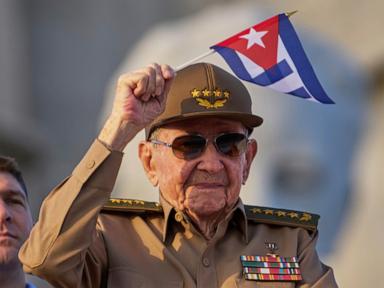
The United States Department of Justice announcement of federal criminal charges against 94-year-old Raúl Castro marks an operational shift in foreign policy, converting a thirty-year-old humanitarian and legal grievance into a contemporary geopolitical lever. Ostensibly centered on the February 24, 1996, shootdown of two civilian Cessna aircraft operated by the exile group Brothers to the Rescue, the indictment serves as the legal infrastructure for an aggressive campaign aimed at systemic political transition in Havana. By analyzing the structural mechanics of the indictment, the tactical deployment of intelligence assets, and the strategic precedents of extra-territorial enforcement, we can map the true utility function of this legal maneuver.
The state-level escalation operates on a precise causal chain: the conversion of historical actionable evidence into an immediate casus belli, synchronized with targeted economic asymmetric warfare to force concessions or regime collapse.
The Evidentiary Matrix and the Wasp Network Infrastructure
The legal core of the Department of Justice case relies on a dual-component evidentiary matrix consisting of intercepted communications and compromised intelligence networks. Unlike standard domestic criminal prosecutions, the case against Castro requires establishing a direct chain of command from the executive leadership in Havana to the Cuban Air Force MiG-29 pilots who executed the kinetic strike over the Florida Straits.
The prosecution’s primary asset is an 11-minute and 32-second authenticated audio recording from June 1996. The evidentiary value of this recording rests on specific directives that establish the command-and-control function:
- Explicit Command Authorization: Castro, serving as the Minister of the Revolutionary Armed Forces, explicitly directed operations with the command: "I said try to bring them down over the territory, but they entered Havana and left... Well, bring them down at sea when they appear."
- Authentication and Verification: The forensic validity of the asset was confirmed via voiceprint analysis and corroborating testimony from Alcibiades Hidalgo, Castro’s former personal secretary.
- Intent and Premeditation: The recording demonstrates that the kinetic engagement was not a spontaneous response by local air defense units operating under standing engagement protocols, but a deliberate, state-sanctioned execution order.
This electronic intelligence is structurally linked to the operational data gathered from La Red Avispa (The Wasp Network), a Cuban espionage ring dismantled by the FBI in the late 1990s. The intelligence network functioned as an information-gathering apparatus that infiltrated civilian organizations in southern Florida.
The operational mechanics of the Wasp Network provided Havana with the precise flight manifests and scheduling data of the Brothers to the Rescue aircraft. Crucially, the network managed the selective extraction of asset Gerardo Hernandez, the ringleader, ensuring he was not aboard the targeted flights. This synchronization proves that the strike was an optimized interception strategy rather than an improvised airspace defense measure.
Precedent Mapping: The Noriega-Maduro Operational Framework
To understand the strategic intent of the indictment, it must be evaluated against the historical architecture of United States extra-territorial enforcement actions. The Department of Justice is utilizing a distinct legal-military playbook designed to strip foreign leaders of sovereign immunity protections by designating them as transnational criminals.
The structural lineage of this strategy contains two primary precedents:
1. The Noriega Precedent (1992)
The successful prosecution of Panamanian leader Manuel Noriega established the initial legal framework for using domestic criminal indictments (specifically racketeering and drug trafficking charges) to justify military intervention and subsequent arrest. The original draft indictments against Castro in the 1990s explicitly leveraged the evidentiary momentum and legal templates developed during the Noriega trials.
2. The Maduro Precedent (2020–2026)
The more immediate operational template is the narco-terrorism indictment of Venezuelan leader Nicolás Maduro. The Maduro framework demonstrates the complete integration of judicial actions with military execution, culminating in the January 3, 2026, kinetic raid on Caracas by United States special operations forces that captured and extradited Maduro to New York.
The strategic objective of applying this framework to Castro is to create immediate parity between the Cuban regime and previously decapitated state structures. However, a comparative analysis reveals a critical structural divergence in the security architecture of the target states:
| Variable | The Venezuela/Panama Model | The Cuba Matrix |
|---|---|---|
| Command-and-Control Cohesion | High fragmentation; susceptible to internal defection via financial levers. | High institutional density; military and intelligence sectors deeply integrated into state enterprises. |
| Sovereign Immunity Posture | Eroded by active, documented parallel cartels (e.g., Cartel of the Suns). | Historically insulated by institutionalized state structures and ideological alignment. |
| Asymmetric Deterrents | Limited to localized paramilitary groups and regional proxy support. | High-value geographic proximity (90 miles) and deeply entrenched, persistent intelligence capabilities. |
The Coercive Economic Model: Sanctions as a Forcing Function
The timing of the indictment corresponds with an intensification of economic warfare designed to destabilize the internal equilibrium of the Cuban state. The current administration's strategy utilizes a multi-layered cost function designed to maximize internal friction within the island's domestic economy.
The economic model targets three primary vulnerabilities:
- Fuel Interdiction Dynamics: By imposing secondary sanctions on shipping entities and third-party states supplying petroleum to the island, the United States has engineered a persistent energy deficit. This policy directly causes systemic electrical grid failures and rolling blackouts, driving up the internal societal friction coefficient.
- Codification via Helms-Burton: The legal backdrop of the 1996 shootdown was the immediate passage of the Cuban Liberty and Democratic Solidarity (Helms-Burton) Act. This legislation codified the trade embargo, stripping the executive branch of the unilateral authority to lift sanctions and tying normalization directly to the complete dismantling of the Castro-led governance model.
- The "Friendly Takeover" Ultimatum: The judicial escalation matches the explicit policy position articulated by the administration, which demands that Havana open its domestic economy to direct American capital investment or face structured political liquidation.
The economic objective is to create a compounding crisis where the cost of maintaining the current governance structure exceeds the risk of internal structural reorganization or defection by mid-tier military officials.
Strategic Friction Points and Operational Risks
A rigorous assessment of this strategy requires outlining the significant operational limitations and escalatory risks inherent in executing a legalistic regime-change model against a sovereign state.
The first limitation is the geographic and historical reality of Cuba’s defensive posture. Unlike Panama in 1989 or the degraded state apparatus of Venezuela in late 2025, Cuba maintains a highly professionalized, institutionalized intelligence and security apparatus. The military command structures are not merely mercenary networks; they are stakeholders in the state's economic enterprises. Consequently, they are less susceptible to simple financial buyouts or traditional defection strategies.
The second bottleneck is the potential for severe geopolitical blowback from regional and global adversaries. Initiating a second kinetic intervention or high-risk extraction operation within the Caribbean basin—while simultaneously managing post-conflict normalization in Venezuela—strains logistical and intelligence bandwidth. A kinetic deployment 90 miles from the United States mainland introduces a risk of asymmetric retaliatory actions, including cyber warfare targeting domestic infrastructure or the deliberate instigation of mass migration crises.
Furthermore, career military planners within the Pentagon maintain a highly conservative posture regarding the utility of using indictments to drive military operations. Legal findings by a grand jury in the Southern District of Florida provide domestic political cover and statutory justifications, but they do not alter the tactical calculus of amphibious or airborne infiltration against a hardened air-defense environment.
The Tactical Playbook
The administration will deploy the Raul Castro indictment not as an end in itself, but as the opening phase of an escalation sequence. The strategic play moves through three distinct phases:
- The Sovereignty Stripping Phase: The formal unveiling of the indictment at Miami’s Freedom Tower establishes the legal fiction that the Cuban leadership operates as a transnational criminal enterprise rather than a sovereign government. This sets the necessary domestic legal precedent for future asset seizures and interdictions.
- The Maritime Blockade Escalation: Under the guise of enforcing federal warrants and preventing transnational criminal activity, the United States will expand its naval presence in the Florida Straits, executing aggressive interdictions of fuel tankers and supply vessels bound for Cuban ports.
- The Internal Cleavage Strategy: By maintaining maximum economic pressure while publicizing the personal legal liability of the senior leadership, Washington aims to decouple the interests of the 94-year-old Castro and his immediate circle from the long-term survival of mid-level officers in the Revolutionary Armed Forces.
The ultimate success of the operation depends entirely on whether these mid-tier military stakeholders determine that sacrificing the historic leadership is the only viable mechanism to secure their own economic survival and institutional preservation.