Mainstream coverage treats India’s diplomatic clash with Turkiye over United Nations General Assembly draft consultations as a straightforward battle for inclusion. They frame New Delhi as the wronged giant demanding a seat at the table and Ankara as the petty gatekeeper weaponizing procedural rules.
That narrative is lazy. It misses the brutal reality of how multilateral diplomacy actually operates.
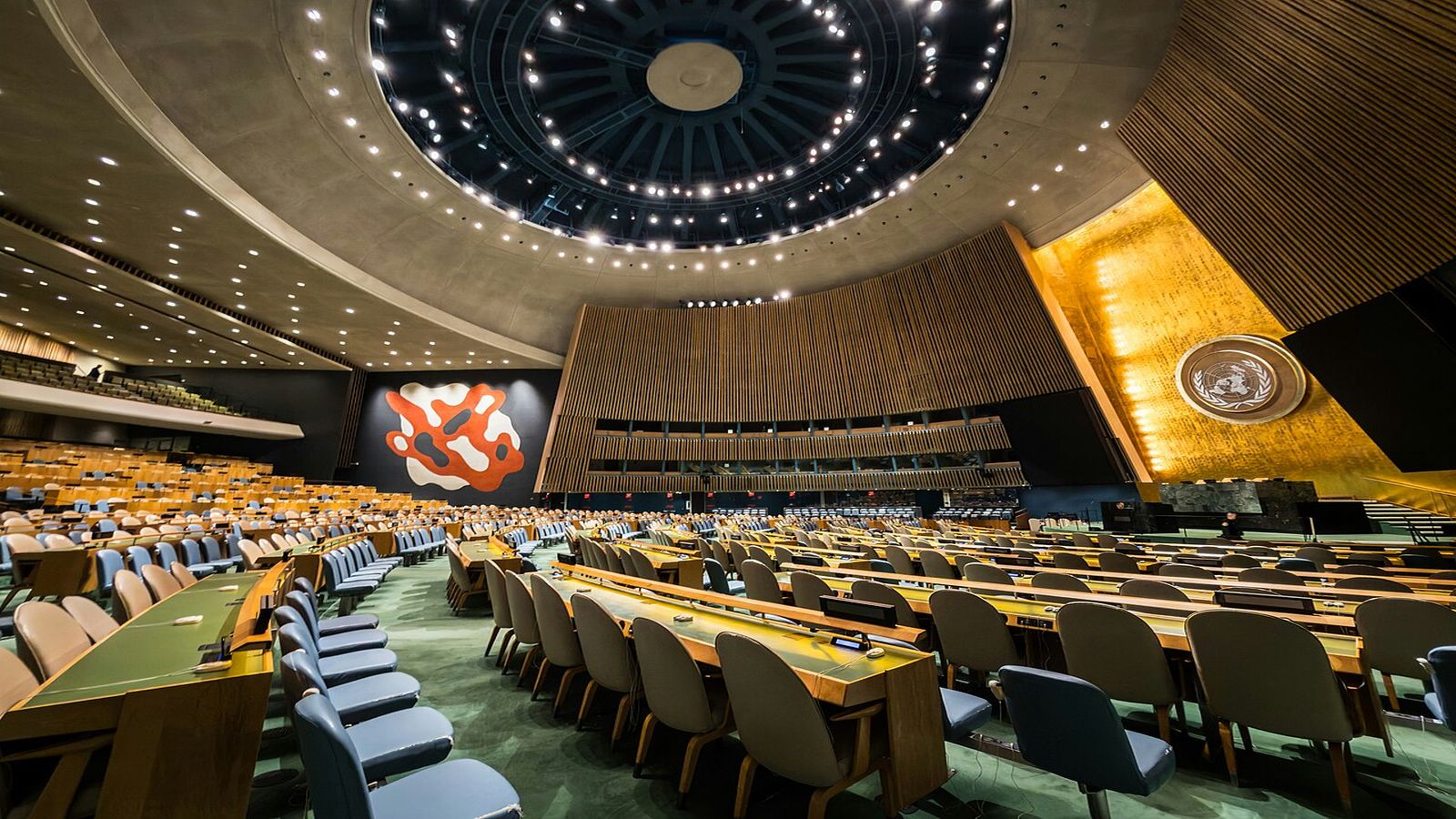
When India called out Turkiye for excluding non-members from drafting consultations on cooperation between the UN and the Organisation of Islamic Cooperation (OIC), diplomats in New York did not gasp in shock. They yawned. Because in the corridors of Turtle Bay, procedural exclusion is not a scandal. It is the standard operating procedure of every bloc that holds the pen.
To understand why this spat matters—and why both sides are playing a much deeper game than the headlines suggest—you have to stop reading press releases and start looking at the mechanics of UN drafting rooms.
The Myth of "Inclusive" UN Consultations
Every foreign ministry loves the word "transparency." Every ambassador demands "inclusive consultations" right up until the exact second they become the penholder on a resolution.
I have sat through enough multilateral drafting sessions to know that "open-ended consultations" is diplomatic code for controlled chaos. When a regional bloc or an intergovernmental organization drafts a resolution on its own institutional cooperation with the UN, the penholders hold informal, closed-door huddles first. They do this to align their internal voting bloc before exposing the text to hostile amendments from outsiders.
Turkiye, acting in its capacity within the OIC framework, drafted the text on UN-OIC cooperation. Naturally, Ankara consulted OIC member states first. India is not an OIC member. Despite boasting one of the world's largest Muslim populations, New Delhi holds neither membership nor observer status in the 57-nation body.
So when India complained about being shut out of the initial drafting phase, it was demanding access to an internal caucus it does not belong to.
Imagine a scenario where the European Union drafts a resolution on UN-EU cooperation, holds internal alignment talks in Brussels, and then gets lectured by Brazil for not inviting Brasilia to the preliminary meetings. Diplomats would laugh the complaint out of the room. Yet when the OIC does it, commentators suddenly treat basic bloc politics like a breach of international law.
What India Is Actually Doing
If New Delhi knows perfectly well how penholder mechanics work, why did Indian diplomats publicly blast Turkiye on the General Assembly floor?
Because the complaint was never meant to get India into that specific drafting room. It was designed to poison the well for whatever language Ankara and Islamabad were quietly slipping into the text.
In UNGA resolutions on UN-OIC cooperation, the devil is always buried in the preambular paragraphs. Historically, OIC-sponsored resolutions have served as a backdoor vehicle to insert references to Jammu and Kashmir, Islamophobia, and self-determination—language carefully calibrated by Pakistan and backed by Turkiye to put India on the defensive.
By attacking the process before the text was finalized, India executed a classic diplomatic pre-emptive strike:
- Delegitimizing the output: If a resolution emerges from a process branded as opaque and exclusionary, any contentious political clauses inside it lose moral authority before a single vote is cast.
- Exposing the Ankara-Islamabad axis: New Delhi wanted to remind the broader UN membership that Turkiye was not acting as a neutral facilitator for the UN, but as a partisan operator pushing narrow bilateral agendas under an OIC banner.
- Signaling red lines to the OIC majority: Many heavyweights inside the OIC—specifically Saudi Arabia and the United Arab Emirates—have spent the last decade building deep economic and security ties with India. By making noise in New York, India forced Gulf capitals to pay attention to what Turkiye was doing in their name.
This is not a cry for help from an excluded nation. It is calculated reputational warfare.
Turkiye’s Strategic Overreach
Ankara, for its part, is playing a dangerous hand. Under President Recep Tayyip Erdogan, Turkish foreign policy has aggressively pursued leadership credentials across the Muslim world. Controlling the pen on UN-OIC resolutions gives Turkiye visible diplomatic clout without costing a single lira.
By freezing out non-members during early consultations, Turkiye gets to shape the baseline narrative. In UN negotiations, whoever writes the first draft controls the gravitational center of the debate. Everything else becomes a fight over deleting words rather than adding them.
However, Ankara’s heavy-handedness carries a glaring flaw. When a penholder locks out major stakeholders until the eleventh hour, it guarantees a floor fight. Instead of passing a routine cooperation resolution by consensus—which is how administrative UN-regional organization texts are supposed to pass—Turkiye turned a procedural rubber-stamp into a polarized spectacle.
Even worse for Ankara, overt hostility toward India alienates pragmatic OIC members who have zero interest in sacrificing trade deals with New Delhi to score rhetorical points for Turkiye in New York. You cannot claim to speak for the consensus of the Islamic world while driving a wedge straight through its economic heavyweights.
Answering the Questions Nobody Asks Correctly
When headlines flare up about India, Turkiye, and the OIC, casual observers usually ask the wrong questions. Let us dismantle the most common misconceptions.
Why isn't India a member of the OIC?
Because the OIC is an organization of Muslim-majority states, not a demographic club for countries with large Muslim minorities. Under the OIC Charter, membership requires a Muslim majority, though historical anomalies exist. More importantly, Pakistan holds a de facto veto over Indian entry. Even if New Delhi wanted in—and its current foreign policy establishment has zero appetite to join a bloc that routinely passes resolutions condemning Indian domestic policies—Islamabad would block it on day one.
Does an UNGA resolution on UN-OIC cooperation actually change anything on the ground?
No. General Assembly resolutions are non-binding political statements. A resolution on institutional cooperation mostly rubber-stamps bureaucratic meetings, joint workshops, and secretariat coordination between UN agencies and OIC offices. The fight is entirely symbolic. In diplomacy, however, symbols become precedents. If a hostile phrase enters a UN resolution once, diplomats will copy-paste it into ten future resolutions until it hardens into accepted international parlance. That is why Indian diplomats fight over single adjectives at 2:00 AM.
Is this proof that the UN is broken?
It is proof that the UN is functioning exactly as its founders designed it—as an arena for great and middle powers to clash with words instead of artillery. Expecting pure neutrality in UN drafting rooms is like expecting neutrality in a parliamentary budget committee. The system runs on leverage, bloc discipline, and procedural ambushes.
How Middle Powers Should Actually Play the Penholder Game
If a foreign ministry wants to stop hostile coalitions from hijacking multilateral resolutions, whining about procedural fairness on the assembly floor has diminishing returns. Publicly shaming a penholder scores domestic media headlines, but it rarely rewrites a draft text.
Serious diplomatic operators use three far more effective levers:
- Flip the bloc from the inside. Never fight an external organization at the gate when you already own bilateral equity with its richest members. Quiet phone calls from New Delhi to Riyadh, Abu Dhabi, and Cairo carry infinitely more weight than a fiery speech in New York. When key OIC funders tell Ankara to water down a text to preserve consensus, the penholder folds immediately.
- Weaponize consensus rules. UNGA cooperation resolutions rely heavily on adoption without a vote. If a penholder refuses early consultations, the excluded party should immediately signal its intent to call for a recorded vote and introduce poison-pill amendments on the floor. Most penholders will abruptly discover a newfound love for "inclusive transparency" rather than risk an embarrassing split vote on a routine resolution.
- Capture parallel committees. Influence at the UN is transactional. A country frozen out of one drafting track can easily hold up budgetary approvals in the Fifth Committee or delay appointments in unrelated working groups until the penholder suddenly remembers how to share the draft text.
The Uncomfortable Truth About New Delhi’s Strategy
There is a massive downside to India’s public confrontation approach that Indian commentators conveniently ignore.
By loudly protesting its exclusion from OIC-related consultations, India inadvertently validates the OIC’s relevance to Indian affairs. Every time New Delhi engages in a public slugfest over an OIC text, it elevates the organization’s profile in South Asian geopolitics.
For decades, India’s sharpest diplomatic minds argued that the best way to neutralize OIC resolutions on Kashmir was total, icy indifference—treating the organization’s statements as irrelevant noise from a club India does not belong to. Jumping into the mud to wrestle Turkiye over procedural access signals that Ankara’s penmanship actually gets under New Delhi’s skin.
Turkiye wanted a stage to project itself as the fearless champion of the Muslim world standing up to a rising Hindu-nationalist power. By taking the bait in full view of the General Assembly cameras, India handed Erdogan the exact domestic headline he wanted.
Multilateral diplomacy is not a court of law where the side with the cleanest procedural argument wins. It is a street fight in bespoke suits. Stop looking for fairness in Turtle Bay, and start watching who actually controls the votes when the gavel drops.