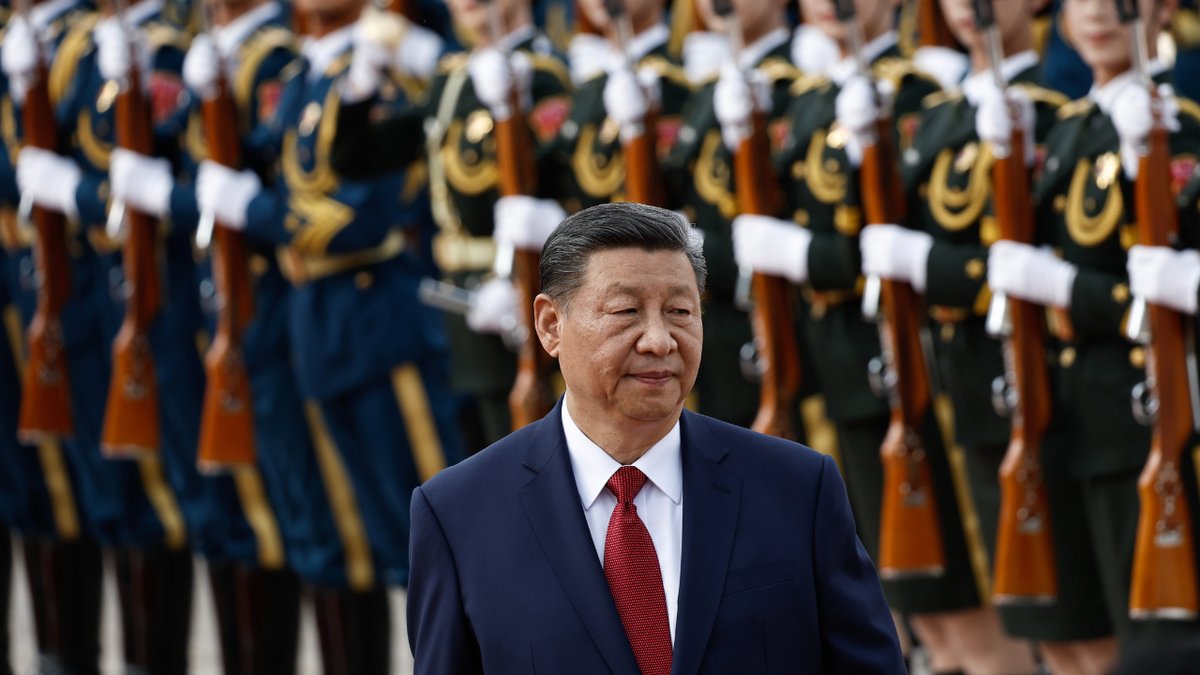
The photo-op looked pristine. Prime Minister Narendra Modi standing atop a sprawling Dutch dyke, looking out over the North Sea, flanked by engineers showcasing centuries of hydraulic mastery. The media immediately spun the narrative: India is ready to absorb Netherlands-style water management to cure its own seasonal cycles of devastating floods and acute droughts.
It is a beautiful, expensive illusion.
The belief that India can simply import Western European hydraulic engineering to solve its water crises is not just naive; it is fundamentally flawed. The Dutch model is built for a hyper-specific, low-energy, predictable environment. Forcing it onto the Indian subcontinent ignores the brutal realities of tropical hydrology, monsoonal variability, and sheer scale.
We are about to spend billions on a template that is guaranteed to fail when applied to geography it was never designed to handle.
The Flaw of the Polder: Scale and Volatility
The Netherlands is a flat, tiny sink. Roughly a third of the country sits below sea level. Their entire engineering philosophy—honed over a millennium via regional water boards (waterschappen)—is built around static control. They hold back a predictable sea and drain a highly managed, low-gradient delta using advanced pumping networks, polders, and dykes.
Now look at India.
India does not have a static water problem. It has a kinetic water crisis.
The Ganga-Brahmaputra-Meghna basin discharges roughly 1.35 million cubic meters of water per second during the peak monsoon. The Bramhaputra alone carries more sediment than almost any river on earth. Dutch engineering deals with gentle, well-behaved rivers that flow consistently year-round. It does not deal with a sky that dumps 80% of a region's annual rainfall in a chaotic 90-day window, liquefying hillsides and shifting river courses by kilometers overnight.
When you build rigid, Dutch-style embankments around a Himalayan-fed river, you create a pressure cooker. The river cannot spill into its natural floodplains, so sediment builds up on the riverbed itself. Over a few decades, the riverbed rises above the level of the surrounding towns. When the breach happens—and it always happens—the catastrophe is exponentially worse than a natural flood. I have seen municipal bodies spend hundreds of crores building concrete retaining walls based on European blueprints, only to watch a single monsoon flash flood bypass, undermine, and smash them into aggregate within forty-eight hours.
The Mathematics of Monsoon vs. North Sea Tides
Let us look at the actual physics. The Dutch Delta Works are designed to withstand a 1-in-10,000-year North Sea storm surge. That is an incredible feat of civil engineering. But a storm surge is a temporary atmospheric event pushing water landward for a matter of hours or days.
A monsoon is a continental thermal engine.
- The Dutch Challenge: Manage a maximum tidal variance of about 4 to 5 meters along a heavily stabilized coastline.
- The Indian Challenge: Manage river stage variances of over 15 meters in rivers like the Brahmaputra, while handling millions of tons of coarse silt that destroys turbines and clogs drainage channels.
If you block a tropical river with a heavy Dutch-style storm surge barrier, you do not protect the interior; you drown it from behind. The water coming from the mountains cannot escape to the sea. The barrier becomes a self-inflicted dam.
The Decentralization Myth
Proponents of the Euro-centric approach love to talk about institutional framework. They point to the Dutch water boards as the pinnacle of decentralized, democratic resource management. "We just need to replicate this localized governance in Bihar, Assam, and Odisha," the think-tank papers claim.
This completely misreads how rural socio-economics operate.
The Dutch waterschappen succeeded because they developed in a highly egalitarian, agrarian society where every landowner had a mathematically identical interest in keeping the polder dry. If your neighbor’s plot flooded, yours did too. Cooperation was existential.
In the Indo-Gangetic plain, water is power, and it is deeply unequal. Upstream farmers divert water for water-intensive cash crops like paddy and sugarcane, leaving downstream communities dry. During the monsoon, upstream landowners routinely cut illegal breaches into embankments to drain their own fields, intentionally flooding the villages below them.
Introducing a decentralized "water board" into a fractured socio-economic ecosystem without fixing land-use rights and enforcing strict extraction caps does not create harmony. It just gives local elites a bureaucratic rubber stamp to monopolize a scarce resource.
Stop Trying to Control the River—Learn to Lose
The real solution is counter-intuitive, politically unpopular, and highly effective: we need to stop trying to conquer water and start designing infrastructure that knows how to give way.
The Dutch are actually realizing this themselves through their Ruimte voor de Rivier (Room for the River) initiative, moving away from higher dykes and toward lowering floodplains. But even their version of "room" is highly manicured and manicured. In India, we need an aggressive, raw adaptation of this concept.
1. Room for the River, Tropical Edition
Instead of pouring concrete along riverbanks to protect illegal encroachments on floodplains, governments must mandate massive, unbuildable bypass channels. This means using satellite telemetry to map the historical 50-year migration path of rivers and completely zoning them out of bounds for permanent concrete infrastructure.
2. High-Velocity Recharge over Storage
The obsession with mega-dams and massive reservoirs is an artifact of 20th-century thinking. In tropical zones, open reservoirs lose massive volumes to evaporation. In states like Maharashtra and Gujarat, up to 15-20% of stored reservoir water evaporates into thin air annually.
Instead of storing water on the surface, infrastructure spending should pivot exclusively to subsurface artificial recharge. We need to use the monsoon’s kinetic energy to force water into depleted deep aquifers. This solves two problems simultaneously: it reduces the immediate peak volume of the flood crest and stores water where the sun cannot touch it for the dry season.
3. Amphibious Infrastructure
If you build a road or a railway line perpendicular to the natural flow of monsoon water in a delta, you are building a dam. Thousands of kilometers of Indian highways act as unintended dikes, trapping floodwaters in villages for months.
We must shift toward building permeable transport corridors—highways on piers and railways with massive, continuous culvert networks—that allow the monsoon pulse to pass through unimpeded. If a village is in a low-lying delta, the houses should not be brick-and-mortar cubes that trap water; they must be designed on stilts or engineered as amphibious structures that rise with the tide.
The Cost of the Wrong Strategy
The downside to this contrarian approach is obvious: it requires immense political will and a complete overhaul of urban planning laws. It means telling people they cannot build high-rises on dried-up lake beds in Bengaluru or Chennai. It means telling farmers in arid regions that growing sugarcane is an environmental crime. It is far easier for a politician to sign a memorandum of understanding with a Dutch engineering firm, pose for a photograph on a clean dam, and promise a "world-class flood defense system" that will inevitably wash away in five years.
We are treating a systemic, continental climate reality as a mere civil engineering problem. You cannot concrete your way out of a monsoon. Every rupee spent trying to turn the massive, untamable systems of the Brahmaputra or the Ganga into the neat, orderly canals of Rotterdam is capital thrown directly into the sea.
Stop looking at the North Sea. Look at our own geography. The river always wins; our only choice is to decide where we stand when it does.