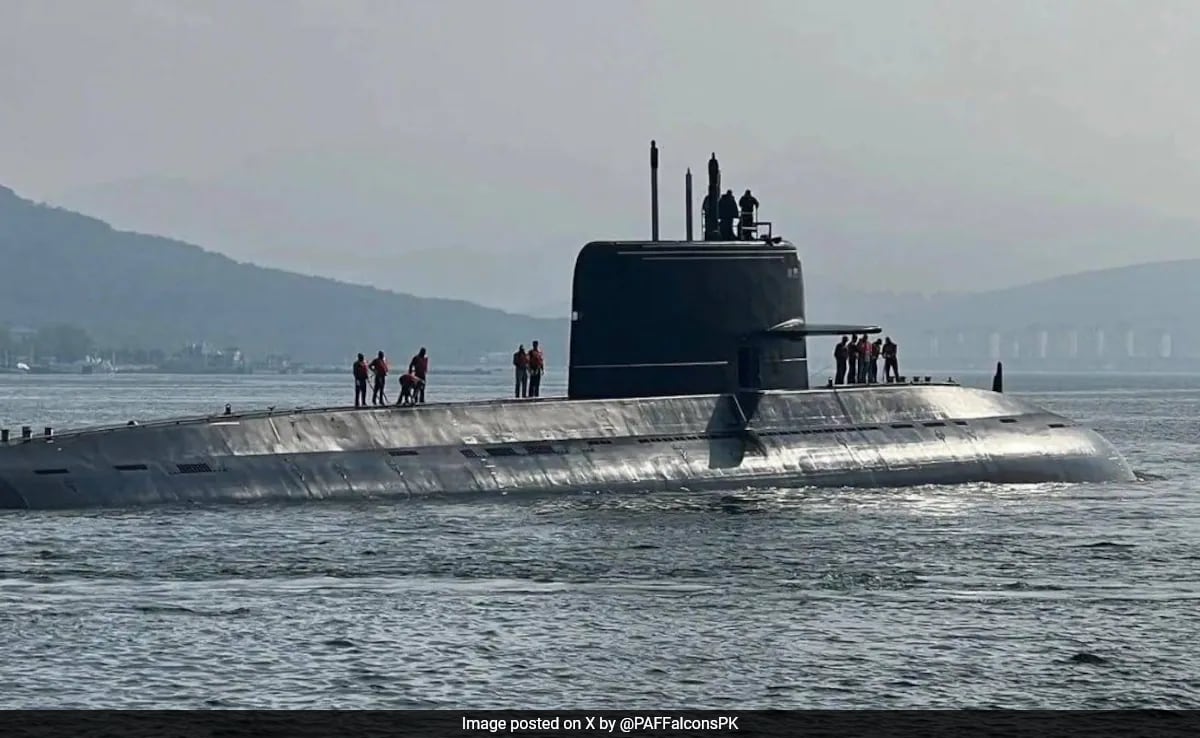
The recent commissioning of the PNS Hangor in Sanya, China, marks the official beginning of Pakistan’s five-billion-dollar underwater modernization program. On paper, the acquisition of eight advanced diesel-electric submarines equipped with Air-Independent Propulsion appears to rewrite the balance of naval power in the Arabian Sea, providing Islamabad with a much-needed counterweight to India’s larger surface fleet. By offering sustained underwater endurance of up to three weeks, these platforms are intended to establish a credible layer of sea denial. However, an examination of the technology transfer, industrial bottlenecks, and forced engine substitutions reveals that this fleet may carry liabilities that compromise its primary asset: stealth.
Behind the political fanfare of the delivery lies a complex web of engineering compromises and geopolitical dependencies. The Hangor-class is not a carbon copy of the frontline Type 039B Yuan-class operated by the People’s Liberation Army Navy. It is an export-derivative platform that has been substantially modified, structurally and mechanically, due to international trade restrictions. The resulting platform presents significant integration questions that the Pakistan Navy must solve in an increasingly contested maritime domain.
The German Engine Embargo and the Unproven Alternative
The foundational blueprint for the Hangor-class relied entirely on Western propulsion technology. The vessels were designed to run on German-manufactured MTU 12V 396 marine diesel engines, a reliable and acoustically quiet standard in conventional submarine design.
In 2021, European regulators enforced strict dual-use export controls after discovering that similar powerplants were being integrated directly into Chinese state combat vessels. This triggered an immediate embargo. Germany blocked the export of the MTU engines to China, halting the production line for the Pakistani hulls.
Faced with an indefinite freeze, Beijing offered its domestically produced CHD620 diesel engine as a substitute. Pakistan accepted the modification.
+-----------------------------------------------------------+
|               PROPULSION CONFIGURATION SHIFT               |
+-----------------------------------+-----------------------+
| Original Specified Powerplant     | MTU 12V 396 (German)  |
+-----------------------------------+-----------------------+
| Enforced Substitute Powerplant    | CSOC CHD620 (Chinese) |
+-----------------------------------+-----------------------+
| Primary Technical Risk            | Acoustic Signature    |
+-----------------------------------+-----------------------+
This change is not a simple swap of components. Naval analysts and marine engineers note that the CHD620 is historically derived from commercial heavy-duty designs rather than purpose-built, low-signature naval specifications. In underwater warfare, the ultimate currency is silence. If a diesel engine generates higher baseline vibrations or harmonic resonance, those vibrations travel through the hull and into the water column. This increases the vessel's acoustic signature, making it vulnerable to advanced multi-static sonar arrays and airborne anti-submarine assets like the P-8I Poseidon.
The Stirling-cycle Air-Independent Propulsion system integrated into these boats does mitigate some risk by allowing the submarine to remain submerged without snorkeling to charge its batteries. Yet, the overall efficiency and acoustic dampening of the Chinese engine-AIP combination remain unproven in sustained, high-intensity operational deployments.
The Dual Track Industrial Bottleneck
The five-billion-dollar deal utilizes a split production model designed to build local industrial capacity. Four submarines are built by China Shipbuilding & Offshore International Company in Chinese yards, while the remaining four are assembled locally by Karachi Shipyard & Engineering Works under a technology transfer agreement.
While this hybrid approach avoids total reliance on foreign shipyards, it introduces steep domestic manufacturing challenges.
- Delayed Timelines: The original bilateral framework aimed for complete fleet delivery between 2022 and 2028. Currently, only the lead vessel has achieved full commissioning, while sister ships like the Shushuk, Mangro, and Ghazi are locked in extended sea trials.
- Infrastructure Deficits: Local assembly in Karachi requires precision machining, heavy structural welding, and advanced alignment tools capable of handling 2,800-ton hulls. The keel for the sixth boat was only laid in early 2025, pointing toward an operational slippage that pushes full fleet readiness closer to 2030.
- Supply Chain Fragility: Every major combat management system, sonar array, and specialized steel alloy originates in China. Local assembly is largely an exercise in kit integration rather than independent manufacturing.
Economic Realities and the Cost of Lifelong Dependency
The acquisition cost of a submarine is merely the down payment. Over a typical thirty-year operational lifespan, maintenance, mid-life upgrades, and spare parts procurement routinely triple the initial purchase price.
Pakistan is executing this expansion during a period of acute macroeconomic distress. The defense allocation is balanced against massive external debt obligations and strict International Monetary Fund oversight. Managing the logistics of an eight-vessel fleet requires a steady flow of hard currency to purchase specialized components from Chinese state enterprises.
This creates an absolute structural dependency. Unlike older Pakistani platforms that utilized French technology or received mid-life upgrades via Turkish defense contractors, the Hangor-class locks the Pakistan Navy into a closed-loop ecosystem managed entirely by Beijing. If operational disruptions or economic shortfalls restrict the flow of proprietary spare parts, the operational readiness of the fleet will erode.
Tactical Realities in the Arabian Sea
The primary mission of the Hangor-class is to complicate the strategic calculus of the Indian Navy. Armed with 533mm torpedo tubes capable of deploying heavy torpedoes and sub-surface launched cruise missiles like the Babur-3, these platforms provide Islamabad with a survivable second-strike option.
They will operate in a highly congested littoral environment. The northern Arabian Sea is characterized by variable thermal layers and high ambient noise, conditions that traditionally favor conventional submarine operations. However, India's concurrent development of localized seabed sonar networks and deep-water acoustic tracking systems means that any increase in a submarine's baseline noise signature drastically reduces its operational survivability.
The value of these eight hulls cannot be measured by numbers alone. If the localized integration of the CHD620 engine fails to meet stringent naval acoustic standards, the multi-billion-dollar fleet risks entering service as a collection of platforms that are easily localized and tracked by modern anti-submarine warfare networks. Technology transfers and rapid shipyard assembly mean very little if the resulting platform cannot survive its operational environment.