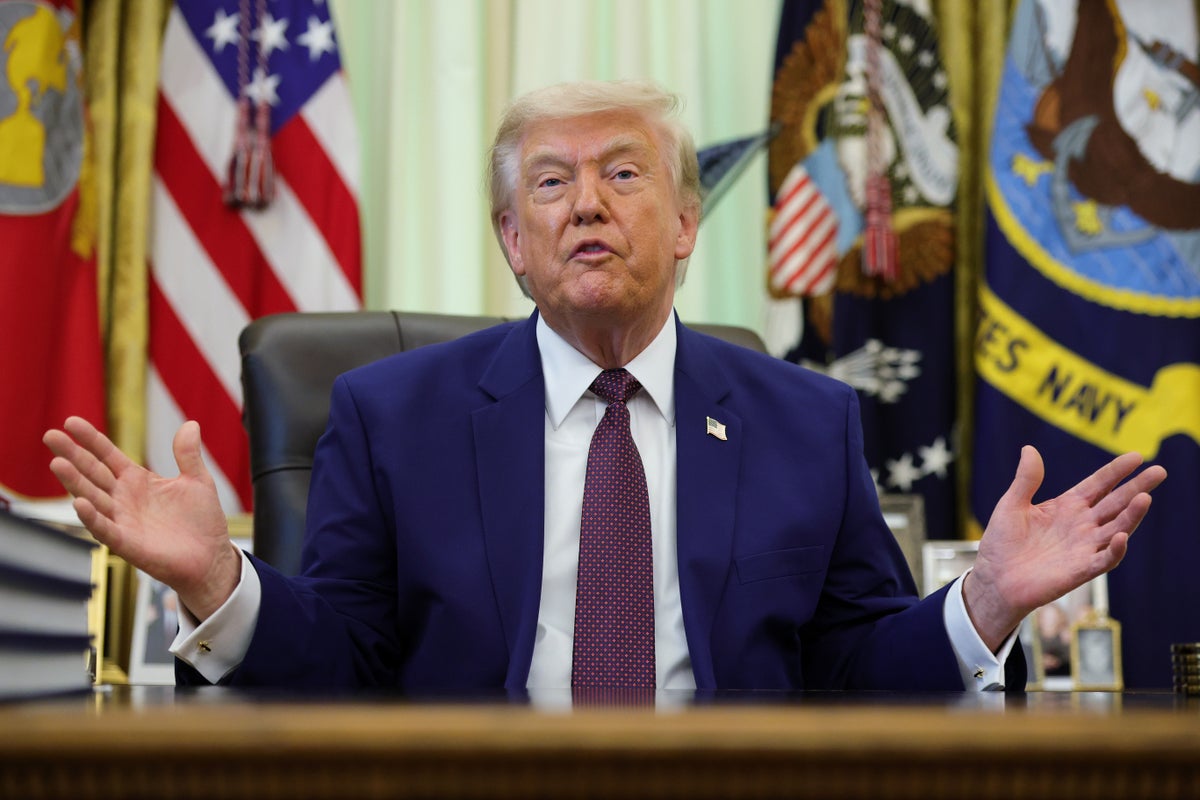
Donald Trump’s second term has officially crossed the 500-day mark, hitting a historic polling floor that signals deep structural trouble for the Republican party ahead of the November midterms. The latest Economist/YouGov survey paints a stark picture, showing a meager 34 percent approval against a staggering 59 percent disapproval. This net negative rating of minus 25 represents the absolute lowest baseline of his combined tenures in Washington.
Conventional wisdom among beltway commentators suggests this drop is merely a temporary fluctuation, a symptom of general voter fatigue. That analysis misses the true mechanism of the decline.
The reality is far more dangerous for the administration. Trump is caught in an unsustainable political paradox. He continues to exercise a absolute veto over the internal mechanics of the Republican primary system, purgeting independent-minded incumbents at will. Yet, the very foreign and economic policies required to maintain that fever-pitch base enthusiasm are alienating the moderate swing voters needed to hold Congress.
The Strait of Hormuz Trap
At the center of this polling freefall is an active conflict with Iran that has bled from a geopolitical standoff into everyday American household balance sheets. The conflict has triggered a prolonged blockade of the Strait of Hormuz, an essential maritime choke point responsible for the transit of roughly one-fifth of the world’s petroleum liquids.
Voters are not viewing this conflict through an abstract lens of national security. They are viewing it at the pump.
The administration’s hardline foreign policy has inadvertently created a domestic inflation spike. The survey indicates a net approval rating on inflation of minus 43.
- Energy Costs: Domestic gasoline prices have surged directly due to the Persian Gulf supply constraints.
- Core Goods: Higher transportation costs have trickled down into grocery stores and retail, compounding standard consumer goods inflation.
- Consumer Sentiment: A majority of independent voters now directly attribute the rising cost of living to the ongoing military engagement rather than lingering supply-chain issues from years past.
The political vulnerability here is structural. Presidents can often sustain low approval ratings during peacetime if the domestic economy feels stable. Conversely, they can rally public support during wartime if the economic home front remains unburdened. Trump’s second term is suffering from the inverse of both scenarios, a grinding foreign conflict that actively degrades domestic purchasing power.
Cannibalizing the Incumbent Advantage
While the broader electorate souring on the White House should theoretically force a strategic pivot, the internal dynamics of the GOP prevent it. This week alone, Trump took credit for the primary defeats of prominent intra-party critics like Kentucky Representative Thomas Massie and Louisiana Senator Bill Cassidy. He has also successfully advanced hard-line MAGA candidates in key races across Texas and the American South.
A recent Marquette Law School national survey confirms that 71 percent of self-identified Republicans state they will vote for any primary candidate Trump endorses, compared to just 20 percent who would back an incumbent opposed by the president.
This absolute control over the primary ballot creates a false sense of security inside the West Wing.
The primary victories are real, but they act as a lagging indicator of actual political health. Trump is effectively optimizing for absolute loyalty within a rapidly shrinking tent. By purging institutionalist Republicans who possess proven track records of winning moderate suburban districts, the administration is installing ideologues who are poorly equipped for general election scrutiny.
The numbers reflect this exposure. Analysts now give Democrats a nine-in-ten chance of flipping the House of Representatives this November. The Senate, once considered a safe Republican lock due to a highly favorable map, has officially shifted to a toss-up.
The Rebellion on Capitol Hill
The anxiety over these numbers is beginning to crack the party's legislative unity. For the first 15 months of this term, congressional Republicans operated with complete compliance. That era of unforced loyalty has ended.
Faced with internal polling that mirrors the national slump, Capitol Hill lawmakers are suddenly discovering their constitutional independence. A notable block of Republican lawmakers recently voted against the administration's active operational funding for the Iranian campaign.
Simultaneously, fierce pushback has emerged against the White House’s proposed $1.8 billion anti-weaponization fund and highly publicized domestic spending projects, including an expensive White House ballroom renovation.
Congressional Voting Alignment Trends (2026)
===================================================
Target Lawmakers: Suburban/Moderate Republicans
Historical Party Loyalty: 92%
Current Alignment on White House Priorities: 64%
Primary Defection Drivers: War Funding, Discretionary White House Spending
This legislative friction is not an ideological awakening. It is pure political survival. Lawmakers representing purple districts in Pennsylvania, California, and New York realize that an unyielding alignment with a president carrying a minus 25 net approval rating is a professional death warrant. When moderate representatives like Brian Fitzpatrick of Pennsylvania face public tirades from the president for failing to offer total compliance, it serves to further alienate the exact voting demographic the GOP requires to maintain a legislative majority.
The administration’s focus remains stubbornly fixed on internal discipline rather than external expansion. A presidency cannot survive on the enthusiasm of a 34 percent base alone, no matter how intense that enthusiasm remains. As the midterm elections approach, the cost of the administration’s foreign and domestic policies is no longer just a hypothetical debate for economists. It is being tallied daily at the gas pump and in the national polling data, leaving the governing party with dwindling options and a rapidly closing window to avert a major electoral correction.