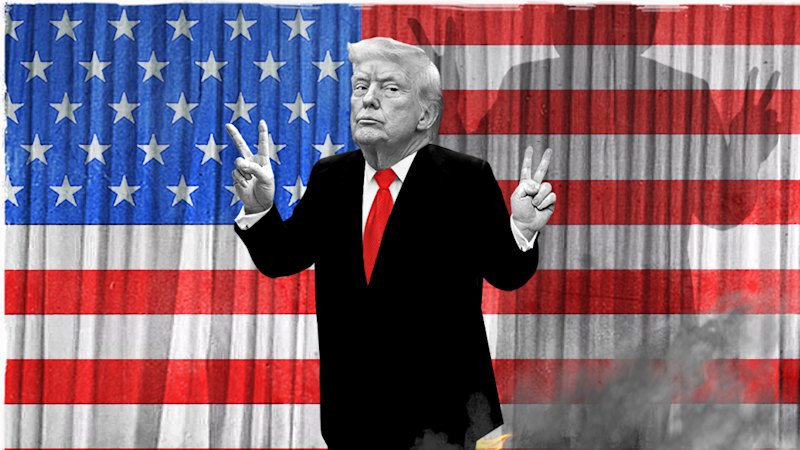
The victory speech was written in gold. On a podium thousands of miles from the grit and heat of the Persian Gulf, the declaration was made with the kind of absolute certainty that only a superpower can afford. The war, we were told, was won. The "maximum pressure" campaign had supposedly choked the life out of a defiant regime, leaving it with two choices: total surrender or total collapse.
But in the cramped, tea-scented backrooms of Tehran, no one was checking the headlines from Washington.
Geopolitics is often treated like a chess match, a clean game played on a wooden board with fixed rules. In reality, it is much more like a blood feud in a crowded apartment complex. You can break your neighbor’s door down. You can shut off their power. You can tell everyone in the building that they are no longer welcome at the table. But as long as they are still breathing behind those walls, the conflict isn't over. It has simply changed its shape.
The Ghost in the Machine
Consider a hypothetical shopkeeper in Isfahan named Esmail. Esmail doesn't care about the grand rhetoric of "winning" or "losing" that echoes through the halls of the United Nations. He cares about the price of cooking oil, which has tripled because of sanctions meant to bring his government to its knees. He sees the local currency evaporating like water in the desert.
To a strategist in D.C., Esmail is a data point. He is a metric of "leverage." The theory is simple: if you make Esmail’s life miserable enough, he will turn his anger toward the leaders in Tehran, forcing them to stop their regional ambitions and dismantle their nuclear dreams.
It’s a logical theory. It is also, historically, a fantasy.
Instead of breaking, the pressure often bakes the resentment into a hard, ceramic shell. While the West declared a tactical victory, the Iranian leadership looked at the same set of facts and saw an existential fight. They didn't see a reason to quit; they saw a reason to go underground.
The "war" that was supposedly won was a conventional one—a battle of bank accounts and oil tankers. But the Iranians specialize in the unconventional. When you cannot win on the open sea, you learn to haunt the shadows. When you cannot trade in dollars, you build a "resistance economy" of smugglers, middle-men, and black-market geniuses.
The Sound of One Hand Clapping
There is a particular kind of silence that follows a unilateral declaration of victory. It is the sound of one side stopping because they think the game is over, while the other side is just beginning to find their rhythm.
For decades, the relationship between Washington and Tehran has been a cycle of misread signals. We see a broken economy and assume a broken spirit. We see a silent street and assume a cowed population. But the reality is that the Iranian Revolutionary Guard Corps (IRGC) thrives in the vacuum created by isolation. Sanctions didn't just hurt the people; they handed the keys of the economy to the military elites who are the only ones capable of bypassing the blockade.
We declared victory over a ghost.
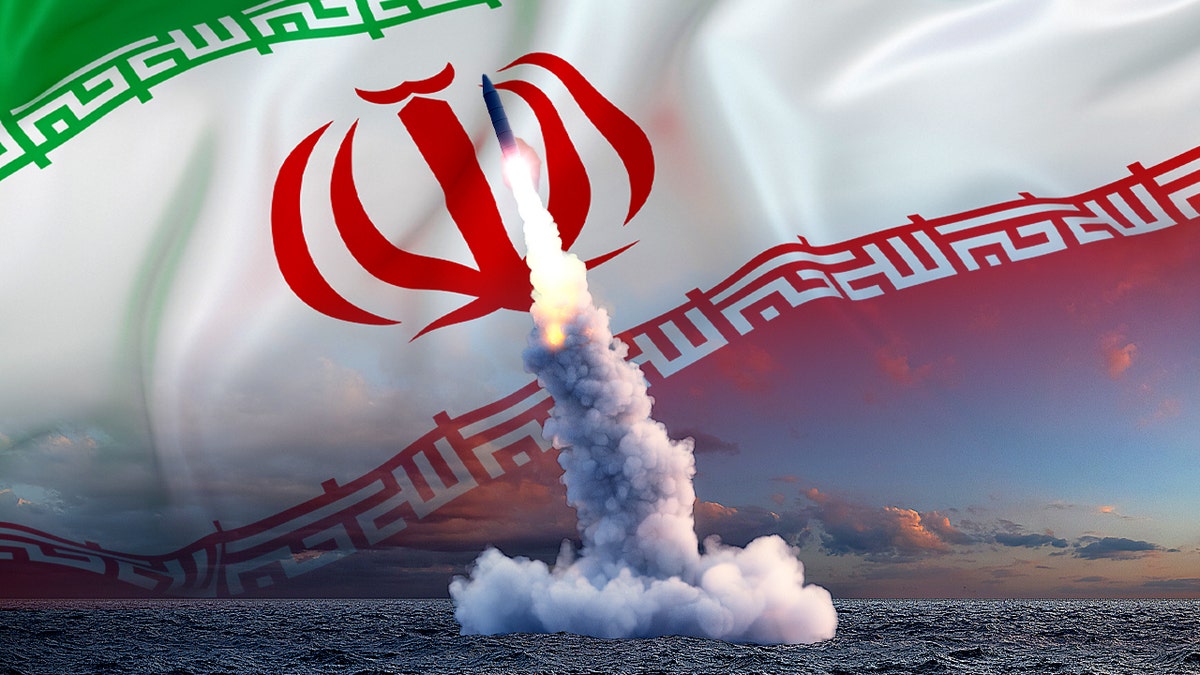
While the rhetoric in the United States focused on the "triumph" of withdrawing from the nuclear deal and tightening the noose, the reality on the ground was shifting. The "war" moved from the debating floor to the gray zones. It moved to the cyber-attacks on infrastructure, the drone strikes on Saudi oil fields, and the quiet, persistent expansion of influence through proxies in Lebanon, Syria, and Yemen.
Victory is a two-way street. If the person you have "defeated" doesn't recognize the loss, you haven't won a war—you’ve just started a more expensive, more dangerous chapter of the same one.
The Architecture of Defiance
The mistake lies in the belief that Iran behaves like a Western corporation. We assume that if the ROI of their foreign policy drops into the red, they will pivot. They will "leverage" their assets and seek a "robust" exit strategy.
They don't.
To understand the core of the conflict, you have to understand the Iranian concept of mazloumiyat—a kind of righteous victimhood that is deeply embedded in the national and religious psyche. In this worldview, being under siege is not a sign of failure; it is a sign of being on the right side of history. The more the pressure mounts, the more it validates the regime’s narrative that the world is out to destroy them.
Imagine you are trying to put out a fire by throwing a blanket over it. If the blanket is thick enough, you might snuff out the flames. But if you leave even a small gap, the heat builds up underneath. Eventually, the pressure becomes so great that when the blanket finally slips, the fire doesn't just return—it explodes.
By declaring the war won while the embers were still glowing, we did exactly that. We walked away from the fire, satisfied with the smoke, while the heat was merely intensifying in the dark.
The Invisible Toll
The cost of this "victory" isn't measured in the speeches given at rallies. It is measured in the erosion of trust and the hardening of hearts.
There was a brief window, years ago, where a generation of young Iranians looked toward the West with a sense of possibility. They wanted to be part of the global conversation. They wanted the "seamless" integration into the world economy that we often take for granted.
But when the "win" involves cutting off their medicine, their travel, and their future, that window doesn't just close. It shatters.
The tragedy of the "victory" narrative is that it treats a living, breathing nation like a problem to be solved rather than a people to be engaged. It assumes that if you push hard enough, the "other" will eventually see reason. But reason is the first thing to die in an atmosphere of constant threat.
The Chessboard and the Street
The disconnect between the declaration and the reality is perhaps most visible in the Strait of Hormuz.
On paper, the U.S. Navy is the most formidable force to ever sail the seas. In a "won war," our dominance should be absolute. Yet, small Iranian fast-boats continue to swarm around billion-dollar destroyers like hornets. They don't need to win a battle to win the moment. They just need to show that they are still there. They just need to prove that the "victory" is a facade.
Every time a drone is launched or a tanker is harassed, the Iranian leadership is sending a message back to the podium in Washington: We were not invited to your victory party.
This is the danger of the narrative of completion. It breeds complacency. It allows us to ignore the ticking of the clock. We think the problem is behind us, so we stop looking for the exits. We stop pursuing the grueling, boring, unglamorous work of diplomacy because we’ve convinced ourselves that the heavy lifting is done.
The Mirror of History
History is littered with the corpses of "final victories."
The human element—the stubborn, irrational, proud streak that exists in every culture—is the one thing that cold geopolitical facts always fail to account for. You can map out the pipelines. You can calculate the GDP. You can count the missiles. But you cannot quantify the resolve of a person who believes they have nothing left to lose.
The Iranian leadership has spent forty years learning how to live in the cracks of the international system. They have turned survival into an art form. While we were busy measuring the success of our "maximum pressure" by the number of zeros lost in their treasury, they were measuring their success by the fact that they were still standing.
That is the fundamental mismatch. One side is playing for a win; the other side is playing for the right to keep playing.
The Weight of the Unfinished
The "war" hasn't ended because the underlying reasons for the conflict haven't been addressed. The map is still the same. The history is still the same. The grievances have only grown deeper and more jagged.
By telling ourselves the war was won, we blinded ourselves to the reality that we are more entangled than ever. We are locked in a room with an opponent who has been told they are dead, yet they continue to breathe, to move, and to plan.
The real danger isn't that the Iranians are strong. The danger is that they are resilient in ways we refuse to acknowledge. We have mistaken a stalemate for a triumph, and in the world of high-stakes power, that is the most expensive mistake you can make.
The tea in the backrooms of Tehran is still hot. The plans are still being drawn. The "victory" exists only in the air between the speaker and the microphone. On the ground, in the dust and the heat, the long, slow, grinding conflict continues, oblivious to the fact that it was supposed to be over.
The most dangerous lie we ever tell ourselves is that the story has reached its end.