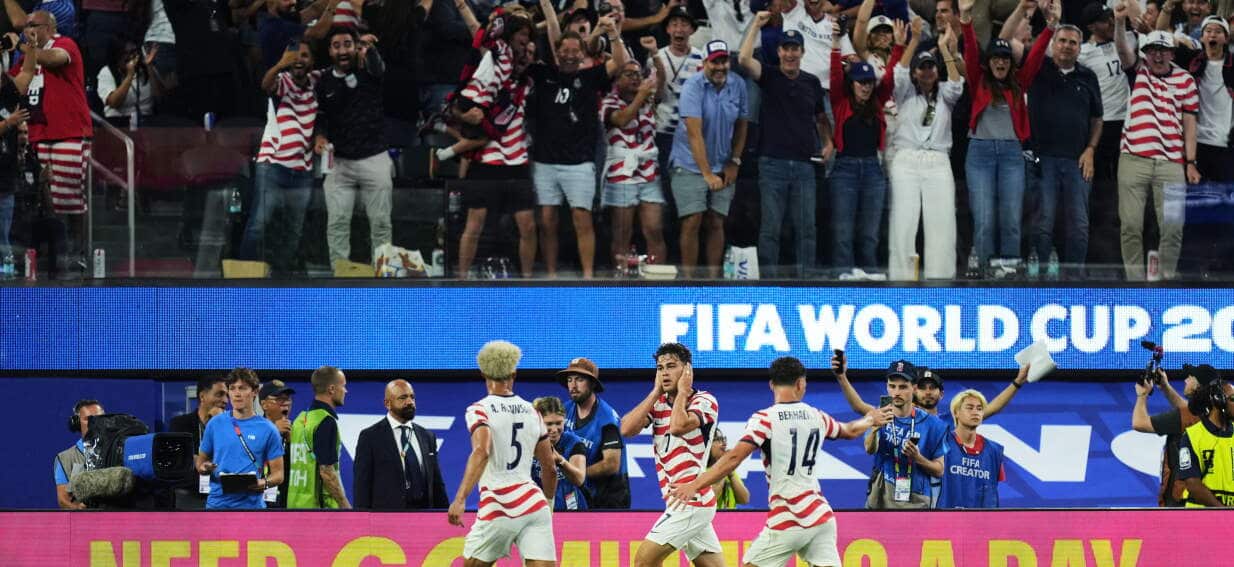
A lopsided scoreline at a major tournament often lies. While casual observers celebrated the United States Men’s National Team and their resounding victory over Paraguay to open Group D play, the performance masked deep structural vulnerabilities that more formidable opponents will ruthlessly exploit. Winning the opening match of a home tournament provides breathing room, but treating this blowout as a tactical masterclass ignores the reality of what actually happened on the pitch. The Americans did not dismantle a defensive powerhouse; they capitalized on a chaotic, undisciplined opponent that collapsed under self-inflicted pressure.
To understand why this victory requires a sober analysis rather than uncritical praise, one must look past the goals.
The US team entered the match under immense scrutiny, tasked with proving they can perform as elite tournament contenders on home soil. They walked away with three points and a boosted goal differential. Yet, a deeper dive into the tactical positioning, transitional defense, and possession metrics reveals that the scoreline flattered a performance that was disjointed for long stretches of the match.
The Midfield Disconnect and the Transition Trap
Against top-tier international opposition, games are won and lost in the central thirds of the pitch. Against Paraguay, the American midfield trio frequently left a chasm between the defensive line and the attacking front three.
During the first half-hour, the US struggled to establish a clean buildup from the back. The central defenders spent too much time passing laterally because the midfielders failed to drop into pockets of space to receive the ball under pressure. When the ball finally did move forward, it bypassed the center of the pitch entirely, forcing the wingers into isolated, low-percentage individual battles on the flanks.
This reliance on individual brilliance over collective structure works when you possess a significant talent advantage. It fails spectacularly against disciplined low blocks or elite pressing teams.
The underlying data shows a worrying trend. The US turned the ball over in the central third multiple times during transition phases. A more clinical opponent would have turned those errors into goals. Paraguay lacked the technical quality to punish these mistakes, routinely misplacing the final pass or rushing their shots from distance. The American back line looked exposed during these sequences, forced into emergency defending because the midfield shield was nonexistent.
The Fullback Dilemma
Modern international football demands that fullbacks act as auxiliary playmakers. In this match, the American fullbacks pushed aggressively high up the pitch, a directive clearly designed to pin Paraguay back.
It worked on the scoresheet, but it created a massive tactical liability. With both fullbacks pushed high simultaneously, the two central defenders were left isolated to cover the entire width of the pitch during counter-attacks.
- The Exposure Zone: The vacated space behind the advancing fullbacks became a playground for Paraguayan wingers early in the game.
- The Recoveries: The central defenders were forced to sprint laterally into wide areas, pulling them out of the penalty box and leaving the center of the defense completely unprotected.
Deconstructing the Goals
The goals that sealed the victory were less about intricate team chemistry and more about capitalizing on catastrophic defensive errors. High-end journalism requires calling a spade a spade. The opening goal came from a set-piece sequence where the Paraguayan marking scheme completely disintegrated, leaving an American attacker completely unmarked at the back post. It was a failure of basic defensive organization rather than an unstoppable offensive design.
Subsequent goals followed a similar pattern. As Paraguay chased the game, they abandoned any semblance of a tactical shape. They stretched the pitch, left massive gaps between their lines, and committed numbers forward with reckless abandon.
The US team deserves credit for being lethal on the counter-attack during these sequences. They exploited the open green grass efficiently. However, breaking down a desperate, tired opponent that has abandoned its defensive shape tells us very little about how this American team will fare against a disciplined side content to sit back, suffocate space, and play for a 1-0 win.
Possession Without Purpose
For significant portions of the second half, the US held a high percentage of possession. To the untrained eye, this looked like total control.
In reality, it was passive possession. The ball moved slowly from side to side, allowing the defensive block to shift comfortably without being pulled out of position. There was a distinct lack of verticality, third-man runs, or quick combination play through the middle. The team frequently settled for speculative crosses into a crowded penalty box, a strategy that yields low conversion rates against physically imposing European or South American defenses.
The Upcoming Tactical Safe Haven is a Myth
The narrative surrounding this team often focuses on their athleticism and youth. Those traits are valuable, but they cannot replace tactical maturity. The group stage of a major tournament is designed to weed out the unprepared, and while the US has essentially secured passage to the knockout rounds, their true test lies ahead.
The coaching staff faces a critical choice before the next kickoff. They can buy into the hype of a blowout victory and maintain the status quo, or they can critically evaluate the tape and address the glaring flaws in their system.
Fixing the midfield spacing must be the priority. The distance between the lines must be compressed. The central midfielders need to operate with greater positional discipline, resisting the urge to chase the ball and instead focusing on occupying space that prevents the opponent from launching immediate counter-attacks.
Furthermore, the attacking rotation requires more fluidity. Relying solely on wingers to beat their markers on the outside makes the offense entirely predictable. The team must find ways to generate central penetration, forcing opposing center-backs to step out of their comfort zones and opening up space for the strikers to exploit.
The scoreboard says the US dominated. The tape says they survived an unpredictable game against an inferior opponent that lacked the tools to punish structural errors. In the knockout stages, those errors become fatal. The luxury of learning from a win is a rare gift in international football. The American squad must take that gift seriously, because the illusion of dominance will vanish the moment they face a team that knows how to punch back.