The mainstream financial press is popping champagne over the latest White House proclamation. The narrative is neat, tidy, and completely wrong. The Strait of Hormuz is declared "toll-free," Iranian crude is supposedly ready to flood the market, and the consensus view says we are entering an era of permanent, low-cost energy security.
It is a beautiful fantasy. It is also a dangerous misreading of how global energy infrastructure, resource nationalism, and OPEC politics actually operate.
The crowd believes that signing a piece of paper instantly translates to millions of barrels of oil seamlessly hitting gas stations in Ohio. They assume geopolitical friction can be turned off like a light switch. I have spent two decades analyzing oil supply chains and advising hedge funds on energy derivatives. If those years taught me anything, it is that the market consistently confuses a political announcement with physical reality.
The reality? The "toll-free" Strait is an illusion. The real costs have just shifted from military escorts to structural, long-term economic friction. Investors selling off their energy positions right now are falling for a classic head-fake.
The Physical Lie of the Immediate Supply Surge
Let’s dismantle the biggest myth first: the idea that Iran can immediately turn on the spigots and crash the global oil price to $40 a barrel permanently.
Mainstream commentators talk about oil production as if it is a digital download. You click a button, and you get it. In the real world, upstream oil infrastructure decays rapidly when it is starved of capital, replacement parts, and international expertise.
Iran has spent years under a crippling sanctions regime. During that time, their fields have suffered from severe pressure depletion. Reservoirs cannot simply be throttled up without risking permanent damage to the geologic formations. To bring dormant wells back online safely requires complex enhanced oil recovery techniques, massive inputs of specialized equipment, and months—if not years—of reservoir engineering.
When the Joint Comprehensive Plan of Action (JCPOA) was implemented back in 2016, the market anticipated an immediate tidal wave of crude. What actually happened? It took nearly a year for Iran to claw back its historical production levels, and a significant portion of that initial volume came from floating storage—sitting on tankers—rather than fresh production. Today, the degradation of their domestic infrastructure is even more pronounced.
Furthermore, the state of global refining capacity completely breaks the "cheap oil" thesis.
- Crude Chemistry Matters: Oil is not a homogenous commodity. Iranian Heavy is sour, sulfur-rich crude.
- Refinery Bottlenecks: Complex refineries on the US Gulf Coast or in Asia cannot just switch from light, sweet domestic shale to heavy, sour imports without massive adjustments to their coking and hydrotreating units.
- The Bottom Line: A sudden influx of heavy crude creates a localized glut of a specific grade, while doing very little to lower the price of the refined products—like diesel and jet fuel—that actually drive the global economy.
Why OPEC Will Never Allow a Free Market Run
The competitor piece assumes OPEC, led by Saudi Arabia, will just sit idly by while a historic rival floods the market and erodes their market share. This ignores the basic mechanics of cartel behavior and domestic fiscal break-even prices.
Saudi Arabia needs oil to stay at a certain price threshold to fund its massive economic diversification projects, such as Vision 2030. The International Monetary Fund (IMF) has repeatedly pegged Riyadh’s fiscal break-even oil price well above $80 a barrel.
Fiscal Break-Even Oil Prices (Estimated)
| Country      | Estimated Break-Even Price (per Barrel) |
|--------------|-----------------------------------------|
| Saudi Arabia | $83 - $85                               |
| UAE          | $65 - $68                               |
| Iran         | $90+ (due to structural inflation)      |
If Iranian crude starts entering the market in volume, OPEC+ possesses the exact mechanism needed to neutralize it: quota management. The cartel has spent the last five years perfecting the art of defensive production cuts to defend a price floor. They will not hesitate to squeeze supply elsewhere to offset Iranian volumes.
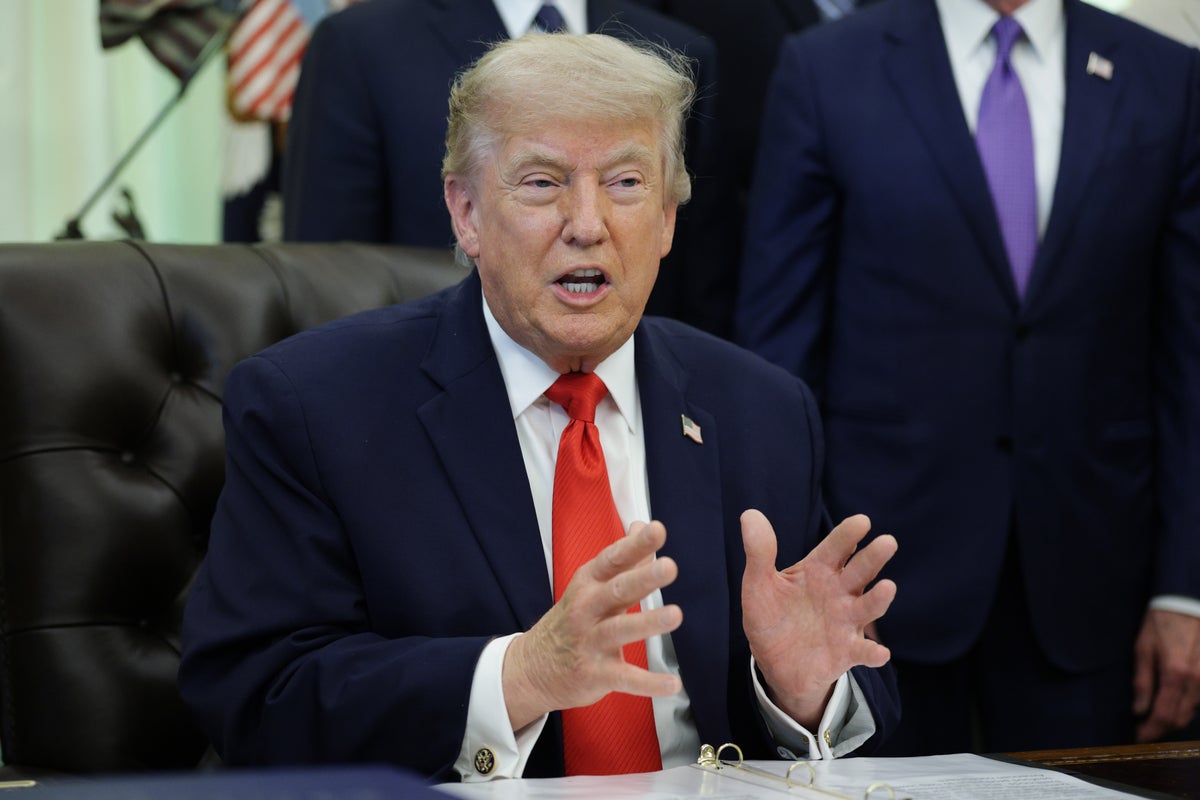
To believe that a Trump-brokered deal creates a permanent "toll-free" paradise is to misunderstand the fundamental motivation of petrostates. They do not optimize for volume; they optimize for state revenue. A lower price per barrel multiplied by higher volume rarely equals fiscal stability for these regimes.
The False Promise of the Toll-Free Strait
The headline proudly boasts that the Strait of Hormuz is now "toll-free." This is a fundamental misunderstanding of maritime logistics and geopolitical risk insurance.
Just because a political agreement states that shipping lanes are open does not mean Lloyd's of London instantly drops its war risk premiums. Insurance underwriters do not operate on political promises; they operate on historical data and hard actuarial risk.
"A signature on a treaty does not remove the asymmetric threat of drone swarms, limpet mines, or state-backed cyber warfare on maritime port infrastructure."
The shadow infrastructure of Middle Eastern proxy conflicts remains entirely intact. The tension between regional actors cannot be erased by a single diplomatic breakthrough in Washington. Shipping companies will continue to pay elevated premiums to transit the Bab el-Mandeb and the Strait of Hormuz because the underlying threat matrix has not changed.
Consider the mechanics of maritime transport:
- War Risk Surcharges: These fees are tacked on per voyage based on real-time threat assessments, not diplomatic handshakes.
- Reinsurance Crises: If a single rogue actor violates the agreement with a localized attack, the entire reinsurance market spikes instantly, rendering the "toll-free" proclamation obsolete overnight.
- Freight Rates: The demand for tankers capable of moving Iranian crude will drive up global dirty tanker rates, increasing the landed cost of oil regardless of the nominal commodity price at the wellhead.
Investors who dump long-term energy infrastructure equities based on the assumption of friction-free shipping lanes are misunderstanding the structural realities of global trade.
The Unintended Consequence: Killing the US Shale Safety Valve
The true danger of this deal isn't that it floods the world with cheap oil. The danger is that the perception of a permanent supply glut destroys the capital expenditure plans of domestic US shale producers.
For the past decade, US shale has acted as the global swing producer. When prices rise, American operators rig up and drill out short-cycle wells, capping the upside of global price spikes. But domestic producers operate on private capital, not state treasuries. They require price predictability.
If Wall Street buys into the myth of endless Iranian oil, capital flight from the Permian and Bakken basins will accelerate. Exploration and production (E&P) companies will face even higher hurdles to secure debt and equity financing. They will stop drilling.
Imagine a scenario where US production contracts by 1.5 million barrels per day because operators refuse to compete with the ghost of Iranian supply. Two years from now, when the Iranian infrastructure bottlenecks prove insurmountable and their production plateaus far below expectations, the global market will suddenly find itself without its American safety valve.
By celebrating the apparent demise of high oil prices today, the market is actively sowing the seeds for the next structural energy crisis.
Dismantling the "People Also Ask" Delusions
Let us address the deeply flawed premises floating around the financial internet right now.
Will gas prices drop to two dollars a gallon because of this deal?
Absolutely not. Retail gasoline prices are decoupled from raw crude futures by a massive bottleneck in domestic refining capacity and environmental regulatory compliance. The United States has not built a major greenfield refinery with significant capacity since 1977. We are running existing plants at 90%+ utilization just to keep up with current demand. You can dump a sea of raw Iranian crude into the ocean; if you cannot refine it into gasoline efficiently, prices at the pump remain sticky.
Does this deal make green energy investments obsolete?
The opposite is true. When fossil fuel prices artificially depress due to political announcements, it starves traditional oil and gas projects of long-term capital. This lack of investment guarantees an supply crunch down the road. Forward-looking capital uses these temporary dips to accumulate transition assets and high-quality infrastructure because they know the structural supply deficit remains unsolved.
Is the petrodollar completely secure now?
The competitor pieces imply this deal re-anchors American hegemony over global energy trade. Look closer at the mechanics. Iran has already established deep economic integration with non-Western clearing systems. Any crude they sell to China or India will likely bypass Western banking systems entirely, using local currencies or digital settlement mechanisms. This deal does not save the petrodollar; it legitimizes the multi-currency pricing models that have been gaining traction across Eurasia.
The Actionable Reality
Stop trading the headlines. The smart money is not shorting oil right now; the smart money is looking for the structural mispricing this announcement creates.
The downside risk of this deal is completely priced in. The structural upside—driven by refining constraints, underinvestment in domestic drilling, and the inevitable reality check of Iranian production limits—is completely ignored.
Position your portfolio for the friction that politics cannot fix. Buy the midstream infrastructure companies that control the actual steel in the ground. Accumulate the service providers who will be paid premiums to fix the very fields everyone assumes are ready to pump tomorrow.
The politicians have had their say. Now the laws of physics, chemistry, and geology will take over.