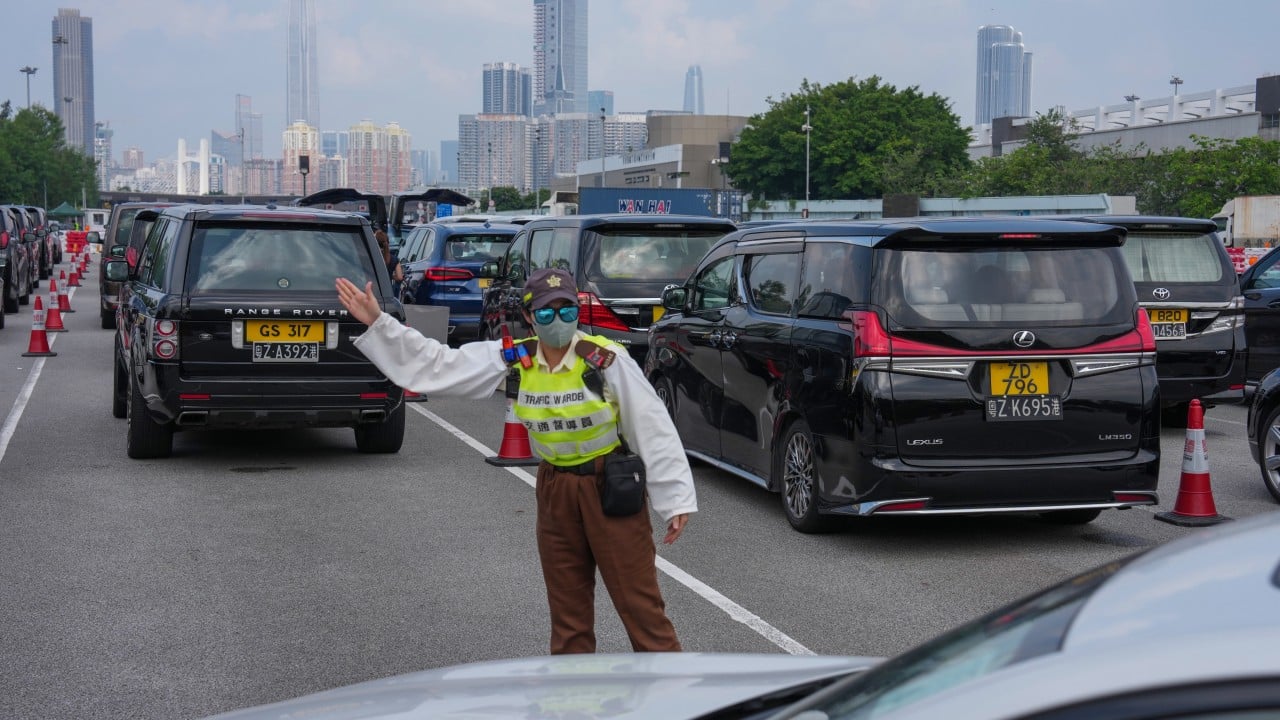
Anyone who has tried crossing between Shenzhen and Hong Kong late on a Sunday night knows the exact feeling of dread when brake lights stretch back toward San Tin Highway. Hong Kong authorities are officially moving to overhaul traffic management at Huanggang Port following severe weekend gridlock, and honestly, the intervention couldn't come soon enough.
For months, cross-boundary commuters, tour operators, and late-night partygoers have treated the Lok Ma Chau–Huanggang corridor like a pressure cooker waiting to blow. When peak weekend return waves hit the narrow approach roads, a single stalled tour coach or confused rideshare driver turns a twenty-minute border hop into a two-hour ordeal. The Transport Department and Hong Kong Police Force finally acknowledged that reactive crowd control isn't cutting it anymore.
What Actually Broke Down at the Lok Ma Chau Crossing
To understand why the traffic management overhaul at Huanggang Port became unavoidable, you have to look at the physical geometry of the crossing. Unlike Shenzhen Bay Port, which features sprawling, modern customs plazas built specifically for high-volume vehicular throughput, the Hong Kong side of the Huanggang crossing operates through the older Lok Ma Chau Control Point.
It's a bottleneck by design. Cross-boundary coaches, yellow shuttle buses (commonly known as the Huang Bus), private cars with dual Guangdong-Hong Kong plates, and local taxis all converge onto San Sham Road before funnelling toward the Lok Ma Chau Bridge.
During weekday mornings, commuter flow is predictable. Weekend nights tell a completely different story.
Huanggang is the only land boundary control point between Hong Kong and Shenzhen operating 24 hours a day for both passengers and private vehicles. That single fact makes it the default safety valve for everyone who misses the last MTR train at Lo Wu or Lok Ma Chau Spur Line. When concerts, major sporting events, or holiday shopping sprees wrap up in Shenzhen, tens of thousands of travelers head straight for Huanggang at the exact same window between 10:00 PM and 1:00 AM.
The breaking point happens when northbound and southbound surges overlap, or when private hire vehicles linger illegally near the Lok Ma Chau Public Transport Interchange waiting for fares. Once San Sham Road locks up, emergency vehicles struggle to get through, and buses already cleared through Mainland customs get trapped on the bridge itself.
Inside the New Huanggang Port Traffic Overhaul
The upcoming changes focus on physical separation, stricter enforcement against illegal pickup zones, and dynamic lane allocation during peak weekend windows. Rather than waiting for tailbacks to reach the San Tin Highway interchange before deploying officers, authorities are shifting toward preemptive traffic segregation.
Here is how the revised operational plan targets the worst choke points:
- Dedicated Public Transport Priority Lanes: Cross-boundary coaches and franchised shuttle buses carry the vast majority of foot passengers, yet they routinely get stuck behind single-occupancy private cars. Separating high-capacity buses from private vehicles earlier along the approach corridor prevents one bottleneck from paralyzing the entire transit network.
- Zero-Tolerance Enforcement on San Sham Road: Illegal stopping by private cars and unauthorized cross-border vans has been a persistent headache. Transport officials and police are ramping up automated camera enforcement and physical barriers to stop drivers from treating approach lanes as makeshift waiting bays.
- Real-Time Tidal Flow Adjustments: Because traffic surges heavily in one direction depending on the hour—southbound into Hong Kong on Sunday evenings, northbound into Shenzhen on Friday nights and Saturday mornings—traffic engineers are introducing flexible lane dividers that adapt to live queue sensors.
- Improved Signage and Pre-Arrival Routing: Drivers unfamiliar with the Lok Ma Chau road network often make last-minute lane changes right before the customs kiosks. Clearer overhead gantries miles ahead of the exit aim to sort permit holders, goods vehicles, and passenger shuttles before they reach the narrowest sections.
Why Construction and Redevelopment Complicate Everything
You can't talk about Huanggang Port traffic without mentioning the massive elephant sitting right across the Shenzhen River. Shenzhen is actively rebuilding the entire Huanggang Port complex into a modern, co-located joint inspection facility where travelers clear both Mainland and Hong Kong immigration under one roof.
That long-term upgrade will eventually eliminate the need for passengers to board shuttle buses just to cross the bridge between two separate checkpoints. When the new co-located facility opens, clearance times will drop dramatically.
Right now, though, we are living through the messy middle.
Active construction zones on the Shenzhen side mean temporary road alignments, shifting bus bays, and reduced staging capacity for coaches waiting to enter Hong Kong. Whenever Shenzhen's customs plaza backs up due to construction constraints, that congestion ripples backward across the Lok Ma Chau Bridge straight into Hong Kong's road network. You can't fix one side of a bridge if the other end is squeezed down to two temporary lanes.
What Most Commuters Get Wrong About Crossing Late at Night
If you've spent enough time navigating Greater Bay Area border crossings, you notice people making the same avoidable mistakes every weekend. Most travelers assume that because Huanggang is open 24 hours, crossing at midnight guarantees smooth sailing.
In reality, midnight is often the single worst time to show up.
Between 11:30 PM and 1:30 AM, every other land border—Lo Wu, Futian, Shenzhen Bay, and Liantang—is closed. Every single late-night traveler in the western and central corridors gets funneled into Huanggang simultaneously. Meanwhile, customs staffing naturally scales down from daytime peak levels, and cross-border bus frequencies adjust to overnight schedules.
Another common misconception is that taking a cross-boundary private car or point-to-point limousine bypasses the queues. While private vehicles don't have to disembark at the intermediate shuttle terminal, they still share the exact same approach roads. When San Sham Road gridlocks, a luxury seven-seater sits in the exact same standstill as a commuter bus.
How This Compares to Other Shenzhen–Hong Kong Checkpoints
The strain on Huanggang highlights a broader imbalance across the border network. Since full quarantine-free travel resumed, weekend northbound travel by Hong Kong residents—often called "northbound consumption"—has fundamentally reshaped regional traffic patterns.
Shenzhen Bay Port handles massive volume, yet it closes at midnight for passengers, pushing late-night spillover straight toward Huanggang. Liantang/Heung Yuen Wai Port has become wildly popular for drivers and cyclists in the eastern New Territories, frequently hitting car park capacity on weekends, yet it closes even earlier at 10:00 PM.
Even the Hong Kong-Zhuhai-Macao Bridge operates 24 hours, but it serves the western Pearl River Delta rather than central Shenzhen. Until Shenzhen Bay or Liantang extends passenger operating hours—a move lawmakers and transport groups have repeatedly lobbied for—Huanggang remains the sole pressure relief valve for overnight road traffic.
Practical Ways to Beat the Weekend Bottleneck Right Now
While the Transport Department rolls out its revised road management measures and enforcement sweeps, travelers don't have to sit helplessly in gridlock. A few tactical adjustments make a massive difference on Friday and Sunday nights:
- Aim for the 10:15 PM Cutoff at Other Ports: If you're returning to Hong Kong on a Sunday night, catch the last East Rail Line train to Lo Wu or Lok Ma Chau Spur Line before they close around midnight. Rail crossings have fixed track capacity and never suffer from road gridlock.
- Use the 2:00 AM Window if Traveling Overnight: If you genuinely need to use Huanggang at night, avoid the 11:30 PM to 1:30 AM rush entirely. By 2:00 AM, the post-concert and late-dinner crowds have cleared, and shuttle buses move straight through customs without queuing.
- Check Live Transport Department Feeds Before Entering San Tin Highway: The Hong Kong Transport Department's HKeMobility app provides live camera feeds of San Sham Road and the Lok Ma Chau Control Point. If you see brake lights stacking past the San Tin interchange, divert toward Lok Ma Chau Spur Line or wait out the surge in Shenzhen.
- Book Direct Cross-Boundary Coaches Over Transfer Shuttles: Direct coaches from major Shenzhen hubs like Futian or Coastal City drop you at urban Hong Kong terminals like Mong Kok, Wan Chai, or Prince Edward. While they use the same border bridge, dedicated coach lanes at the terminal often clear faster than the public Huang Bus queues during peak surges.
Hong Kong's traffic overhaul at Huanggang Port addresses the immediate symptoms of poor lane discipline and choked approach roads, but lasting relief depends on synchronization with Shenzhen's ongoing port reconstruction. Until that new joint terminal opens its doors, smart timing and live traffic checks remain your best defense against spending Sunday night parked on San Sham Road.