In 1931, the world smelled of coal smoke, wet wool, and copper pennies. People walked a little slower because there was nowhere else to go, and a thirty-eight-thousand-dollar price tag was not merely a cost of living; it was an astronomical bet on the permanence of stone.
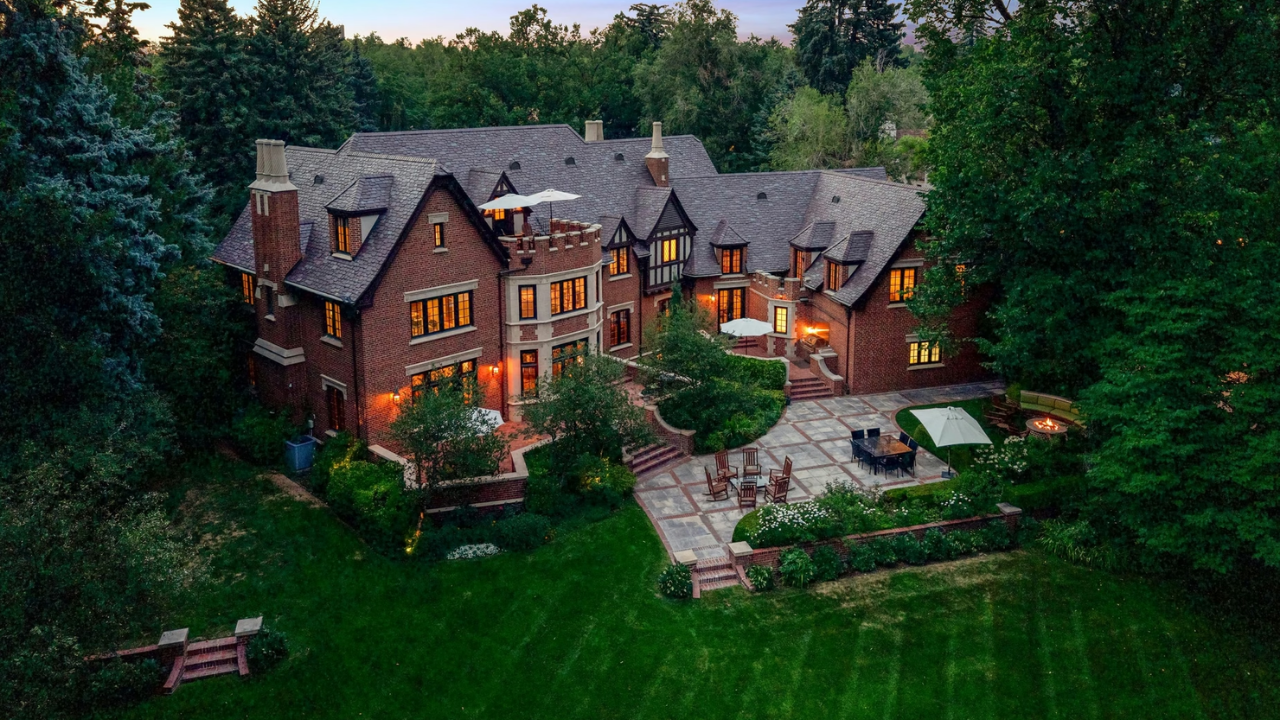
Outside, the Great Depression tightened its grip around the throat of American industry. Inside the rising skeleton of a Denver estate, masons placed heavy timber beams into mortar with deliberate, exhausted precision. They were building a Tudor revival. They had no way of knowing that the slate roof they nailed down would outlive the financial system that funded it, let alone the men who hammered the nails.
Thirty-eight thousand dollars.
Today, that number sounds like a rounding error on a kitchen renovation. But in the autumn of 1931, it represented a small fortune, a monument carved out of economic panic. Master craftsmen worked timber and leaded glass by hand, carving arches that echoed English manors built centuries prior. They weren't just constructing a shelter. They were building defiance against the vacuum outside.
Time passed. The world changed its clothes several times over. Mid-century modernism happened. Neon signs flickered and died. Synthesizers replaced acoustic guitars. Corporations swallowed neighborhoods.
And then came Tom Shane.
To most, the name is synonymous with radio commercials, a familiar, smooth voice promising that friend in the diamond business. But behind the commercial cadence was a man who looked at a historical Denver relic not as a museum piece, but as a backdrop for living. When Shane acquired the estate, he inherited more than just leaded windows and grand staircases. He inherited the weight of decades.
Houses have memories, though we rarely credit them with the capacity. Every slammed door during a family argument leaves an imperceptible vibration in the lath and plaster. Every whispered conversation near the hearth settles into the floorboards. When you walk through a home built nearly a century ago, you are walking through the accumulated ghosts of previous iterations.
Consider the kitchen. In 1931, it was a place of hidden labor, dominated by a cast-iron stove and a maid's pantry. By the time Shane walked these halls, it had likely evolved into a modern culinary staging ground, fitted with stainless steel and copper pots that reflected the changing rhythms of American life. The walls watched it all. They watched the fashion swing from flapper dresses to bell-bottoms, from minimalist chic to maximalist excess.
Now, the estate sits on the market with a price tag of $10.75 million.
That number is staggering. It forces us to ask a deeply uncomfortable question about what we are actually buying when we purchase real estate. Are we buying square footage? Are we paying for heated bathroom floors and temperature-controlled wine cellars?
No.
At ten million dollars, you are buying an alibi against time. You are buying the illusion that you can step outside of the modern blur and anchor yourself to something older, heavier, and more permanent than a tweet or a stock ticker.
Stand in the grand living room as the sun begins to drop behind the Rocky Mountains. The light hits the leaded glass panes, refracting amber and purple across the dark oak paneling. For a second, the year 2026 evaporates. You can almost hear the scratch of a 78 RPM record playing in the corner. You can smell the faint trace of pipe tobacco and woodsmoke from an era before air conditioning filtered out the seasons.
This is why old houses command such staggering figures. They sell us our own mortality wrapped in English Tudor architecture. They whisper a promise that long after we have packed our boxes and moved on to whatever comes next, these walls will still stand. The timber will still hold. The slate roof will still shed the rain.
The price is high because eternity, even a rented version of it spanning a few decades, has always demanded a premium.
The hammer falls. The listing goes live. Somewhere out there, a buyer is waiting, ready to trade millions of modern dollars for a handful of 1931 stone.