The smell of a basement after a flood is something that never truly leaves your nose. It is not just the scent of damp earth or rotting drywall. It is the smell of security evaporating. It is the unmistakable, heavy aroma of a lifetime of collected memories turning into a sodden, unrecoverable weight.
In Saskatchewan, where the sky usually dominates the landscape, the earth recently decided to take over.
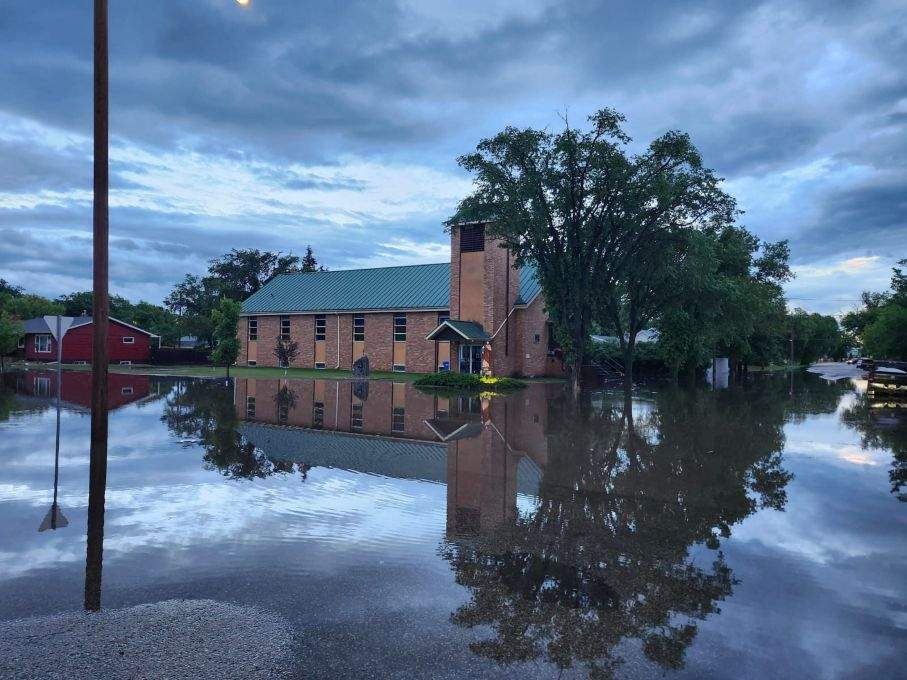
When the waters rose across the province's low-lying communities, there was no dramatic, cinematic wave. It did not look like a Hollywood disaster film. Instead, it was a slow, agonizingly quiet invasion. The creeks swelled past their banks, the coulees filled like clogged drains, and within hours, the prairie horizon—usually an endless stretch of golden wheat and living skies—became a mirror of muddy, unrelenting water. Far as the eye could see, the land was swallowed.
But the real story does not belong to the water. It belongs to the people who were left behind to look at the mud.
The Weight of Wet Drywall
Consider a man standing in a rubber boots on a Tuesday morning, staring at a pile of ruined photo albums on his front lawn. Let us call him Arthur. Arthur is a hypothetical composite of the dozens of homeowners in small-town Saskatchewan who woke up to find their life savings floating in six inches of murky runoff, but his reality is entirely genuine.
Arthur did not lose his life. He did not even lose his house, technically. The structure still stands.
Yet, everything that made that structure a home is currently sitting in a dumpster at the end of the driveway. The provincial emergency reports will summarize this event in cold, bureaucratic terms: millimetres of rainfall, cresting rivers, infrastructure damage, and estimated dollar amounts for disaster assistance. They will talk about the provincial disaster assistance program and the mobilization of municipal pumps.
What the reports omit is the sheer, physical exhaustion of the cleanup.
Cleaning up after a flood is a brutal, manual ritual. You have to cut the drywall exactly four feet high to ensure the moisture has not crept further up the studs. You have to rip up carpet that weighs three times its normal weight because it is saturated with river water and silt. Every single item must be categorized, photographed for insurance, and thrown away. It is a relentless assembly line of heartbreak.
The Illusion of the Dry Prairie
There is a common misconception that the Canadian Prairies are a dry, flat expanse immune to the water crises that plague coastal cities or deep river valleys. This is a dangerous misunderstanding of geography.
Saskatchewan’s terrain is defined by its glacial history. The land is dotted with depressions, sloughs, and small river systems that can transform from trickling streams into raging torrents in a matter of days if the winter snowpack melts too fast or a summer storm dumps a month’s worth of rain in twenty-four hours.
When the soil reaches its saturation point, it stops acting like a sponge. It acts like concrete.
Every drop of rain that falls after that point has nowhere to go but sideways, filling basement windows, overtaking grid roads, and cutting off isolated rural communities from the rest of the world. It is a reminder of how fragile our engineered world truly is. We build roads and towns on the assumption that nature will behave within predictable margins. When those margins are breached, the isolation is immediate.
The Invisible Stakes of Community
When a crisis hits a major metropolitan area, the response is institutional. Heavy machinery arrives, emergency crews block off streets, and a professionalized apparatus swings into motion.
In a rural Saskatchewan community, the response is deeply personal.
The people operating the sandbag stations are your neighbors. The person driving the tractor to dig a trench across a grid road to divert water away from the elementary school is the local mechanic. There is no anonymity in a prairie flood. If a basement fills with water, the people helping to pump it out are the same people you will see at the grocery store next week.
This hyper-local reliance creates a unique emotional dynamic. There is a profound sense of solidarity, yes, but there is also a quiet, unspoken pressure. Everyone is tired. Everyone’s hands are blistered from shoveling sand. The community operates on a deficit of sleep and an abundance of coffee, driven by the knowledge that if they do not look out for each other, no one else will arrive in time to do it for them.
The Economics of a Muddy Floor
The financial impact of localized flooding extends far beyond the immediate cost of reconstruction. The true burden lies in the uncertainty of what comes next.
Insurance policies for overland flooding are notoriously complex. Many homeowners discover too late that their standard policy does not cover the specific type of water that entered their home. Was it groundwater rising? Was it a backed-up sewer? Was it overland flow from a nearby creek? The definitions matter immensely to a claims adjuster, but they mean absolutely nothing to the family watching their furnace submerge.
Even when provincial disaster assistance steps in, it is designed to restore property to a basic, functional state. It does not replace the antique dresser passed down through three generations. It does not pay for the lost wages of a self-employed contractor who had to stop working for two weeks to save his own home. The economic ripple effects move quietly through a small town, slowing down local spending and straining municipal budgets that were already stretched thin.
The Rhythm of Recovery
Days turn into weeks. The water eventually recedes, leaving behind a crust of gray silt and a lingering dampness in the air. The headlines move on to other stories, other crises.
But the cleanup continues long after the cameras have left.
The sound of industrial fans becomes the background noise of daily life. They hum constantly, day and night, a mechanical reminder of the invisible moisture still trapped inside the walls. People walk through their neighborhoods and notice the subtle shifts—the sagging porches, the warped doors that no longer close properly, the sudden appearance of mold in a closet that seemed dry a week ago.
Recovery is not an event. It is a slow, tedious process of reclamation.
It requires a stubborn kind of resilience that is familiar to anyone who chooses to make their living on the plains. You adapt to the weather, you rebuild what was broken, and you look at the sky with a little more suspicion than you did before.
The next time the rain begins to fall against the windowpane, the sound will not be soothing. It will be a prompt to check the basement stairs. It will be a reminder of the fragility of the ground beneath our feet. Arthur will look out over the vast, open horizon, seeing the beauty of the vast sky, but always remembering the day the water rose to meet it.