Efficiency is the favorite hiding spot for bureaucrats who have run out of ideas.
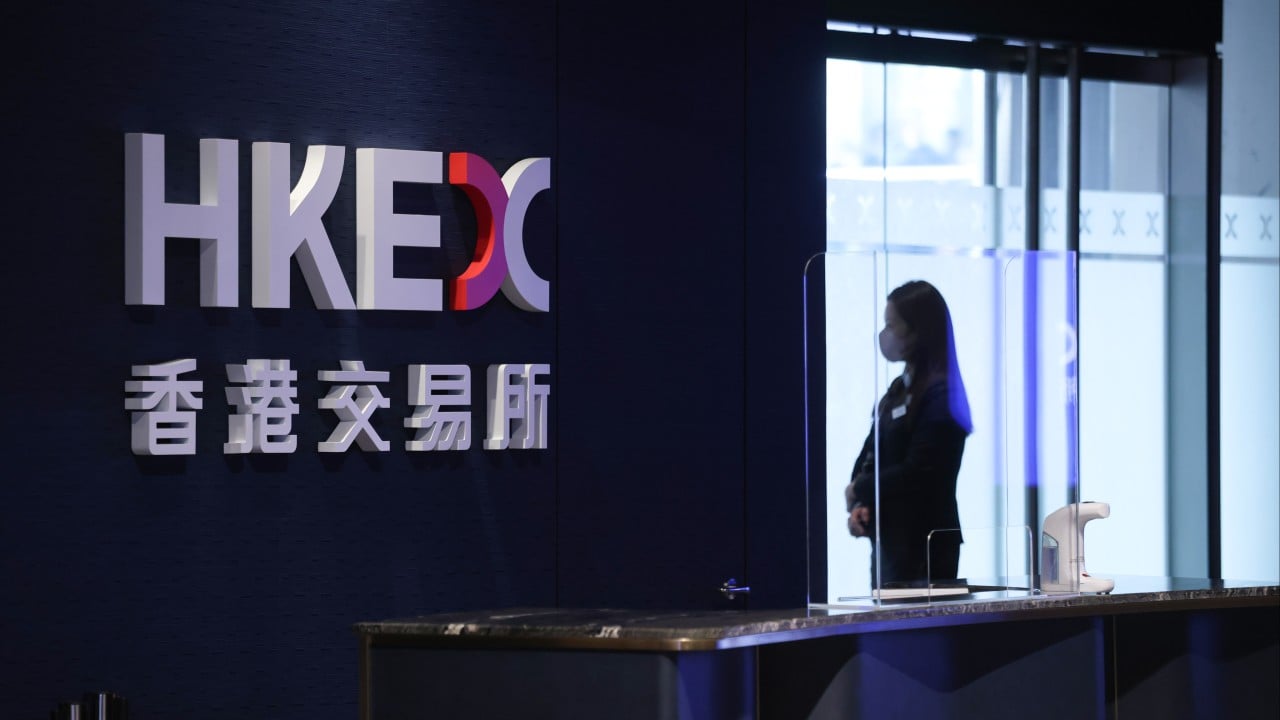
The Hong Kong Exchanges and Clearing (HKEX) is currently patting itself on the back for proposing a shift from T+2 to T+1 settlement cycles. The narrative is predictably dull: shortening the time between a trade and the exchange of cash for shares will "boost the city’s financial profile" and "reduce systemic risk." It sounds modern. It sounds fast. It is also a fundamental misunderstanding of why capital is actually fleeing the region.
Speed is not a substitute for liquidity. You can settle a trade in five seconds, but if there is nobody on the other side of the book, you are just accelerating the velocity of a vacuum.
The Liquidity Illusion
The "lazy consensus" among exchange operators is that technical friction is the primary barrier to entry. They look at the United States—which moved to T+1 in May 2024—and assume that mimicking the plumbing will mimic the prestige.
This is a category error.
Wall Street moved to T+1 because it had to manage the sheer, violent volume of retail and institutional flow that was stressing collateral requirements. Hong Kong is facing the opposite problem. Turnover is anemic. The Hang Seng Index has spent years in a horizontal crawl while the rest of the world’s indices hit record highs.
Shortening the settlement cycle in a low-liquidity environment does not attract new investors. It actually punishes the ones who are left. When you compress the time to settle, you narrow the window for currency conversion and funding. For a global fund manager sitting in London or New York, a T+1 requirement in Hong Kong isn't a "feature." It is a massive operational headache that requires them to pre-fund HKD positions or scramble in the middle of the night to fix broken trades.
If you make it harder to trade, people trade less. It is that simple.
The Hidden Cost of "Efficiency"
Let’s talk about the math that the HKEX proposal glosses over. In a T+2 world, a custodian bank has a 48-hour buffer to reconcile discrepancies. In a T+1 world, that buffer evaporates.
- The Funding Gap: International investors must navigate the gap between their home currency and the Hong Kong Dollar. Under T+1, the window to execute FX trades closes almost immediately after the equity trade.
- The Fail Rate: When the US moved to T+1, fail rates didn't plummet; they shifted. Errors that were previously caught in the "middle day" now become hard fails.
- The Tech Debt: Small and medium-sized brokerages cannot afford the automated straight-through processing (STP) systems required to survive a T+1 environment.
By forcing this transition, the HKEX is effectively gentrifying its own ecosystem. It is pricing out the smaller participants who provide essential niche liquidity, leaving the floor to a handful of massive investment banks that already have the infrastructure. You aren't "democratizing" the market; you are oligopolizing it.
Why the US Model Fails in Asia
The proponents of this move love to cite the SEC. "The US did it, so we must do it to remain competitive."
This ignores the reality of time zones. The US is a self-contained ecosystem. The vast majority of its participants operate within the same three time zones. Hong Kong is a bridge. Its value proposition is—or was—its ability to connect Western capital with Eastern assets.
When a New York-based fund buys a stock in Hong Kong on a T+1 basis, the trade happens at 3:00 AM Eastern Time. By the time that trader wakes up and checks their coffee, the settlement window is already slamming shut.
Imagine a scenario where a $500 million trade fails because of a simple clerical error in a power of attorney document. Under T+2, you have a day to pick up the phone. Under T+1, the trade is dead, the collateral is seized, and the reputation of the exchange takes another hit.
The HKEX is trying to build a high-speed rail line to a city that people are currently trying to leave. The problem isn't the speed of the train; it's the destination.
The Settlement Trap: A Risk Transfer, Not a Risk Reduction
The biggest lie in fintech is that "faster equals safer."
The argument for T+1 is that it reduces "counterparty risk." This is technically true—the less time a trade sits open, the less chance one party goes bust. But risk is like energy; it is never destroyed, only transformed.
By shrinking the settlement cycle, you are trading counterparty risk for operational risk.
You are betting that your software, your APIs, and your cross-border banking rails will work perfectly 100% of the time. We saw what happened during the "flash crashes" of the last decade. High-frequency environments don't stop disasters; they just make them happen too fast for humans to intervene.
In a T+2 environment, the "dead day" acts as a circuit breaker. It provides a moment of institutional sobriety. Removing it in a market that is already jittery and prone to sudden regulatory shifts from the mainland is an act of bravado, not strategy.
What No One Admits About "Competitive Profiles"
The HKEX claims this will "strengthen Hong Kong’s position as a global financial hub."
Look at the data. Investors aren't avoiding Hong Kong because it takes two days to settle a trade. They are avoiding it because of:
- Increasingly opaque regulatory environments.
- The decoupling of the US and Chinese economies.
- A lack of high-growth IPOs that aren't just state-backed enterprises.
Fixing the settlement cycle to attract investors is like a restaurant owner changing the font on the menu because the food is tasteless. It’s "busy work" for executives. It allows them to tell shareholders they are "innovating" without having to address the structural, political, and economic rot that actually dictates capital flow.
The Superior Path: Optionality over Mandates
If the HKEX actually wanted to lead, it wouldn't mandate T+1. It would build the infrastructure for Atomic Settlement (T+0) via distributed ledger technology and make it an optional fast-lane for those who want it.
Instead of a blanket rule that hurts international participants, they should offer a tiered system.
- The Standard Track (T+2): For global funds managing complex FX and compliance.
- The Fast Track (T+0): For high-frequency traders and local institutions with pre-funded HKD accounts.
This provides actual value. It acknowledges that not all participants are the same. It treats the market like a diverse ecosystem rather than a monolithic block of code.
The Brutal Reality of "Modernization"
I have seen exchanges spend hundreds of millions on "modernization" projects that ended up being nothing more than expensive ways to do the same thing they were already doing.
The move to T+1 is a distraction. It is a way to look productive while the actual house is on fire. The "financial profile" of a city is built on trust, transparency, and the presence of unique assets. You cannot code your way out of a crisis of confidence.
If you are an investor, do not be fooled by the PR. Faster settlement does not mean better returns. It just means you lose your money more efficiently.
Stop pretending that shaving 24 hours off a back-office process is a visionary move. It is a desperate attempt to stay relevant by copying a neighbor's homework without understanding the subject matter.
The exchange doesn't need faster pipes. It needs something worth flowing through them.