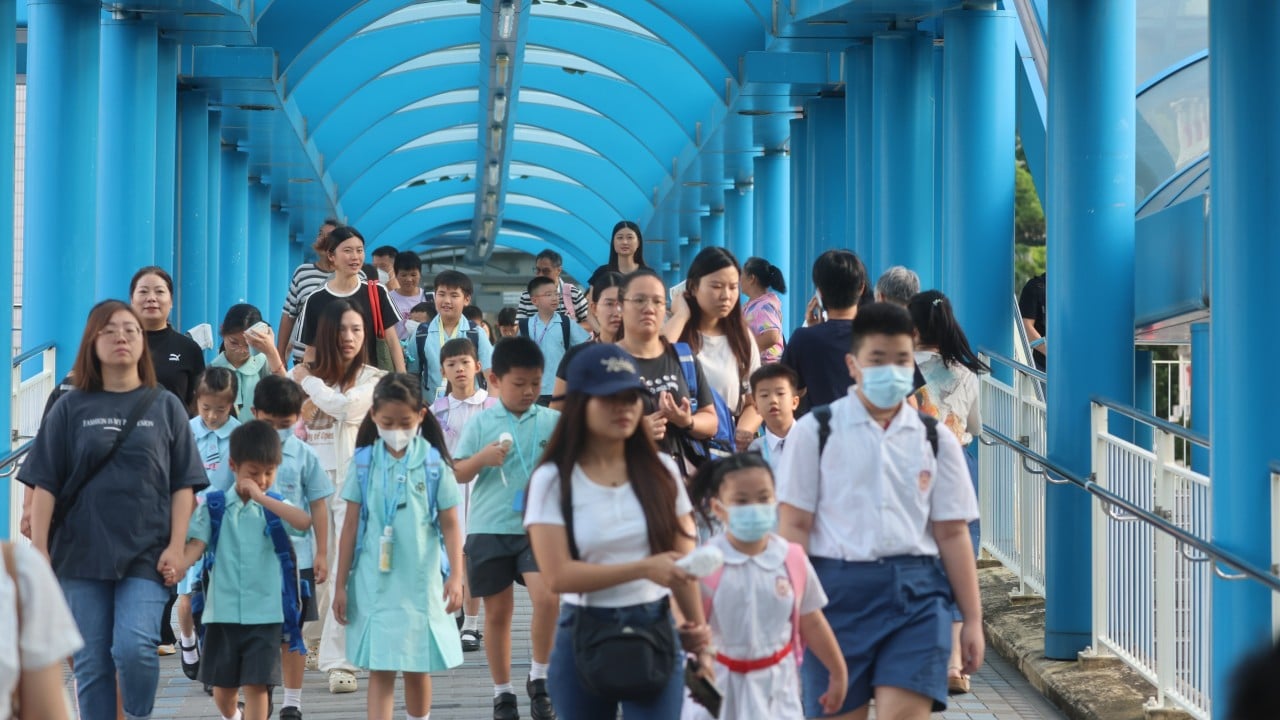
The headlines are celebrating right on cue. Mainstream local media outlets are trumpeting the latest Secondary School Places Allocation results as a triumph, boasting that 74 percent of students secured their absolute first choice, matching previous record highs. Parents are breathing sighs of relief. Bureaucrats are congratulating themselves on a stable, efficient system.
It is a comforting narrative. It is also completely fraudulent.
Celebrating a high first-choice satisfaction rate in Hong Kong’s current educational climate is like celebrating a high occupancy rate in a burning building because the doors happen to be unlocked. The number looks fantastic on a government spreadsheet, but it masks a dark reality of demographic collapse, systemic panic, and a generation of parents who have been conditioned to self-censor their children's ambitions.
The 74 percent figure is not a badge of honor. It is a lagging indicator of a system that is shrinking, thinning out, and forcing families to play a high-stakes game of strategic surrender.
The Demographic Mirage
To understand why these numbers are a mirage, look at the brutal mathematics of population decline. Hong Kong has been grappling with a massive, historic drop in its student population. This is driven by two undeniable forces: a plummeting birth rate and a sustained wave of family emigration to countries like the United Kingdom, Canada, and Australia.
When you have thousands fewer children entering the Secondary School Places Allocation system, competition naturally plummets.
Imagine a game of musical chairs where a third of the players suddenly leave the room, but the coordinators keep the same number of chairs. Suddenly, everyone gets a seat. Is that because the game has become more efficient or fair? No. It is because the room is emptying out.
SSPA Success Inflation Mechanics:
[Fewer Total Applicants] -> [Reduced Competition for Elite Bands] -> [Artificially Inflated Satisfaction Rates]
When local news outlets report that nearly three-quarters of pupils got their first choice, they want you to believe that schools have magically found a way to accommodate everyone’s deepest desires. The reality is far simpler: there are fewer bodies to fill the classrooms. Elite institutions that once turned away straight-A students with flawless portfolios are now scrambling to fill their cohorts. A high satisfaction rate is the natural mathematical byproduct of a emptying system.
The Self-Censorship Trap
The second flaw in the celebratory narrative lies in a fundamental misunderstanding of what a "first choice" actually means in the minds of Hong Kong parents.
The education system relies on a brutal banding mechanism. Students are sorted into Band 1, Band 2, and Band 3 based on internal assessments and scaling. The allocation process is a mix of merit and a random digital lottery. If a parent aims too high and misses out during the central allocation phase, their child risks being dropped into an entirely different tier of schooling, miles away from home.
Because the penalties for missing are so catastrophic, parents do not write down their dream school as their first choice. They write down the safest possible option that they can tolerate.
I have spoken with dozens of parents who confessed that their true first choice—the school that perfectly matched their child’s artistic talents or scientific curiosity—was left off the form entirely. Why? Because their primary school principals warned them that playing realistically was better than dreaming boldly.
"Do not risk a Band 1B school if your child is on the borderline of Band 1C," the advice goes. "Lock in the certain bet."
Therefore, when the Education Bureau proudly announces that 74 percent of students received their first choice, what they are actually measuring is the efficacy of parental terror. The system is not matching children with their ideal schools; it has successfully trained parents to lower their expectations so precisely that the data looks clean. It is a metric of strategic compliance, not genuine satisfaction.
The Dilution of Elite Standards
Let us address the elephant in the room that traditional education columnists refuse to touch: the quality of the student intake at top-tier institutions has fundamentally shifted.
For decades, getting into a top traditional "elite" school in districts like Kowloon City or Central and Western meant surviving an absolute crucible of academic excellence. The students who occupied those desks were pushed to the absolute limits of their capabilities.
Today, because of the sheer volume of vacant spots left by the emigration wave, schools that were once fiercely exclusive are being forced to accept students who, five years ago, would not have made the first cut.
On the surface, this looks like a win for social mobility. The narrative tells us that more children from diverse backgrounds are getting a shot at elite education. But ask any veteran secondary school teacher behind closed doors, and they will tell you a different story. They are facing unprecedented gaps in student readiness. The curriculum remains intensely demanding, but the incoming baseline has shifted downward.
By celebrating the fact that more kids are getting into these schools, we are ignoring the reality that the brand of an elite Hong Kong education is being diluted. If everyone is getting their first choice, then the distinctiveness that made those choices desirable in the first place is being eroded.
Dismantling the Consensus: The Premise is Broken
If you look at online discussion forums or standard educational advice columns, the questions are always the same:
- How do I maximize my chances of getting my first choice?
- Is the SSPA system still the fairest way to allocate places?
These questions are entirely wrong. They accept the premise that the traditional secondary school trajectory is the only path to success in a modern economy. They assume that winning the allocation lottery is an automatic ticket to a prosperous future.
Let us answer the brutal question nobody wants to ask: Is securing your first-choice local school even a victory anymore?
Not necessarily. The local curriculum remains heavily focused on rote memorization and high-stakes examination performance via the Hong Kong Diploma of Secondary Education. While the rest of the world shifts toward critical thinking, adaptive problem-solving, and technology-driven literacy, the local system is still largely optimized for producing compliant bureaucrats and corporate foot soldiers.
When you fight tooth and nail to get your child into a traditional first-choice school, you are often fighting to place them in an educational pressure cooker that is increasingly out of step with the global economy. Winning the first choice means your child gets to spend the next six years sacrificing their sleep, mental health, and creative instincts to chase a single set of exams that international universities are increasingly viewing with skepticism.
Actionable Advice for the Non-Conformist Parent
If you refuse to buy into the false euphoria of the 74 percent statistic, you need a completely different playbook for navigating your child’s secondary education. Stop playing the system’s game and start building an alternative path.
1. Treat the "First Choice" Form as a Risk Mitigation Tool, Not a Dream Sheet
Do not mistake the allocation form for a wish list. If you are participating in the central allocation, use the demographic decline to your advantage by securing a solid, stable school that does not destroy your child's mental health. Do not waste your energy aiming for hyper-competitive legacy institutions that will demand your child conform to an outdated academic mold. Use the system to find safety, then build excellence outside of it.
2. Pivot to Alternative Curriculums Early
If you have the financial means, look away from the local track entirely. The real growth is happening in schools that offer the International Baccalaureate or British A-Levels. These tracks value independent inquiry over blind memorization. With the current demographic shifts, even highly selective international and Direct Subsidy Scheme schools have openings that did not exist a few years ago. The barrier to entry has never been lower.
3. Prioritize Portfolio Over Pedigree
The global job market does not care about the name of a Hong Kong secondary school. It cares about capability. Instead of spending thousands on tutors to push your child's grades from an A-minus to an A-plus just to fit into a specific school banding, invest that capital in real-world skills. Coding, public speaking, independent research projects, and entrepreneurial ventures will matter infinitely more than whether a child attended a school that matched a 2025 statistical record.
The collective celebration of school allocation data is a defense mechanism for a city watching its youth population dwindle. The high satisfaction rates are not a sign of a thriving system; they are the final, quiet echoes of a room that is clearing out. Stop measuring your child’s potential by whether they became a positive data point for a government press release. The real winners of the current educational landscape are the ones who realize the game itself is no longer worth winning.