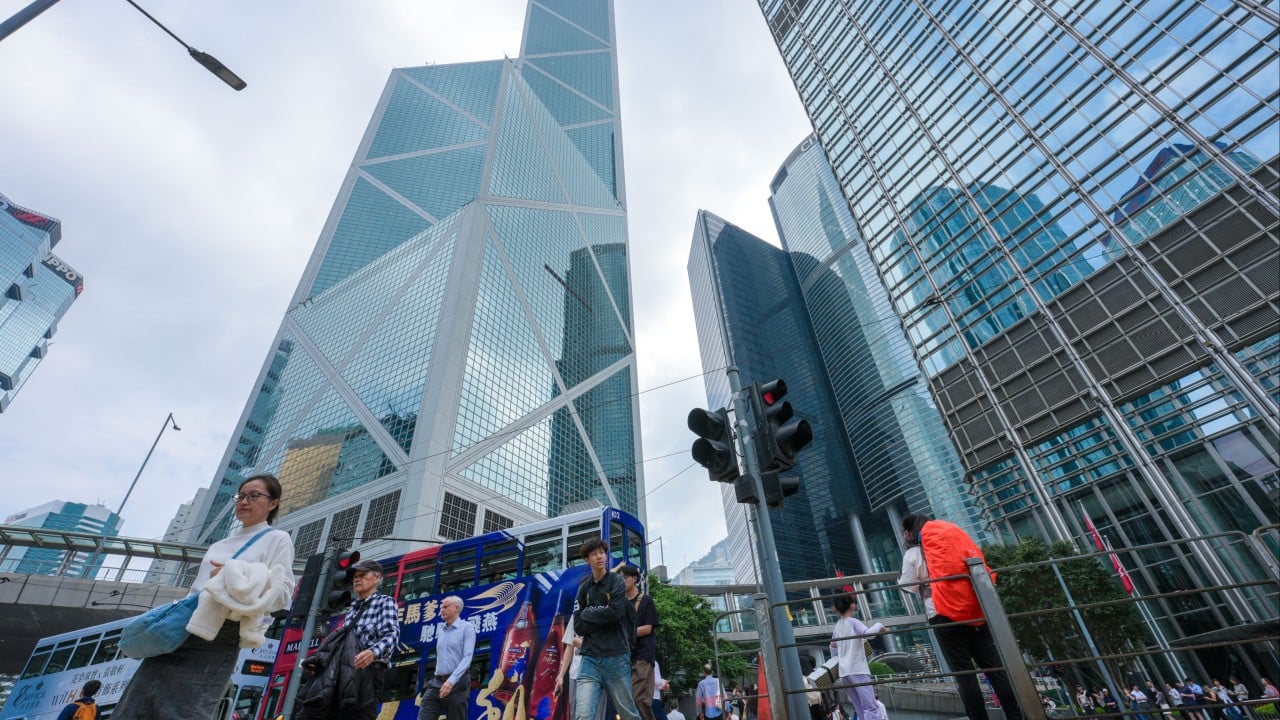
Hong Kong isn't just a bridge anymore. For decades, the city thrived on being the middleman between a rising China and the rest of the world. It was easy. You had the common law system, the US dollar peg, and a front-row seat to the fastest wealth creation in history. But being a service provider isn't enough to secure the number two spot globally. If Hong Kong wants to overtake London and sit right behind New York, it has to stop following the rules and start writing them.
Being a top-tier financial hub means you define how money moves. It's about setting the standards for new asset classes before anyone else gets there. Right now, the global financial order is shifting. The old guards are struggling with aging infrastructure and slow regulatory pivots. This is the opening. Hong Kong has the capital. It has the talent. Now it needs the guts to dictate the terms of trade for the next fifty years.
The Middleman Trap is Real
Most people think Hong Kong's strength is its neutrality. That’s a mistake. In a world where finance is increasingly weaponized and digitized, neutrality can look a lot like irrelevance. If you're just a pass-through for capital, you're a commodity. Commodities are replaceable. To be indispensable, you have to be the place where the world’s financial "operating system" is updated.
Look at how Singapore or Dubai operate. They don't just wait for the IMF or the World Bank to tell them what the best practices are. They experiment. They build sandboxes that actually work. Hong Kong spent too long resting on the laurels of its stock exchange. Listing big Chinese companies was a great business model, but that well isn't as deep as it used to be. The real power lies in institutionalizing the "new."
Think about carbon credits or digital assets. These are the frontiers. If Hong Kong establishes the most transparent, liquid, and legally sound framework for trading these, the world has no choice but to use its platforms. That is what rule-making looks like. It’s not about asking for permission. It’s about creating a reality so efficient that everyone else has to adapt to it.
Digital Assets and the New Plumbing of Finance
Web3 isn't a fad in the East. It’s the new plumbing. While Western regulators were busy suing every crypto startup in sight, Hong Kong started building a regulated environment for virtual assets. This was a smart move. But it's only the first step. To be a leader, the city needs to integrate these digital layers into the traditional banking system so tightly that they’re indistinguishable.
We aren't just talking about Bitcoin. We're talking about the tokenization of real-world assets. Imagine every office building in Central or every shipping container in the port being represented as a digital token on a ledger. This increases liquidity by orders of magnitude. It lets a retail investor in South America buy a tiny fraction of a Hong Kong skyscraper.
If the city perfects the legal recourse for these tokens, it wins. The legal framework is the product. The code is just the delivery mechanism. Hong Kong’s judiciary is its greatest asset here. Using that common law foundation to govern smart contracts is the ultimate "power move." It bridges the gap between the trust of the old world and the efficiency of the new.
Green Finance Beyond the Buzzwords
Everyone talks about ESG. Most of it is fluff. It's often just marketing teams trying to make oil companies look like forest preserves. Hong Kong can do better. By becoming the primary hub for green bond verification and carbon trading in Asia, the city positions itself at the center of the world’s most expensive transition.
China needs trillions of dollars to hit its 2060 carbon-neutral goal. Much of that capital will come from international investors who are terrified of "greenwashing." This is where Hong Kong steps in. By setting rigorous, data-driven standards for what actually counts as a green investment, the city provides the "trust layer" that's currently missing.
You don't get to be number two by just selling bonds. You get there by being the guy who decides which bonds are valid. It's about creating the benchmarks. When a fund manager in London or New York looks at a green project in Southeast Asia, they should check it against Hong Kong’s standards. That’s how you exert influence.
The Talent War is About More Than Visas
You can't write the rules if the smartest people are leaving. There’s been a lot of noise about a brain drain, and some of it is grounded in reality. High rents and strict policies during the early 2020s didn't help. But talent follows opportunity and capital.
The city needs to stop acting like a gated community and start acting like a laboratory. This means making it incredibly easy for fintech founders and quantitative researchers to set up shop. It’s not just about the Top Talent Pass Scheme. It’s about the ecosystem. If you're a developer in Bangalore or a trader in Chicago, Hong Kong needs to feel like the place where the future is being built, not just where the old money is being managed.
I've talked to founders who say the banking opening process is still a nightmare. That’s a rule-maker failure. If you want to lead the world, your basic infrastructure has to be frictionless. You can't claim to be a digital finance leader if it takes six weeks to open a corporate bank account. Fix the small things to prove you can handle the big things.
Reimagining the GBA Connection
The Greater Bay Area (GBA) is often cited as a huge advantage. It is. But we’ve been talking about "integration" for years with mixed results. To truly be the world’s second financial center, Hong Kong must be the sophisticated front-end for the GBA’s massive industrial back-end.
Shenzhen is the world’s factory for innovation. Hong Kong is the world’s vault. The goal should be a seamless flow of data and capital between the two that bypasses the friction of traditional cross-border banking. This involves the e-CNY and other central bank digital currencies (CBDCs).
If Hong Kong becomes the primary testing ground for the international use of the digital yuan, it gains a massive first-mover advantage. It’s a way to settle trades faster and cheaper than the SWIFT system. Some people get nervous about this. They see it as moving away from the dollar. It isn't. It’s about having more than one way to pay. Choice is a form of power.
Why the Common Law Still Matters
Let's be blunt. The reason money stays in Hong Kong is the legal system. You can have the best tech in the world, but if people don't believe their contracts will be honored, they'll take their cash elsewhere. Rule-making isn't just about new regulations; it’s about the consistent application of existing ones to new scenarios.
The city’s courts need to be the most "tech-literate" in the world. Judges should understand the nuances of decentralized autonomous organizations (DAOs) and cross-border data transfers. When a dispute happens in the metaverse or over a high-frequency trading glitch, the world should want that case heard in a Hong Kong court because the expertise there is unmatched.
This is how London stayed relevant for so long after the British Empire faded. They made their law the "global default" for shipping and insurance. Hong Kong must make its law the global default for the digital economy.
Moving Fast and Fixing Things
The window of opportunity won't stay open forever. Other cities are hungry. New York is busy entrenching its lead. London is trying to find its post-Brexit soul. Singapore is playing a very disciplined game. Hong Kong’s advantage is its unique position as the only place that combines Western legal traditions with direct, unfettered access to the Chinese economy.
But that advantage is a depreciating asset if it's not actively managed. You don't win by being "China-lite" or "London-East." You win by being the version of the future that actually works.
Stop waiting for global consensus. Consensus is for followers. Rule makers create the consensus that others eventually follow. Start by doubling down on the specialized sectors—biotech financing, green tech standards, and the legal framework for AI-driven trading.
Move your capital into the sectors where the rules haven't been written yet. Hire the people who are currently breaking things in other markets and give them a regulated space to build something permanent. The path to becoming the world's number two financial center is paved with bold policy, not cautious observation. Get the licensing for stablecoins right. Make the tax incentives for family offices even more aggressive. Ensure the judicial system stays fiercely independent and specialized. Do these things, and the rank takes care of itself.