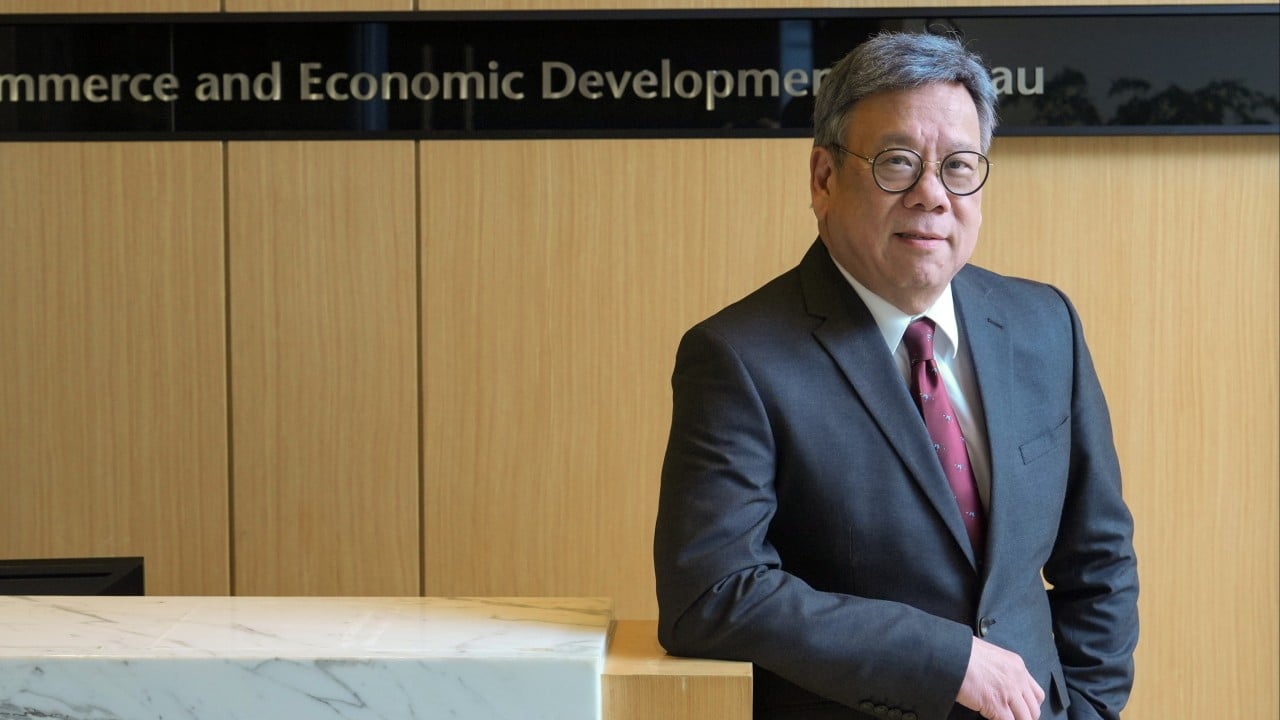
Hong Kong commerce chief Algernon Yau is preparing to lead a joint business delegation alongside mainland Chinese officials to Malaysia, marking a calculated diplomatic and economic maneuver across Southeast Asia. The upcoming mission brings together representatives from both the Hong Kong government and mainland enterprises to pitch infrastructure, trade, and financial partnerships directly to Kuala Lumpur. This dual-track approach reflects a broader regional strategy. Beijing and Hong Kong are working in tandem to secure supply chains, bypass mounting Western trade barriers, and lock in alternative markets within the Association of Southeast Asian Nations bloc.
For years, Hong Kong played the role of the solitary intermediary between mainland China and the rest of the world. Western capital flowed freely through its stock exchange, and multinational corporations used the city as a springboard into the mainland. That traditional playbook is broken. Geopolitical friction with the United States and Europe has fundamentally altered capital flows. Hong Kong can no longer rely on Western liquidity alone. It must pivot toward the Global South, with ASEAN economies sitting squarely at the top of that priority list. Malaysia represents a particularly lucrative prize due to its rapidly expanding digital economy, robust manufacturing sector, and strategic position along critical shipping lanes.
The Mechanics of Joint Delegations
Bringing mainland officials and Hong Kong bureaucrats onto the same international trade mission is not accidental. It is a deliberate display of integration. When foreign counterparts sit across the negotiating table from a joint delegation, they are not just talking to a local trade secretary from Victoria Harbour. They are engaging with the wider economic apparatus of the Chinese state.
This structure aims to streamline negotiations. In the past, foreign nations often had to navigate separate bureaucratic channels if they wanted to deal with both mainland factories and Hong Kong financial institutions. By combining forces, the delegation presents an end-to-end proposition. Hong Kong supplies the legal framework, international arbitration standards, and venture capital financing. The mainland brings heavy industrial capacity, raw material access, and massive engineering prowess.
Yet, this joint approach carries subtle risks for Hong Kong's distinct identity. Business leaders in Kuala Lumpur and other Southeast Asian capitals watch closely to see how much autonomy remains within the Special Administrative Region's commercial governance. If local business delegations appear entirely subservient to mainland directives, foreign partners may question whether Hong Kong's common law system and independent judiciary retain their traditional insulation from external political interference.
Why Malaysia Matters Now
Malaysia is not a random stop on a diplomatic itinerary. The country has emerged as a powerhouse in the global semiconductor supply chain, particularly in back-end packaging, assembly, and testing. As Washington tightens export controls on advanced technology to China, Malaysian facilities have become vital nodes for tech manufacturing.
Beijing knows this. Hong Kong knows this, too. By targeting Malaysia, the joint delegation is positioning itself near the beating heart of Southeast Asian tech production.
The Semiconductor Connection
Advanced manufacturing requires vast amounts of capital and specialized logistics. Hong Kong's financial institutions want a larger slice of that financing pie. Malaysian tech firms need foreign direct investment to scale operations and meet surging global demand.
- Venture Capital: Hong Kong's stock exchange has introduced rules to attract pre-revenue technology companies, making it an increasingly attractive listing venue for Asian tech startups.
- Logistics Integration: Free trade agreements already exist between ASEAN and China, but efficient financing and risk management require sophisticated banking networks that Hong Kong excels at providing.
- Green Energy Transition: Malaysia has aggressive carbon-neutrality targets and abundant natural resources, creating fertile ground for green bond issuances arranged through Hong Kong markets.
Despite these opportunities, structural hurdles remain. Southeast Asian nations are fiercely protective of their own domestic industries. Malaysian policymakers want to ensure that incoming foreign investment results in genuine technology transfer and local job creation, rather than simply serving as a conduit for foreign extraction.
Navigating Regional Skepticism
Winning over Kuala Lumpur requires more than glossy presentations and high-level handshakes. Southeast Asian business communities are pragmatic. They see the trade friction between the United States and China, and many want to avoid getting caught in the geopolitical crossfire.
When Algernon Yau and his mainland counterparts arrive in Malaysia, they will face tough questions about regulatory compliance, currency stability, and the long-term viability of cross-border investments. Local entrepreneurs want guarantees that capital can move with minimal friction. They also want reassurance that Hong Kong's legal protections remain robust enough to handle complex commercial disputes without political interference.
The success of this mission will not be measured by the number of memorandums of understanding signed during formal banquets. Those documents are easy to draft and rarely binding. Real success will be measured by whether private sector entities on both sides actually commit capital once the cameras stop flashing.
The Broader Shift in Global Commerce
The dispatch of a joint trade delegation to Malaysia signals the permanent end of the old economic order. Hong Kong is shedding its past life as a purely Western-facing financial outpost. It is actively carving out a new identity as the premier international gateway for a Sino-centric trade network spanning the Global South.
This transition is fraught with challenges. Competition from Singapore is fierce, and other ASEAN members like Indonesia and Vietnam are aggressively courting the same capital pools. But hesitation is not an option. If Hong Kong fails to deepen its economic integration with rising regional economies, its relevance on the world stage will steadily erode.
The delegation's return will offer the first real glimpse into whether this high-stakes charm offensive bore fruit. The contracts will speak for themselves, provided the ink actually dries.