Everybody loves a good obituary. Headlines love to declare cities dead, abandoned, or hollowed out. Hong Kong gets this treatment constantly. People point to shifting capital, departing expats, and strict security laws as proof that the party is over.
They are wrong.
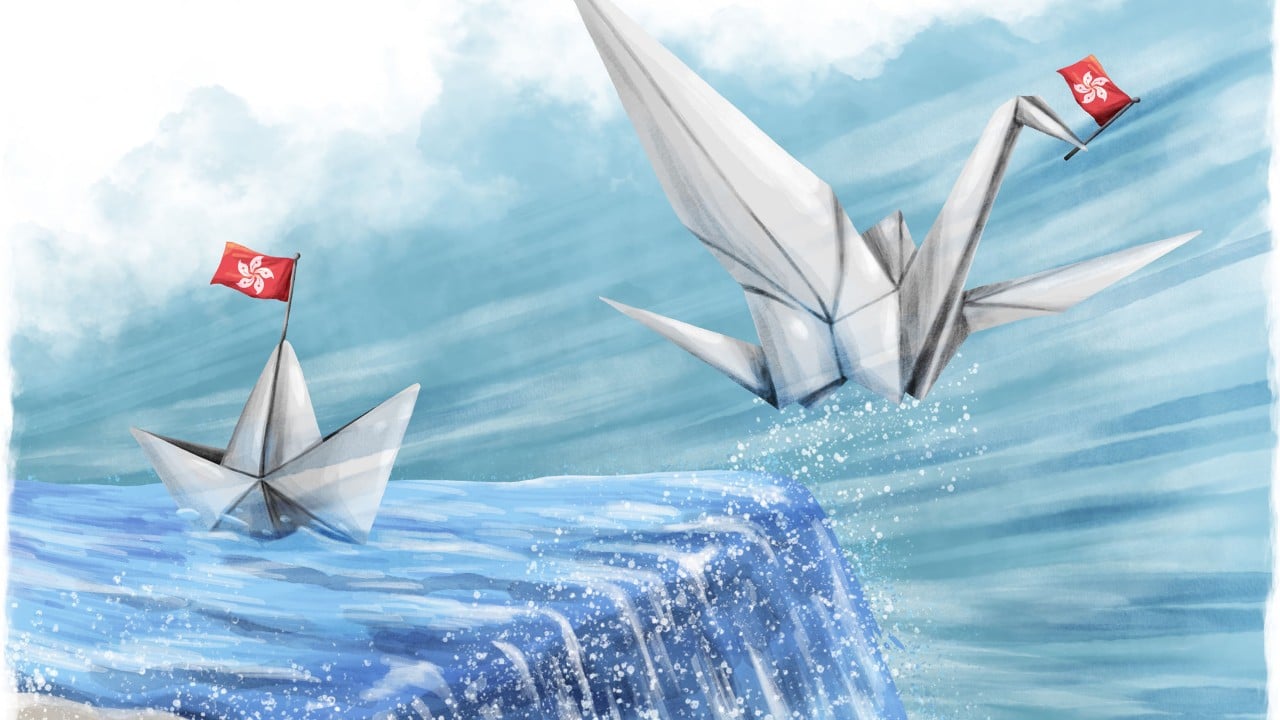
Hong Kong isn't dying. It is transforming into something else entirely. If you judge this city by the metrics of 1995 or even 2015, you will miss the point completely. The financial hub is shedding its old skin. It hurts. It is messy. But dismissing it as a ghost town ignores what is actually happening on the ground.
The Myth of the Empty Streets
Walk through Sheung Wan or Sham Shui Po on a Tuesday afternoon. You won't find a wasteland. You will find small art galleries opening in gritty tenement blocks, coffee shops roasting beans from Yunnan, and young designers carving out niche brands.
The expat corporate culture that defined the nineties has shrunk. That is true. High-level banking executives who lived in Repulse Bay on corporate stipends have packed their bags for Singapore or London. But that group never represented the soul of Hong Kong anyway. They represented a transient layer of global capital.
Local entrepreneurship is stepping into that void. Independent bookstores, local record shops, and experimental theaters are popping up in unexpected corners. People who stayed are building a new cultural identity. They are not waiting for permission from multinational corporations to make things happen.
Where the Money Is Actually Flowing
Finance hasn't vanished. It has pivoted. Western institutional money might be hesitant, but capital is pragmatic. It flows where the deals are.
Look at the numbers coming out of the Stock Exchange of Hong Kong regarding mainland listings and Middle Eastern partnerships. The city is positioning itself as the primary connector between mainland capital and global markets, especially the Middle East and Southeast Asia. Saudi Aramco executives visit regularly. Sovereign wealth funds from the Gulf are looking for Asian exposure through a familiar legal and banking system.
Hong Kong still operates under common law, maintains a pegged currency, and has a tax system that makes business owners smile. Those pillars did not disappear overnight. They are the shock absorbers that keep the economy upright while the political reality settles into a new normal.
The Cultural Shift You Are Missing
Culture in this city used to be imported or commercialized pop music manufactured for regional consumption. Today, it is grittier and more local.
Independent filmmakers are shooting micro-budget projects that capture the alienation and resilience of urban life. Young artists are staging pop-up exhibitions in industrial buildings because traditional galleries play it safe. You see a determination to document the present moment that simply did not exist when everyone was too busy chasing quick commissions in advertising and banking.
I talked to a cafe owner in Sai Ying Pun last year. He spent a decade working in London before moving back home. Why return to a city facing political headwinds? Because the friction creates ideas, he told me. Comfort breeds stagnation. Pressure forces creativity.
You can feel that pressure in the neighborhoods. People are hyper-aware of the constraints, yet they find ingenious ways to work around them. That is the true spirit of the place. It has always been a city of refugees, hustle, and short-term survival turning into long-term permanence.
What Travelers and Observers Miss
If you visit for a weekend to write a doom piece, you will stay in Central, take the Peak Tram, eat dim sum at a tourist trap, and leave convinced the magic is gone.
You need to dig deeper. Take the ferry to Peng Chau. Ride the ding-ding tram through North Point at midnight. Talk to the thirty-somethings who are opening independent bakeries using sourdough starters cultivated from local tea.
The old Hong Kong is gone. Good riddance. That iteration was built on high rents, colonial nostalgia, and an unsustainable bubble of easy money. What is replacing it is harder to categorize, less glamorous for international magazines, and infinitely more interesting to witness firsthand.
Stop looking at the skyline and waiting for a funeral. Watch the streets instead. Hong Kong is busy writing its next chapter while everyone else is busy reading the old one.
Go book a ticket. Walk through the wet markets of Kowloon. Order a milk tea at a local cha chaan teng and talk to the owner about how the neighborhood has changed. See the grit and the reinvention with your own eyes. You will realize that writing off this city is the easiest mistake you can make.