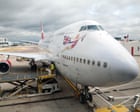
The smell of jet fuel is something you never quite forget. It is sharp, chemical, and strangely hopeful—the scent of a promise that you are about to be somewhere else. For a pilot, it is the lifeblood of the machine. For a passenger, it is the invisible propellant of a long-awaited reunion or a high-stakes deal. But lately, at some of the busiest hubs across the UK and Europe, that scent is being replaced by the sterile, anxious air of departure lounges filled with people who have nowhere to go.
Supply chains are usually invisible. We treat them like oxygen; we only notice them when they start to thin out. Right now, the oxygen is getting thin.
Consider Sarah. She is a hypothetical traveler, but she represents thousands of real people currently checking their phones every eleven minutes. Sarah is standing in Terminal 5, clutching a bag of duty-free chocolates and a boarding pass for a flight to Berlin. She needs to be there for a wedding. More importantly, she needs to be there because she hasn't seen her sister in three years. But the screen above her head doesn't say "Boarding." It doesn't even say "Delayed." It says "Cancelled."
The reason isn't a strike. It isn't a blizzard. It is simply that the plane, a multi-million-pound feat of engineering, is sitting on the tarmac with a thirst that cannot be quenched. The tanks are dry.
The Mechanics of a Drought
The crisis currently bubbling under the surface of European aviation isn't a single catastrophic failure. It is a slow-motion collision of logistics, geopolitics, and aging infrastructure. Airports have warned that jet fuel stocks are hitting "critical" levels. This isn't just a corporate headache for Heathrow or Schiphol; it is a structural fracture in how we move across the globe.
Aviation fuel doesn't just appear. It travels through a labyrinth of pipelines and refineries, many of which are currently groaning under the weight of redirected global energy flows. When a refinery in the Middle East shifts its output, or a pipeline in Central Europe faces a maintenance bottleneck, the ripple effect doesn't just slow things down. It stops them.
Logistics experts point to a "just-in-time" delivery model that has finally met its match. For years, airports operated on razor-thin margins of supply, trusting that the next shipment would arrive exactly when the previous one ran low. But the world is no longer predictable. Labor shortages in the trucking sector, coupled with a surge in post-pandemic travel demand, have created a vacuum.
The numbers are stark. Industry reports suggest that fuel reserves at several major European gateways have dipped below the three-day safety margin. In the world of aviation, three days is an eyeblink. If a tanker is delayed by a storm in the Atlantic or a protest at a port, the schedule collapses.
The Quiet Chaos of the Tarmac
To understand the stakes, you have to look past the departure boards and into the cockpit.
When a pilot learns there is a fuel shortage at their destination, they have to perform a frantic bit of mathematical gymnastics known as "tankering." This involves filling the aircraft with enough fuel at the departure point to complete the round trip without refueling.
It sounds like a simple fix. It isn't.
Fuel is heavy. Carrying an extra twenty tons of kerosene just so you don't have to fill up in London means the plane burns significantly more fuel just to carry that extra weight. It is an environmental disaster and a financial nightmare. Worse, it often means the plane becomes too heavy to land safely with its full complement of passengers and cargo.
So, what gives? Usually, it’s the passengers.
Baggage is left behind to shed weight. Seats are left empty. Or, in the most extreme cases, the flight is scrapped entirely because the math simply doesn't work. The airline loses a quarter-million dollars in revenue. Sarah loses her sister's wedding. The invisible gears of the global economy grind against each other, throwing sparks that no one sees until the fire starts.
A Continent on Edge
The European Union's integrated airspace was designed for seamless flow, but that flow depends on a steady pulse of energy. Currently, that pulse is irregular. In the UK, the situation is exacerbated by a specific set of logistical hurdles. Since the decoupling from the single market, the friction of moving goods—even liquid ones like Jet A-1 fuel—has increased.
It isn't just about the fuel itself; it’s about the people who move it. We are facing a chronic shortage of specialized tanker drivers. You can’t just put a standard haulage driver behind the wheel of a highly flammable, pressurized fuel truck and expect them to navigate the complex security protocols of a major international airport. It takes training. It takes time.
Two things we don't have.
Airports in the North of England and parts of France have already begun issuing "Notices to Airmen" (NOTAMs), warning that fuel may not be available for non-scheduled flights. Private charters, medical transports, and smaller cargo carriers are the first to feel the squeeze. They are the canaries in the coal mine. When the big players like British Airways or Lufthansa start voicing concerns, the mine is already filling with gas.
The Human Cost of Efficiency
We have spent decades optimizing our lives for efficiency, stripping away the "slack" in the system to save a few pennies on a ticket. We wanted cheaper flights, and we got them. But the cost of that efficiency is a terrifying lack of resilience.
When you stand in an airport today, you aren't just looking at a building. You are looking at the end-point of a thousand-mile-long straw. If anyone kinks that straw, the whole system gasps for air.
There is a psychological weight to this. For the business traveler, it is the erosion of reliability. For the family on their one holiday of the year, it is a looming shadow of uncertainty. We have grown used to the idea that the world is small and accessible. We believe that money plus a passport equals a destination.
The fuel shortage is a blunt reminder that our mobility is a fragile gift, contingent on the silent coordination of thousands of people we will never meet. It depends on a truck driver in Antwerp, a refinery manager in Qatar, and a pipeline technician in the Scottish Highlands all doing their jobs perfectly, every single day.
Beyond the Pump
There is no quick fix. You cannot conjure a refinery out of thin air, and you cannot train a fleet of specialized drivers overnight. The industry is looking at Sustainable Aviation Fuel (SAF) as a long-term savior, but current production levels are a drop in the bucket—less than one percent of global demand.
For now, the strategy is "management." This is a polite word for rationing. Airlines are being asked to prioritize essential routes. Ground crews are being told to squeeze every drop of efficiency out of their turnarounds.
But as the peak travel season approaches, the tension is rising. The warnings from airport operators aren't just bureaucratic posturing; they are an alarm bell. They are telling us that the buffer is gone.
The next time you sit in a plane and hear the engines whine to life, listen closely to that sound. It is the sound of a miracle. It is the sound of a system that is currently strained to its absolute limit, held together by frantic emails, diverted tankers, and the hope that the straw doesn't kink today.
Sarah is still in the terminal. She isn't thinking about pipelines or "just-in-time" logistics. She is looking at a photo of her sister on her phone, wondering if she should try to catch a train, or a bus, or if she should just go home. The Chocolates are melting in her hand.
The jet is there. The pilot is there. The runway is clear. But the tank is empty, and in the modern world, that is the only thing that matters.
Silence.