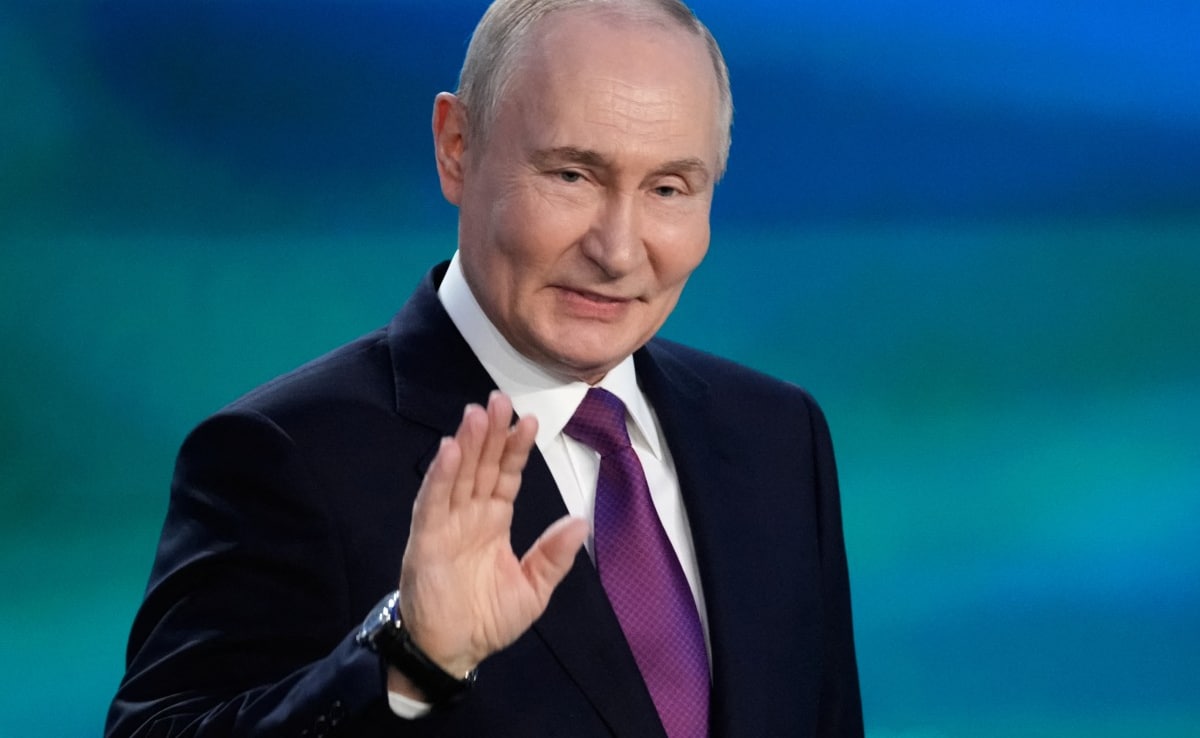
The Kremlin’s announcement of a temporary ceasefire for the Orthodox Easter holidays follows a well-worn script of religious posturing designed more for domestic consumption and international optics than for any genuine shift in the conflict's trajectory. While the proposal ostensibly offers a 36-hour window of silence across the front lines, military analysts and veteran observers recognize it as a strategic pause masquerading as piety. History suggests these unilateral pauses rarely hold. They serve as tactical breathing room for Russian forces to regroup, resupply, and fortify positions while attempting to seize the moral high ground in a war that has long since abandoned it.
For the soldiers in the trenches, a ceasefire order from Moscow is often treated with extreme skepticism. In previous years, similar declarations for Christmas or Easter resulted in sporadic shelling and continued skirmishes, as neither side trusts the other to lower their guard. Ukraine views these gestures as cynical traps. If Kyiv ignores the ceasefire, Moscow paints them as godless aggressors; if Kyiv follows suit, it risks giving Russian units the quiet they need to rotate exhausted troops without the threat of precision artillery fire.
The Logistics of a Performative Truce
Wars do not simply stop because a decree is signed in a distant capital. The friction of the front line ensures that small-unit engagements, drone strikes, and reconnaissance missions continue regardless of high-level diplomatic posturing. By announcing a ceasefire, Putin targets a specific demographic: the deeply religious segments of the Russian population and the broader Orthodox world. It is a move intended to frame the Russian state as the protector of traditional values, even as its missiles continue to hit civilian infrastructure outside the holiday window.
From a purely military standpoint, a 36-hour pause offers negligible strategic benefit in terms of long-term planning, but it provides a significant psychological advantage. It forces the Ukrainian command into a difficult position. They must choose between potentially violating a "holy" truce or allowing the enemy a moment of respite. This is not about peace. It is about control of the narrative.
The Role of the Russian Orthodox Church
The Moscow Patriarchate has been a staunch supporter of the invasion, providing the theological scaffolding for what it calls a "metaphysical struggle." Patriarch Kirill’s call for an Easter truce is inseparable from the state’s political goals. By aligning the military’s actions with the church’s calendar, the Kremlin attempts to sanctify the war effort. This fusion of church and state interests makes the ceasefire a political tool rather than a humanitarian one.
Ukraine’s own religious landscape has shifted dramatically since the full-scale invasion began. With the rise of the independent Orthodox Church of Ukraine, the influence of the Moscow-linked wing has cratered. For many Ukrainians, a ceasefire proposed by the very institution that blesses the tanks crossing their borders is not an olive branch. It is an insult.
Historical Precedent and Failed Promises
The track record for these "holiday truces" is dismal. Looking back at the Minsk agreements and subsequent local ceasefires, the pattern is consistent: a brief drop in large-scale maneuvers followed by an immediate return to high-intensity combat the moment the clock runs out. In many cases, the "silence" is used to move ammunition closer to the zero line under the cover of the truce.
- Christmas 2023: A similar unilateral ceasefire was announced, yet regional governors reported dozens of strikes during the period.
- Harvest Truces: In earlier years of the Donbas conflict, "harvest truces" were frequently violated within hours.
- The Mariupol Corridors: Humanitarian pauses in the besieged city were repeatedly interrupted by fire, leading to a total breakdown in trust.
Trust is the most expensive commodity in a war of attrition. Once it is spent, it cannot be recovered with a press release. The Ukrainian General Staff remains focused on the reality of Russian troop movements rather than the rhetoric coming out of the Kremlin. They understand that a stationary target is easier to hit, and they are unlikely to grant the Russian army the luxury of standing still.
The Global Audience and Diplomatic Pressure
Beyond the front lines, the ceasefire announcement serves as a signal to neutral or "leaning" nations in the Global South. It allows Russian diplomats to argue that they are the party seeking de-escalation, however briefly. This narrative is effective in diplomatic circles where there is a fatigue with the ongoing war and a desire for any sign of a slowdown in hostilities.
However, Western intelligence agencies remain focused on the "shadow" movements that occur during these periods. Satellites do not stop orbiting during Easter. If Russian supply lines are seen moving fuel and shells toward the front during the 36-hour window, the ceasefire will be exposed for what it is: a logistical maneuver. The reality is that Russia needs a pause more than Ukraine does at this specific juncture. The Russian offensive has stalled in several key sectors, and the cost of maintaining constant pressure is becoming unsustainable for their frontline units.
The Cost of Hesitation
For Ukraine, the danger of the ceasefire is the loss of momentum. Modern warfare relies on a constant cycle of observation and strike. If a unit stops its drone surveillance for a day, it loses track of the enemy's shifting assets. This "blindness" can be fatal once the holiday ends. Therefore, Ukrainian forces are expected to maintain "active defense," a term that essentially means they will fire if they feel threatened, which, in a war zone, is a constant state of being.
The international community's reaction is largely split along predictable lines. Supporters of Kyiv see the move as a transparent ploy. Those advocating for immediate negotiations at any cost see it as a missed opportunity. But the soldiers in the mud of the Donbas don't have the luxury of such abstractions. They know that a shell doesn't care about the calendar.
The Internal Russian Logic
Within Russia, the ceasefire helps maintain the illusion of a "limited" operation that respects civilian life and religious tradition. It is a necessary piece of theater for a domestic audience that is increasingly feeling the economic and social strain of the conflict. By appearing "reasonable" for 36 hours, the leadership can justify the violence of the remaining 364 days of the year.
The timing also coincides with the need to process new conscripts and reorganize commands. While 36 hours isn't enough for a total overhaul, it is enough time to clear backlogs in field hospitals and move replacement hardware into hidden positions near the front.
Beyond the Holiday
Once the bells of the Easter services stop ringing, the war will resume with its usual ferocity. The ceasefire does nothing to address the underlying causes of the conflict or the territorial disputes that drive it. It is a temporary band-aid on a gaping wound. Real peace requires more than a temporary halt in shooting; it requires a withdrawal of forces and a recognition of sovereignty—neither of which is on the table.
The international community must look past the 36-hour window and focus on the months of combat that will inevitably follow. To treat this ceasefire as a genuine step toward peace is to ignore the fundamental mechanics of the Kremlin’s strategy. It is a tactical move, nothing more.
Watch the movement of the heavy rail lines during the truce. If the flatcars are still moving tanks toward the border while the guns are silent, the "peace" is a lie. True de-escalation isn't found in a temporary order to stop pulling triggers; it's found in the decision to stop loading the guns entirely. Until the Russian military begins a verifiable withdrawal, every ceasefire is merely a reload.


