Donald Trump turned Game 3 of the NBA Finals into a security-clogged political rally, suffocating the New York Knicks home-court advantage and sparking an escalating war of words with Representative Alexandria Ocasio-Cortez. For a franchise that had rolled through 13 consecutive playoff victories, the sudden influx of presidential logistics, two-hour security lines, and the forced cancellation of local fan watch parties dismantled the organic energy of Madison Square Garden. By the time the final buzzer sounded on a deflating home loss to the San Antonio Spurs, a sporting milestone had morphed into a bitter cultural debate over elitism, gentrification, and political opportunism.
The transformation of the arena from a basketball sanctuary into a fortified federal zone began hours before tipoff. Madison Square Garden thrives on an unpredictable, raucous atmosphere generated by working-class fans, local legends, and a shared civic obsession. When Trump arrived as the guest of billionaire Knicks owner James Dolan, that atmosphere vanished under the weight of metal detectors, Secret Service checkpoints, and restricted access routes.
Fans who paid thousands of dollars for seats spent hours shuffling through airport-style screening lines. Outside the arena, the vibrant community watch parties that defined this playoff run were abruptly shut down by law enforcement. The NYPD and Secret Service citing safety concerns erased the exact fan footprint that gave the team its pulse.
The Optics of a Courtside Slumber
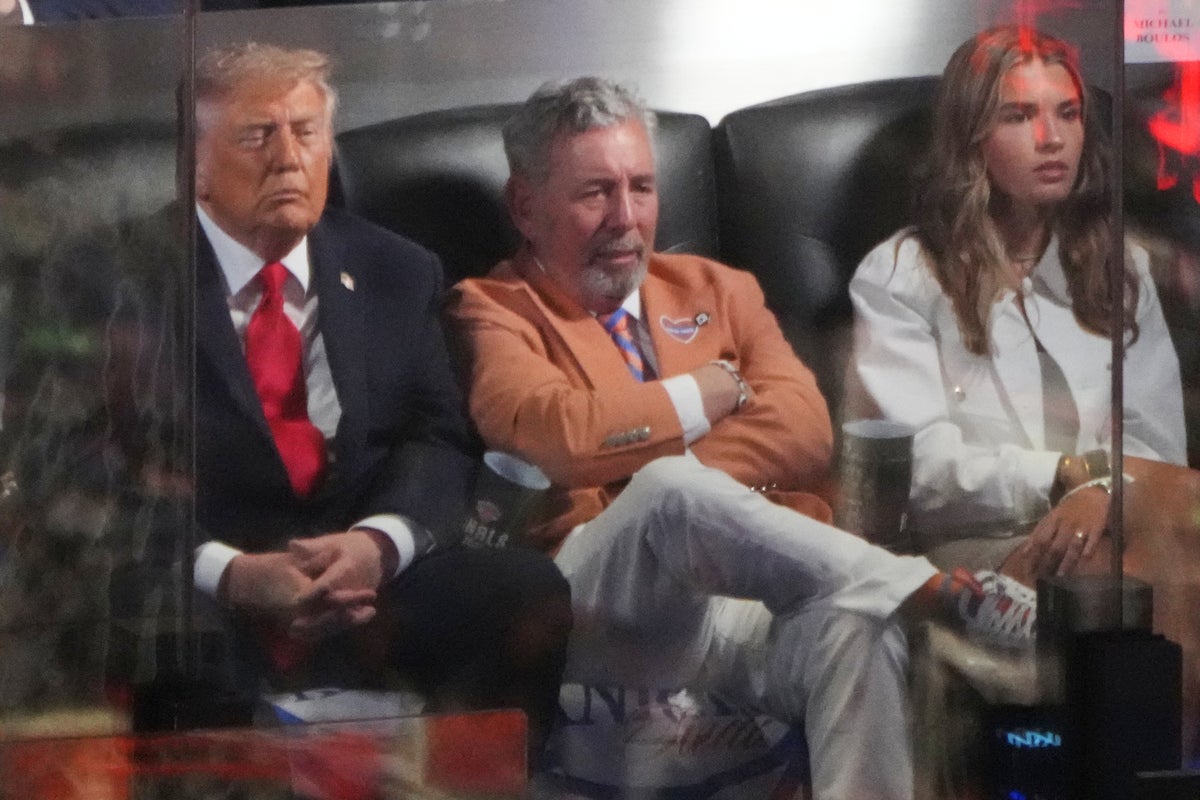
The tension boiled over on social media when cameras captured the president appearing to doze off during the game. Sitting in Dolan’s luxury suite alongside political allies and family members, Trump’s visible dip in energy became an immediate lightning rod.
Alexandria Ocasio-Cortez capitalized on the moment, posting a sharp response telling him to wake up. The remark cut through the typical partisan noise because it connected directly with the frustration felt by fans inside the arena. While thousands of New Yorkers stood in lines or were pushed out of the surrounding blocks, the guest of honor was caught fading on national television in seats most citizens could never afford.
Critics quickly seized on the imagery. The Lincoln Project labeled the appearance an expensive taxpayer-funded nap, pointing out the irony of creating immense municipal disruption for a brief photo opportunity. Basketball analysts and fans noted the immediate shift in team performance. The historic momentum built over weeks of dominant play seemed to dissolve the moment the arena’s natural ecosystem was replaced by a highly managed political entourage.
Pricing Out the True Fan Base
The controversy highlights a deeper structural shift within modern professional sports. Tickets for the historic matchup reached baseline prices of $8,000, effectively restricting attendance to corporate executives, high-net-worth individuals, and political insiders.
Ocasio-Cortez noted that the high cost of admission fundamentally altered the crowd composition, creating an environment far more insulated than a typical playoff game. The raucous, intimidating noise that usually greets opponents at Madison Square Garden was replaced by a sterile, corporate audience. When Trump was shown on the jumbotron during the national anthem, the initial chorus of boos was quickly managed, illustrating the stark divide between the wealthy ticket holders inside and the working-class fan base outside.
Political figures from across the state voiced similar frustrations. House Minority Leader Hakeem Jeffries questioned the authenticity of the visit, arguing that the appearance was less about supporting the team and more about injecting a political circus into a rare moment of civic unity. The sentiment resonated with fans who felt their long-awaited championship run was being used as a backdrop for national political messaging.
The Real Cost of Corporate Ownership
The disruption points directly to the philosophy of Knicks ownership. James Dolan has long maintained an insulated relationship with his fan base, frequently clashing with critics, former players, and local media. Inviting a divisive political figure to a critical championship game, fully aware of the operational chaos it would bring to the arena, aligns with a history of prioritizing elite connections over the fan experience.
Forcing the city to scramble for alternative watch party locations—moving thousands of fans to Bryant Park and Central Park on short notice—showed a blatant disregard for the community supporting the franchise. The team’s sudden loss on the court cannot be entirely blamed on security delays, but the erasure of the home-court advantage played a measurable role.
Professional athletes are creatures of routine. When a locker room is subjected to sweeping security sweeps and an arena loses its raw energy, the competitive edge dulls. The Knicks did not just lose a basketball game; they lost ownership of their home floor at the exact moment it mattered most.