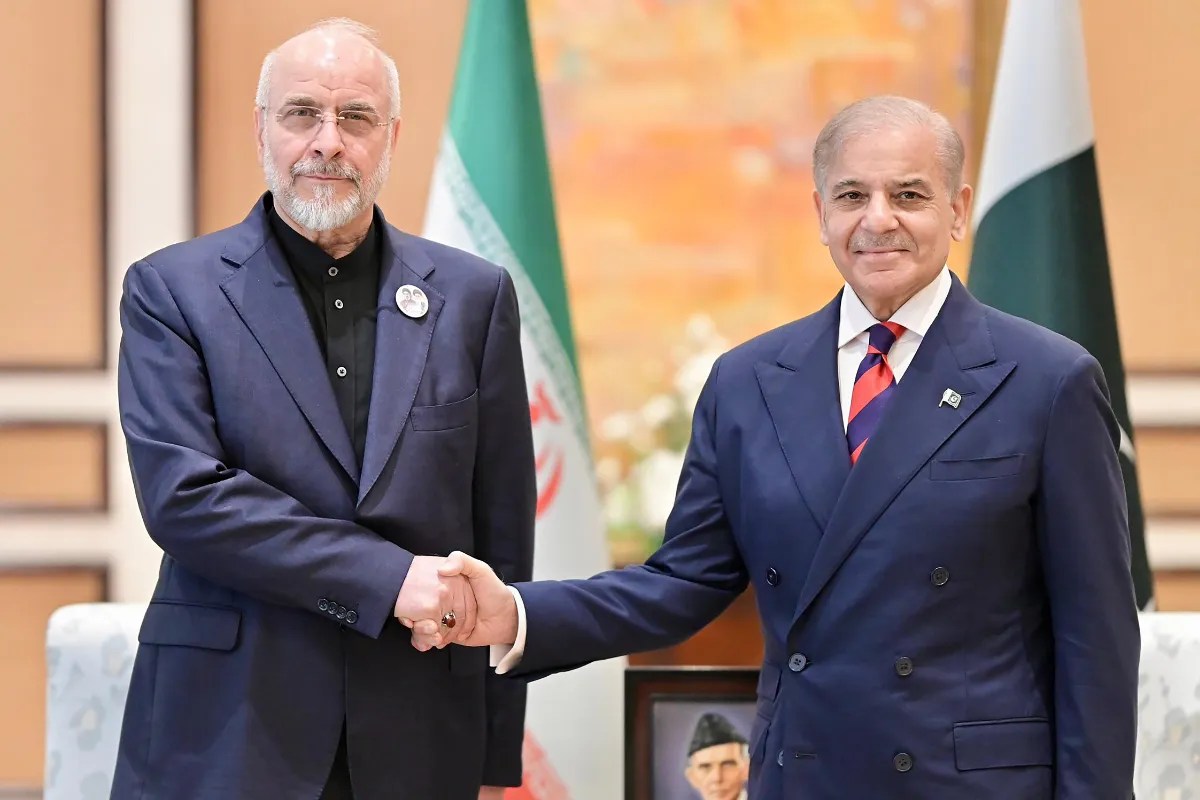
Islamabad's Risky Diplomatic Gamble
Pakistan is attempting to position itself as the central mediator for a historic diplomatic thaw between Iran and the United States, planning to host a formal summit to broker a deal. Prime Minister Shehbaz Sharif and Army Chief General Asim Munir are moving in lockstep on this initiative, aiming to salvage Pakistan's fractured economy and restore its fading geopolitical relevance. However, this high-stakes diplomatic maneuvering is less about global peacemaking and more about survival. By inserting itself between Washington and Tehran, Islamabad hopes to unlock frozen regional energy projects, secure international financial concessions, and prove its strategic worth to a skeptical West.
The optics of the situation look ambitious on the surface. Yet, behind the public handshakes and official praise in Islamabad lies a web of deep economic desperation and immense structural friction. For a more detailed analysis into this area, we suggest: this related article.
The Driving Forces in the Shadows
To understand why Pakistan is suddenly inserting itself into the long-standing hostility between Washington and Tehran, one must look at the balance sheets of Islamabad’s finance ministry.
Pakistan is trapped in a structural debt cycle. The country relies heavily on repeated bailouts from the International Monetary Fund (IMF) and short-term loans from friendly Gulf nations to avert a default on its balance of payments. Conventional diplomatic leverage has run dry. For broader details on the matter, comprehensive analysis can also be found at The Guardian.
The Ghost of the Peace Pipeline
The most urgent regional catalyst for this sudden diplomatic push is the long-stalled Iran-Pakistan (IP) gas pipeline.
Tehran has completed its section of the infrastructure. It has repeatedly threatened to drag Islamabad to international arbitration courts, demanding a penalty that could reach up to $18 billion for Pakistan's failure to construct its side of the pipeline. Pakistan halted work years ago due to the threat of unilateral American sanctions.
By pushing for a broader diplomatic understanding between the US and Iran, Pakistan is attempting to solve two problems at once. If Washington eases its stance, Islamabad can complete the pipeline, avoid a crippling multi-billion-dollar legal penalty, and secure a cheap, stable source of energy for its starved domestic industry.
A Unified Front in Islamabad
The domestic political alignment behind this strategy deserves scrutiny.
Historically, Pakistan’s civilian governments and the powerful military establishment have clashed over foreign policy priorities. This time, the coordination is blatant. Prime Minister Sharif’s public commendation of General Munir’s back-channel diplomatic efforts signals a absolute consensus within the Pakistani state apparatus. The military needs economic stability to maintain its institutional reach and domestic authority. The civilian government needs the military's backing to survive political volatility. This shared vulnerability has forced a unified front that is rare in Pakistani political history.
The Severe Friction in the Plan
The fundamental flaw in Islamabad's strategy is the assumption that either Washington or Tehran desires its intervention.
The structural grievances between the United States and Iran run far deeper than any logistical fix a third-party host can provide. The geopolitical realities of 2026 present massive obstacles that Islamabad cannot simply negotiate away.
+------------------------------------+------------------------------------+
| Washington's Core Demands          | Tehran's Strategic Imperatives     |
+------------------------------------+------------------------------------+
| - Permanent nuclear restrictions   | - Guaranteed sanctions relief      |
| - Cessation of regional proxy acts | - Retention of domestic enrichment |
| - Verification of compliance       | - Strategic depth in Middle East   |
+------------------------------------+------------------------------------+
The Washington Washington View
The United States views its relationship with Pakistan through a narrow lens focused on counter-terrorism and regional containment. The days of the Cold War and the post-9/11 era, when Islamabad could leverage its geography for billions of dollars in direct American aid, are gone.
Washington’s primary strategic partner in South Asia is now New Delhi. Any major diplomatic concession given to Pakistan would be viewed with suspicion by India. Furthermore, US policy toward Iran is heavily influenced by domestic political dynamics and the security concerns of Israel. A Pakistani government struggling with its own internal stability possesses little to no leverage to alter the strategic calculus of the White House.
The View from Tehran
Iran looks at its eastern neighbor with a mixture of pragmatic economic interest and deep security skepticism.
Tehran is fully aware that Pakistan remains highly dependent on financial lifelines from Saudi Arabia and the United Arab Emirates—Iran’s traditional regional rivals. While Iran welcomes any avenue that could lead to the lifting of economic sanctions, it is unlikely to trust its core national security negotiations to a mediator that is financially bound to Riyadh and militarily aligned with Washington. Tehran has historically preferred direct, quiet channels through neutral interlocutors like Oman or Switzerland when dealing with the Americans.
Overlooked Domestic Risks
If this diplomatic gamble fails, the domestic fallout for Pakistan will be severe. The country is already dealing with a volatile internal security situation.
The Balancing Act with the Gulf
Pakistan's economy stays afloat through rolled-over loans from the Gulf Cooperation Council (GCC) states.
While Saudi-Iran relations have seen tactical thaws in recent years, a permanent, unchecked realignment that positions Pakistan as Iran's primary economic gateway would raise serious concerns in Riyadh. The Pakistani leadership is walking a thin tightrope. If they tilt too far toward accommodating Iranian interests to save themselves from the pipeline penalty, they risk alienating the ultra-wealthy Gulf monarchs who hold the keys to Pakistan's immediate financial survival.
Internal Security Complications
The border region between Pakistan and Iran remains highly unstable.
Armed militant groups operate on both sides of the Balochistan border, frequently launching cross-border attacks that strain bilateral relations. Just last year, these tensions erupted into direct, retaliatory missile strikes between the two nations. Expecting to host a smooth, high-level international peace summit while struggling to control basic border security is an exercise in optimism over reality.
The Cost of Failure
Pakistan's diplomatic machinery is operating under the assumption that merely playing the host will generate goodwill. This is a miscalculation.
If the proposed summit falls apart or is rejected by either Washington or Tehran, Pakistan will find itself in a worse position than before. It will have irritated its western neighbors, exposed its lack of genuine leverage to the international community, and brought itself no closer to solving the looming $18 billion legal threat from Iran.
The structural decay of Pakistan's economy cannot be fixed by high-profile diplomatic theater. True leverage on the global stage comes from economic self-reliance, industrial productivity, and internal political stability. Until Islamabad addresses these core internal issues, its attempts to play the global peacemaker will remain a transparent diversion from its own domestic failures.