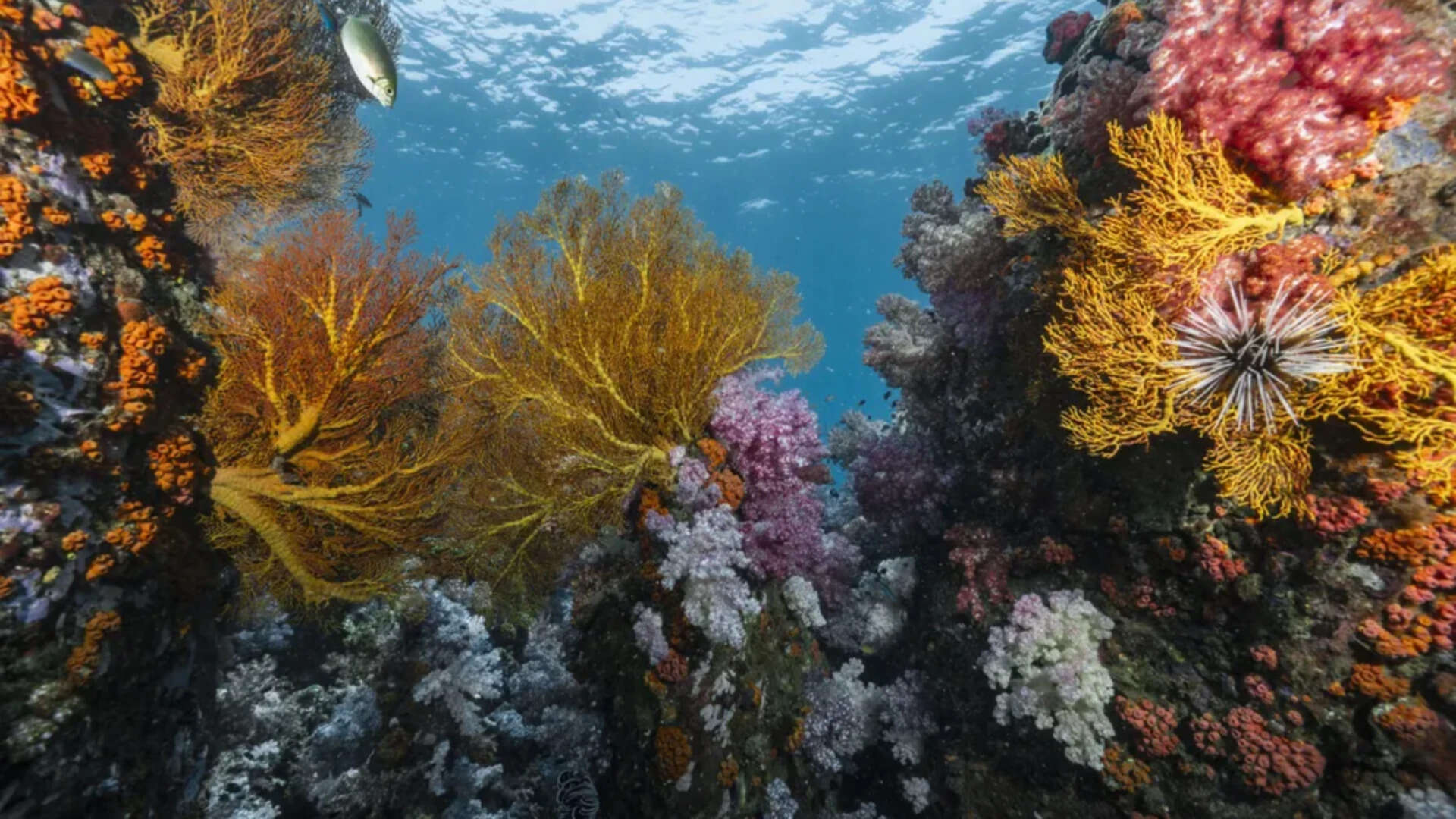
The water in the Coral Triangle used to feel like a crisp, life-giving embrace. Now, when you dive into certain bays in Indonesia or the Philippines, it feels like wading into a lukewarm bath. It is a subtle, terrifying shift. For anyone who has spent decades watching the sea, that extra degree or two carries the scent of a funeral.
When the water gets too warm, the magic stops. The brilliant purples, neon greens, and deep ambers of a healthy reef fade. The coral animal, stressed by the suffocating heat, expels the microscopic, colorful algae that provide its food. What remains is a ghost town. Bone-white, brittle, and starving skeletons. It is the underwater equivalent of a forest fire, happening in total silence, hidden beneath the waves.
For years, the narrative surrounding the world’s oceans has felt like a terminal diagnosis. We have been told that coral reefs, which support a staggering 25 percent of all marine life and protect the coastlines of 500 million people, are simply beyond saving. The data seemed to back up the despair. Since 2023, record-breaking marine heatwaves have hammered over 80 percent of the world’s reefs. The math of extinction felt inevitable.
But data only tells the story of what we choose to look at.
An international team of scientists from the Wildlife Conservation Society and Macquarie University refused to accept the obituary. Instead of looking only at the devastation, they decided to hunt for the survivors. They gathered more than 45,000 individual field observations dating back to 1960. They tracked water chemistry, human activity, and temperature shifts across decades. Then, they fed this massive, messy mountain of history into an artificial intelligence model designed to project what the oceans will look like by the year 2050.
The computer didn't spit out a death sentence. It drew a roadmap.
The AI identified roughly 64,000 square miles of coral reefs—an area about the size of Wisconsin—that are actively defying the odds. Scattered across 71 countries and 100 territories, these underwater sanctuaries possess the rare capacity to either withstand or rapidly recover from severe heat stress.
To understand how this is possible, it helps to look at how these sanctuaries operate. Scientists break them down into three distinct strategies of survival.
First, there are the zones of avoidance. Think of these as natural air-conditioning units. Imagine a deep, cold-water current rising from the abyss, washing over a specific ridge in the Bahamas or Cuba, sheltering the local coral from the baking surface heat. The surrounding ocean might be boiling, but this specific pocket remains a cool oasis.
Second, there is resistance. In places like the scorched waters of the Red Sea or shallow flats in Australia, corals have essentially gone to the gym. Over generations, they have naturally evolved to tolerate temperatures that would cook their delicate cousins elsewhere. They are tough, stubby, and stubborn.
Finally, there is recovery. These are reefs dominated by fast-growing branching and plating corals. They might get hit by a heatwave, and they might even bleach, but their local environment is so pristine, and their internal biology so resilient, that they bounce back with astonishing speed before starvation can set in.
Consider the distribution of these secret strongholds. The AI mapping revealed that about 60 percent of these climate-resilient reefs are concentrated in just five nations: Australia, the Bahamas, Cuba, Indonesia, and the Philippines. But the algorithm also flagged surprise anomalies—previously unmapped pockets of high resilience in Belize, Nicaragua, and the Turks and Caicos Islands.
The discovery changes the entire nature of ocean conservation. For a long time, resources were scattered, a reactive game of environmental whack-a-mole. Now, we know exactly where the fortresses are. If we can shield these specific sanctuaries from overfishing, coastal pollution, and industrial destruction, they can serve as the seed banks for the future. When the rest of the ocean eventually cools or stabilizes, these resilient pockets can reseed the barren zones.
But a map is only useful if you follow it.
Right now, less than a third of these predicted climate refuges sit within protected marine areas. The rest are vulnerable to the immediate, clumsy hand of human industry. While a localized reef in Nicaragua might possess the genetic superhuman ability to survive a marine heatwave, it cannot survive a bottom-trawling fishing net or toxic runoff from a coastal development.
The science has shifted from a eulogy to a directive. The oceans have provided us with a lifeline, carved out by nature's own adaptability and mapped by human ingenuity. The question is no longer whether coral reefs can survive the century. The question is whether we will let them.
A fisherman casting his net over a reef in the Coral Triangle doesn't see the global data models, but he knows when the fish disappear. The revelation of these 64,000 square miles means his children might still have an ocean to harvest. The survival of the deep is no longer a blind hope. It is a matter of geography.