The metal of the steering wheel feels sticky under sweaty palms. It is midday in Rostov-on-Don, and the air inside the stationary sedan is thick, smelling of old upholstery and exhaust fumes. Outside, a line of cars stretches backward into the shimmering heat haze of the southern Russian summer, a metal spine winding down the tarmac for over a mile.
Tatiana Sedykh glances at her fuel gauge. The orange needle hovers over an empty black void. She turns the key, shutting off the engine to preserve the final, precious drops of fuel. Silence drops like a heavy blanket, broken only by the distant, rhythmic honking of horns further up the queue.
She looks at her watch. Two hours have passed since she joined the line. She is still three blocks away from the pumps.
For years, the conflict in Ukraine was something that happened elsewhere. It belonged to the television screen, a barrage of curated state media segments filled with distant explosions and official briefings. It was a reality that existed thousands of miles away from the ordinary routines of Russian citizens.
Not anymore.
Now, the reality of a five-year war is measured in centimeters of gasoline.
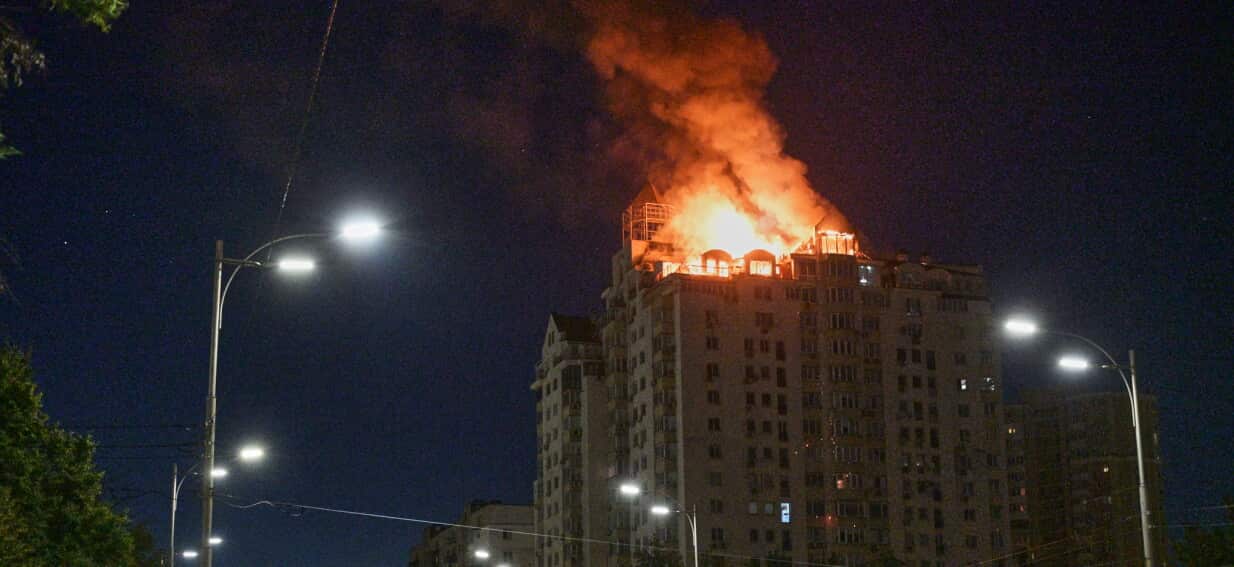
The mechanism behind this paralysis is invisible to the drivers waiting in Rostov-on-Don, but its effects are mathematical and unforgiving. Over the past several months, Ukrainian long-range drone strikes have systematically targeted the crown jewels of the Russian energy sector. Oil terminals, pipelines, and massive processing facilities have been struck with precision.
The Kapotnya refinery, the single largest supplier of fuel to the Moscow region, was struck twice in rapid succession. Unnamed officials admit the plant will remain entirely offline until at least the end of 2026. Experts estimate that over 20 percent of Russia’s total oil refining capacity has been knocked out by these aerial campaigns.
Think of it as a biological system. The country sits on top of some of the largest crude oil reserves on earth, but crude oil cannot power a tractor or a delivery truck. The refineries are the heart that pumps usable energy through the veins of the nation. When that heart is damaged, the extremities begin to wither first.
Consider the Russian grain belt, the fertile Black Earth region where farmers are staring at fields of gold with absolute dread. The wheat is ripe. The weather is perfect. But the combines are sitting idle in the sheds.
Imagine a hypothetical farmer named Mikhail. For decades, his life has been dictated by the season of the harvest. It is a grueling, non-stop race against time and autumn rains. This year, Mikhail cannot buy diesel in bulk. The state has restricted wholesale distributions to preserve dwindling supplies for the military.
Left with no choice, Mikhail drives his massive, roaring combine harvester out of the fields and down a public highway, pulling up to a standard retail gas station like a commuter in a hatchback. He is turned away. The station attendant points to a handwritten sign taped to the glass door: No fuel in containers. Maximum 20 liters per vehicle.
Mikhail watches the sky, knowing that if the crops rot in the soil, the financial ruin will ripple far beyond his family farm.
This is not an isolated bottleneck. It is a structural fracture. According to data collected from official announcements and local media reports, at least 55 of Russia’s 83 federal entities are currently under some form of fuel rationing. The restrictions are a chaotic patchwork, some mandated by regional governments, others imposed by desperate private fuel companies trying to prevent their pumps from running dry.
The immediate casualty of this scarcity is public order. Tempers are fraying. On social media networks like VK and Telegram, videos show drivers engaging in fistfights at gas stations, screaming over cut lines and empty pumps. In Sevastopol, the largest city in Russian-controlled Crimea, gasoline prices skyrocketed by 30 percent in a single week.
While the state statistical agency, Rosstat, claims average national prices hover around 72.38 roubles ($0.92) per liter, the reality on the ground tells a vastly different story. In the hardest-hit regions, independent witnesses have documented stations charging as much as $2.42 per liter.
To cope, the population has turned to the digital underground. Crowdsourced maps have emerged online, with thousands of users trading real-time tips on which stations still have fuel and where the lines are shortest.
The shift in public anxiety is measurable. Data from the search engine Yandex revealed that online searches for the phrase "how to siphon fuel" exploded from just 697 searches a month ago to more than 9,300 by late June. A video titled "The Ultimate Luxury 2026" went viral across Russian channels, showing a man slowly, mockingly pouring petrol from a plastic jerry can into a lawnmower. "What riches," he jokes bitterly to the camera. "Who can afford this now?"
But the real problem lies elsewhere, far from the humor of internet videos.
The crisis is beginning to dismantle the basic services that keep a society functioning. In the remote Zabaikalsky region, which borders China and Mongolia, regional authorities have been forced to cancel vital public bus routes. A local waste-collection firm suspended all services across four entire districts because its trucks had nothing to put in their tanks.
On a regional news site covering the cuts, a resident left a brief comment that quickly garnered over a hundred likes: "More scary is how much groceries will cost. All deliveries are done by road."
The Kremlin is acutely aware of the danger. For months, Moscow downplayed the shortages as minor logistical hurdles, but the scale of the disruption has forced a change in tone. President Vladimir Putin publicly acknowledged the market instability, promising aggressive state interventions to protect the agricultural sector.
The solutions being deployed highlight the sheer irony of the situation. Russia, historically one of the world's leading exporters of fossil fuels, has been forced to ban its own gasoline and jet fuel exports entirely. More revealingly, Moscow has begun importing seaborne gasoline from India and has secured an agreement with Kazakhstan to supply 50,000 metric tons of fuel over the coming months.
It is a makeshift shield against an economic storm. Independent polling indicates that even before the fuel crisis deepened, public pessimism regarding Russia's economic future had reached its highest level in two decades.
Back in Rostov-on-Don, Tatiana Sedykh watches a driver two cars ahead step out of his vehicle, kick his front tire in frustration, and lean against the warm hood. She looks down at her own hands. She realizes she is glad her car runs on diesel, which is slightly easier to find than standard gasoline today, but the relief is fleeting.
"The line for gasoline is just insane," she says, looking out at the gridlock stretching toward the horizon. "I'm starting to think maybe I should begin walking to work."
The sun continues to beat down on the long, motionless line of steel, a silent monument to a conflict that has finally come home.