Chalk dust clings to everything. It settles into the creases of a worn shalwar kameez, coats the knuckles of a tired hand, and lingers in the dry air of a room long after the final bell has been replaced by silence.
When a teacher is shot on a dusty road in Balochistan, the headlines arrive fast and cold. Words like unrest, insurgency, and death squads flash across screens in Islamabad, London, and New York. Then they vanish beneath the next dispatch. Yet behind every single-line alert lies a life measured not in geopolitical metrics, but in morning tea, unfinished lesson plans, and children waiting at wooden desks that never quite fill up.
I have sat in rooms where fear tastes like copper and dry earth. Even when you are not holding a gun, you feel the weight of eyes watching from the ridge. Truth in a place like Balochistan is rarely neat. Accusations fly across deep chasms of distrust, and when a teacher is killed and local voices blame state-backed armed groups—often referred to by critics and rights monitors as death squads—the shockwave reaches far beyond one family's courtyard. It strikes at the fragile, stubborn idea that tomorrow can look different from yesterday.
Why a Chalkboard Threatens an Armed Peace
To understand why a schoolteacher becomes a target in a conflict zone, you have to step away from military maps and look at power. Guns control territory for an afternoon. Ideas reshape how people see themselves for decades.
In Balochistan—Pakistan's largest province by landmass, sparse in population, rich in gas, minerals, and strategic coastline—the conflict has stretched across generations. For decades, Baloch nationalists have accused the federal state in Islamabad of economic marginalization, resource extraction without local benefit, enforced disappearances, and heavy-handed military operations. Official authorities, in turn, have long framed armed groups as separatist militants and foreign-backed proxies threatening national unity and major infrastructure projects. Caught between entrenched narratives, ordinary civilians often pay the steepest price.
In many troubled districts, armed factions and state-aligned irregular militias—groups widely alleged by human rights organizations and local activists to operate with tacit state tolerance or backing against separatist networks—have turned daily life into an allegiance test. Every profession carries a subtext. A journalist's notebook looks like evidence. A doctor's clinic looks like a supply line. A teacher's classroom looks like a battleground over memory and identity.
Think of it like tending a small orchard on a steep slope during a landslide. Every sapling you plant takes water you barely have, and every rock that rolls down the hill threatens to crush months of quiet labor. You do not plant trees because the slope is safe. You plant them because bare dirt cannot hold the earth together.
A Hypothetical Morning in Kech
To see how abstract geopolitical friction lands on real shoulders, let us trace a fictionalized morning inspired by patterns documented across southern Balochistan. This scenario is hypothetical, constructed to illustrate the human stakes of ongoing unrest rather than recount a single verified police dossier.
Picture Tariq, a middle-school history and mathematics teacher in a small settlement near Kech. At 6:15 a.m., before the sun turns the stony hills the color of old bronze, Tariq stands on his courtyard wall listening to the wind. His wife pours cardamom tea from a dented kettle. Their youngest daughter tugs at his sleeve, asking if she can walk with him to the edge of the lane.
Tariq teaches eighth graders how to solve quadratic equations and how to read maps without flinching. Outside school hours, he quietly encourages students—especially girls—to stay in class rather than leave for seasonal labor or early marriage. To his neighbors, he is simply Masterji, the man who lends pens and stays after hours when the power cuts out.
Yet in a polarized environment, neutrality is a luxury nobody grants you. If you teach the official curriculum without complaint, militant activists may view you as a cog in a distant state machine. If you speak openly about local grievances or student disappearances, security-linked actors or rival armed men may mark you as a sympathizer with separatists. When violence erupts and local residents point fingers at state-backed death squads, outrage surges because killing an educator feels like an attack on the future itself.
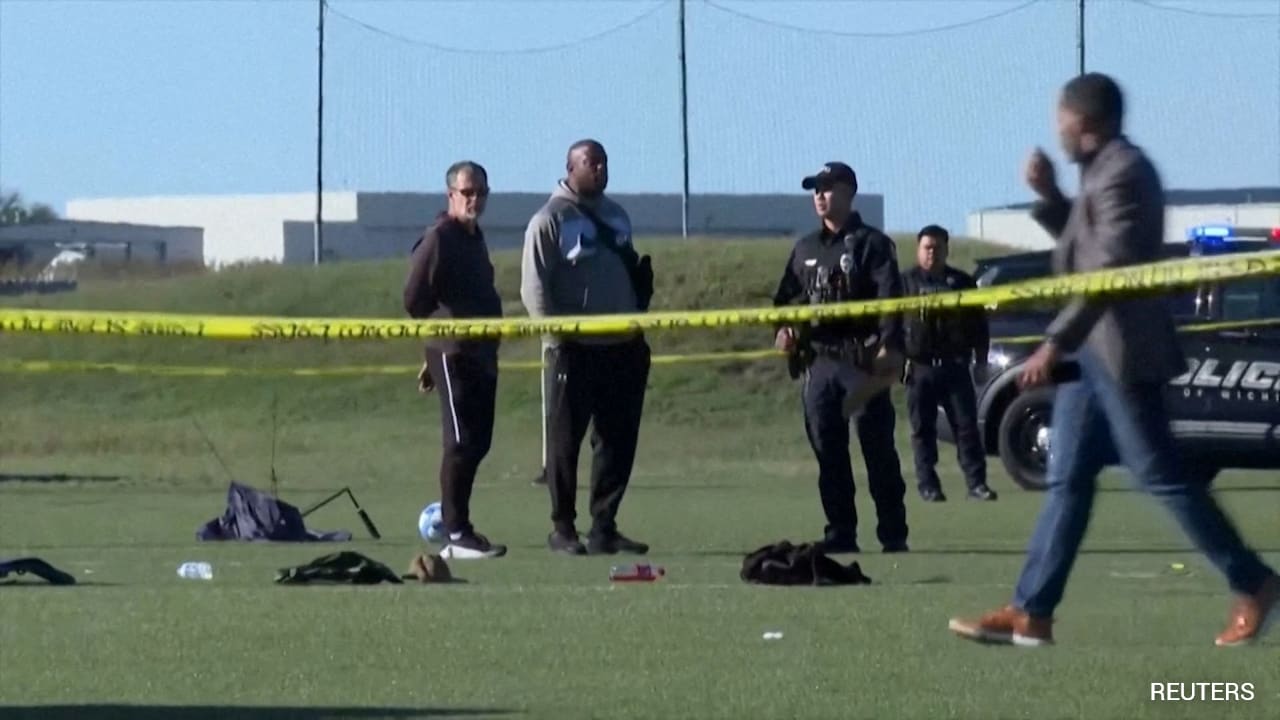
By 7:40 a.m., Tariq walks past a cluster of shuttered stalls. A motorcycle idles near a bend where the mud road narrows between thorn bushes. He does not speed up; hurrying in a place like this draws attention. Five minutes later, two shots crack through the dry morning air. No siren answers. No crowd gathers immediately—because in a place where suspicion hangs heavy, stepping outside too fast can put you next in line.
The Outrage That Refuses to Stay Quiet
When news of a teacher's killing spreads across Balochistan, grief quickly curdles into fury. Students march with books held above their heads. Teachers' associations call strikes, shutting down classrooms across towns and cities. Rights defenders and local commentators demand independent inquiries, pointing to long-standing allegations that unaccountable armed groups operate with impunity while families wait years for answers.
Official statements routinely promise investigations or blame rival actors, deepening the gap between state narratives and lived experience on the ground. That gap is where anger grows sharpest. When citizens feel neither courts nor security forces protect the people who shape their children's minds, outrage stops being a passing headline. It becomes a moral verdict.
Let's pause and be honest about how confusing this terrain can feel from the outside. Watching news from a distance, readers often ask simple, urgent questions: Who pulled the trigger? Why target someone unarmed? How can a province so vast and resource-rich remain locked in cycle after cycle of fear?
There is rarely a single tidy answer. Conflict thrives in shadows. Verification on the ground is difficult when reporters face restrictions, phone networks drop, and witnesses fear retaliation. Admitting that uncertainty does not mean surrendering to cynicism. It means refusing to flatten human tragedy into a lazy slogan.
What Is Really Lost When a Classroom Empties
When a teacher dies violently, the immediate loss belongs to a spouse, parents, and children sitting beside an empty chair. The secondary loss spreads outward like ripples on still water.
- Trust erodes further. Every unpunished killing convinces more families that law is a theater rather than a shield.
- Opportunity shrinks. When schools close or parents keep children home out of terror, an entire generation loses ground in literacy, science, and civic confidence.
- Voices go quiet. The people most capable of bridging divides—educators, elders, community organizers—either leave for safer cities or lower their voices until only gunfire speaks.
History shows a clear pattern in protracted internal conflicts: societies rarely heal through force alone. Heavy security measures may suppress visible protests for a season, just as retaliatory violence may inflame resentment for another. Durable peace requires something far harder to build than a checkpoint—it requires accountability, economic fairness, local representation, and basic physical safety for ordinary citizens doing ordinary work.
Carrying the Weight Forward
Imagine standing in an empty classroom ten days after a tragedy. The wooden benches are lined up in neat rows. On the green slate board, a half-erased diagram of a river basin still shows faint white lines where a hand traced the flow of water from high peaks down to the sea.
Nobody comes to wipe the board clean right away. The chalk stays there, faint and stubborn, waiting for someone brave enough to pick up an eraser and begin again.
Out on the road beyond the gate, the wind keeps blowing dust across the stones. A child stops by the threshold, clutching a notebook to her chest, listening for footsteps that do not come.