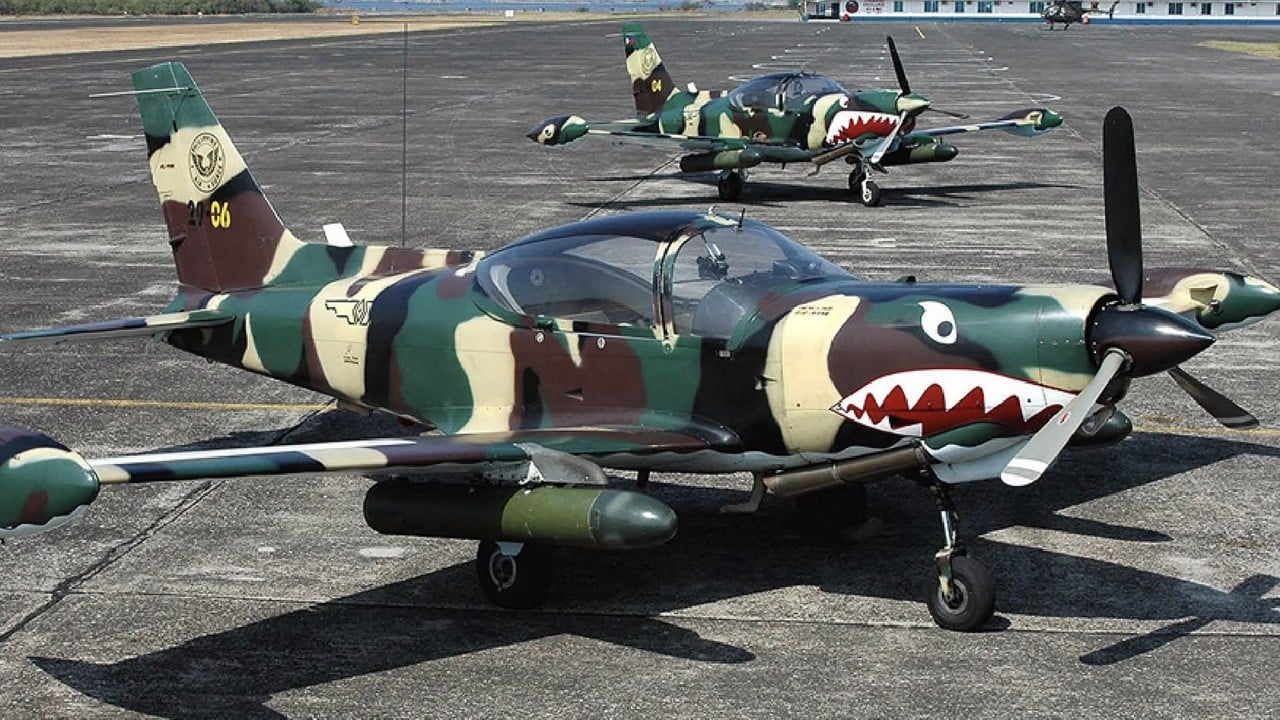
Metal screams before it breaks. Anyone who has spent time on a tarmac in Pampanga or Zamboanga knows the sound—not the clean, percussive roar of a fresh turbine spooling up, but the rattling, metallic cough of an airframe that has been patched together one too many times.
Silence follows. That is the worst part.
When a Philippine Air Force aircraft goes down, the headlines follow a predictable, sterile choreography. An official statement expresses profound sorrow. A board of inquiry convenes. A fleet gets grounded for "preventive maintenance." Within forty-eight hours, the national conversation shifts back to geopolitical posturing, defense budgets, and procurement timelines. The human beings inside the cockpit—men and women who strapped themselves into aging aluminum tubes with full knowledge of the odds—become statistics in a recurring debate over Philippine military modernization.
We have gotten this story backward for decades. We treat defense modernization as an abstract accounting exercise, a tug-of-war between spreadsheets in Manila and territorial ambitions in the West Philippine Sea. It is not. It is a matter of physics, fatigue, and the quiet, daily courage of pilots asked to defend an archipelago of more than seven thousand islands with museum pieces.
The Anatomy of a Predictable Tragedy
Consider a hypothetical scenario, built from the recurring details of actual Philippine Air Force incident reports over the past twenty years. Imagine a young co-pilot—let us call him Lieutenant Reyes—completing a pre-flight walkaround on a Vietnam-era utility helicopter or a hand-me-down trainer jet at dawn. The humidity already clings to his flight suit. He runs his hand along a riveted seam where fresh gray paint covers decades-old alloy. His ground crew, geniuses of improvisation who can fabricate a gasket out of scrap rubber when the supply chain stalls for six months, give him a thumbs-up. They did everything humanly possible with the tools they were given.
Reyes climbs in. He knows the aircraft's history. He knows that the original manufacturer stopped making certain spare parts before he was born. He knows that the avionics suite lacks modern terrain-warning redundancies, meaning if clouds swallow the mountain ridge ahead, his survival depends entirely on analog dials and muscle memory. Yet he pulls the canopy down, runs the checklist, and lifts off into the heavy tropical air.
When an aircraft like Reyes’s crashes—whether during a night-vision training exercise, a disaster relief run into a typhoon-battered province, or a routine patrol—we call it an accident. Technically, that is accurate. Practically, it is a mathematical certainty.
Every airframe has a fatigue life. Think of a paperclip bent back and forth. The first ten bends do nothing visible. The twentieth warms the metal. On the twenty-first, it snaps without warning. Commercial airlines retire jets long before their structural limits are tested, bound by strict international safety margins. Militaries operating on shoestring budgets do not have that luxury. They extend service lives. They cannibalize grounded planes to keep one sister ship airborne. They fly through monsoon squalls in machines built for a different century.
A History of Secondhand Ambitions
To understand why the Philippine Air Force keeps burying its best pilots, you have to look at the timeline of neglect that shaped it.
In the 1950s and 1960s, the Philippines boasted one of the most capable air forces in Southeast Asia. Filipino pilots flew F-86 Sabres and F-5 Freedom Fighters, enforcing airspace sovereignty and training allied aviators across the region. That era ended abruptly. When the US military bases closed in 1991 and 1992, Manila suddenly lost the security umbrella it had leaned on for nearly half a century. Almost simultaneously, the 1997 Asian Financial Crisis gutted public spending, and decades of internal insurgencies forced the Armed Forces of the Philippines to funnel nearly every available peso into ground troops, rifles, and boots.
The Air Force became an afterthought. By 2005, the last of the F-5 jets were retired without a replacement. For an entire decade—from 2005 to 2015—an island nation sitting atop one of the most contested maritime chokepoints on earth possessed zero supersonic fighter jets. Zero. If an unidentified aircraft entered Philippine airspace, the military could track it on radar, radio a polite warning, and watch it fly away untouched.
When the Revised AFP Modernization Program finally kicked off in 2012, the ambition was real, even if the funding remained chronically outmatched by the geography. Manila acquired twelve FA-50PH light combat aircraft from South Korea—agile, capable jets that finally gave Filipino pilots a supersonic platform again. They ordered Black Hawk helicopters to replace the aging, crash-prone Hueys that had become synonymous with aviation tragedies.
Yet progress moved at the speed of bureaucracy while threats accelerated at the speed of modern warfare.
| Capability Area | Operational Reality | Core Vulnerability |
|---|---|---|
| Fighter Fleet | 12 FA-50PH light combat aircraft | Too few airframes to maintain 24/7 air policing across a massive maritime Exclusive Economic Zone. |
| Rotary Wing | Mix of new S-70i Black Hawks and legacy Hueys | High operational tempo for disaster relief accelerates wear; older airframes suffer from acute spare-parts shortages. |
| Air Defense | Newly acquired ground-based radar and missile batteries | Incomplete coverage; massive blind spots remain over southern and eastern approaches. |
| Maritime Patrol | Limited turboprop surveillance aircraft | Insufficient endurance and sensor range to continuously monitor remote reefs and shoals. |
Look at those numbers. Twelve light fighters for a country spanning roughly 1,850 kilometers from north to south. When two are in scheduled depot maintenance, two are dedicated to pilot training, and two are on standby alert in Luzon, you are left with a handful of jets to cover an entire sovereign nation. Every single airframe gets pushed harder. Every pilot logs hours under tighter margins.
The Invisible Drain on the Cockpit
People outside the military often assume that buying a weapon system is like buying a car: you pay the sticker price, turn the key, and drive it off the lot. Defense procurement works nothing like that.
A modern fighter jet or multi-role helicopter is not a standalone machine; it is the tip of an immensely expensive logistical spear. For every hour a jet spends in the sky, it requires anywhere from ten to twenty hours of maintenance on the ground. It demands climate-controlled hangars to keep salt air from corroding sensitive electronics. It requires specialized diagnostic computers, simulator hours so pilots do not have to burn real fuel and airframe life for basic emergency drills, and a deep bench of certified technicians.
When a defense budget gets slashed or delayed by congressional wrangling, the cuts rarely cancel the headline-grabbing purchases. Politicians love ribbon-cutting ceremonies for new helicopters. Instead, the cuts quietly bleed the sustainment budget—the unglamorous line items for spare parts, engine overhauls, fuel allocations, and munitions.
I have spoken with retired aviators who described the quiet dread of watching their flying hours shrink while their administrative duties grew. Proficiency in aviation is a perishable skill. You cannot pause a pilot's muscle memory for six months while waiting for a replacement turbine blade to clear customs, then expect them to execute a flawless night landing in zero visibility. When flying hours drop below international minimums—roughly 180 to 200 hours per year for combat pilots—risk climbs exponentially.
And then there is the private sector poaching problem. Commercial airlines across Asia and the Middle East are perpetually hungry for disciplined, well-trained aviators and aircraft mechanics. A senior Air Force captain earning a modest government salary, watching friends perish in preventable crashes while waiting years for promised upgrades, faces an agonizing choice every time a commercial recruiter calls. Some stay out of pure, stubborn patriotism. Many leave. When they walk out the gate, they take decades of institutional knowledge with them, leaving younger pilots to navigate unforgiving skies with fewer mentors.
Why Geography Refuses to Wait
If the Philippines were a landlocked nation surrounded by peaceful neighbors, slow modernization would merely be an administrative embarrassment. Geography offers no such mercy.
The archipelago sits directly on the frontline of intensifying great-power friction in the Indo-Pacific. In the West Philippine Sea, foreign coast guard vessels and maritime militia ships routinely shadow, block, and water-cannon Philippine resupply boats bound for Ayungin Shoal and Pag-asa Island. Beneath the waves, unmarked submarines transit strategic straits. Above them, foreign reconnaissance drones and bombers test air defense identification zones with growing frequency.
At the exact same time, the Philippine military serves as the nation's primary first responder to climate catastrophe. An average of twenty typhoons slam into the islands every single year. When bridges wash out and provinces go dark, nobody calls a private contractor. They wait for the thump of Air Force rotor blades carrying rice, medicine, and rescue teams into valleys shrouded in low cloud ceilings and violent crosswinds.
This dual burden—external territorial defense and relentless internal disaster response—grinds equipment into dust. A helicopter designed for clean tactical insertions spends its life hauling heavy relief pallets through corrosive sea spray and volcanic ash. An air force built for peacetime patrol gets stretched across a twenty-four-hour emergency footing that never truly ends.
The Illusion of the Silver Bullet
Every time a fatal crash reignites public outrage, someone proposes a quick fix. Buy multi-role fighters immediately. Double the defense budget overnight. Lease aircraft from allies.
None of those ideas grapple with the deeper structural rot. Throwing billions of pesos at advanced fourth-generation fighters—like the F-16V or the JAS 39 Gripen, both long-rumored contenders in Manila’s Horizon 3 modernization phase—will accomplish very little if the foundational ecosystem remains broken. Put a Ferrari in a garage with no mechanics, no spare tires, and gravel roads, and you have not bought speed. You have bought an expensive paperweight.
True modernization requires boring, unsexy discipline. It means multi-year, non-lapsable funding laws so procurement isn't held hostage by annual political theater. It means building hardened, weather-protected airbases rather than parking multimillion-dollar aircraft on open tarmacs exposed to tropical storms. It means investing heavily in flight simulators, technical schools, and competitive retention pay for the enlisted mechanics who hold these machines together with sweat and torque wrenches.
Most of all, it requires honesty from civilian leadership. For years, administrations have sold the public a comforting fiction: that strategic alliances and diplomatic protests can substitute for credible, self-reliant deterrence. Allies matter. Mutual defense treaties provide vital deterrence against full-scale invasion. Yet no ally is going to fly your daily maritime patrols, rescue your stranded villagers during a Category 5 typhoon, or police your sovereign airspace every single afternoon. That burden belongs to the men and women wearing the Philippine flag on their shoulders.
What Remains After the Wreckage Clears
Go back to the tarmac after the investigation board finishes its work.
The press releases have stopped. The flags at the airbase have been raised back to full staff. The families have received their folded banners, their posthumous medals, and the quiet condolences of commanding officers who have delivered that exact speech far too many times.
Out on the flight line, the ground crew rolls open the hangar doors. Another aircraft is pulled into the morning sun. A young lieutenant walks across the concrete, helmet tucked under one arm, eyes squinting against the glare, checking the rivets, testing the control surfaces, trusting that the metal will hold together for one more sortie.
He climbs into the cockpit, straps himself in, and reaches for the ignition switch—flying on borrowed time, waiting for a country to decide what his life is actually worth.