The fluorescent strip lights of a South London supermarket hum at a frequency you only notice at 9:45 on a Tuesday night. You are standing in aisle four. In your left hand, a wire basket. In your right, a dented tin of chopped tomatoes.
Two weeks ago, you bought one tin. Tonight, you reach for four. For an alternative perspective, consider: this related article.
You feel slightly ridiculous doing it. A voice in the back of your skull—dry, skeptical, distinctly British—mutters that you are overreacting. You tell yourself you are just saving a trip in the rain. You avoid eye contact with the teenager stacking digestive biscuits three yards away. Yet the extra weight in your basket feels strangely comforting, like locking the front door twice before going upstairs to sleep.
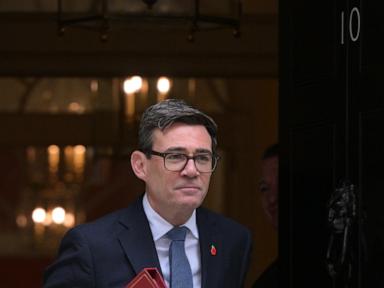
Now, picture Wes Streeting standing in that exact same aisle. Further insight on this trend has been provided by BBC News.
Not as an abstract figure on a Sunday morning political broadcast, framed by bookshelves and speaking in measured, media-trained cadences. Picture him as a man in a coat, under those same buzzing lights, quietly deciding that the pantry at home needs a little more ballast. When the UK’s Health Secretary—a senior cabinet minister with access to intelligence briefings the rest of us will never see—admits he began stockpiling food weeks ago amid rising global threats, the sound of a tin hitting a shopping basket changes entirely.
It stops sounding like paranoia. It starts sounding like a translation.
The Architecture of Assumed Abundance
For nearly eighty years, the average British household has operated on an unspoken, miraculous assumption. We assume that tomorrow morning, the milk will be there. We assume the lorries will roll up the M1 through the dark, that the shipping containers will clear Felixstowe without incident, and that the digital ledgers connecting a wheat field in Manitoba to a bakery in Manchester will stay lit.
We have forgotten how thin the ice actually is.
Modern food logistics do not work like a well-stocked larder; they work like a high-wire act performed without a net. To keep prices low and shareholders happy, supermarkets spent decades perfecting "just-in-time" delivery systems. Warehouses shrank. Transit trucks became the storage facilities. At any given moment, the United Kingdom holds roughly three to five days' worth of fresh food inside its borders. If the ports choke, or the power grid flickers, or a cyberattack scrambles the payment terminals at regional distribution hubs, the shelves do not empty over months.
They empty by Thursday afternoon.
Consider a hypothetical family—let’s call them the Patels, living in a terraced house in Coventry. Both parents work. They have a seven-year-old son who eats bananas like they are going out of style and a cat with an expensive, specific dietary requirement. On a normal Friday, their fridge holds enough for the weekend: half a carton of oat milk, three eggs, some wilting spinach, and leftover curry. They rely on the corner shop five minutes away and the big superstore ten minutes down the dual carriageway.
Now, introduce a shock. Not a cinematic asteroid or a Hollywood invasion, just the messy, cascading reality of modern geopolitical friction. A subsea cable severed in the North Sea. A sudden spike in maritime insurance rates through the Red Sea and the Strait of Hormuz that halts container traffic. A coordinated ransomware strike on European logistics software.
By Saturday morning, the Patels wake up to discover their debit cards decline at the corner shop because the payment processor is offline. By Saturday evening, the superstore is open, cash-only, and stripped bare of bread, pasta, and baby formula by people who arrived four hours earlier. By Sunday night, the Patels are boiling the last cup of rice at the back of the cupboard while their seven-year-old asks why there are no bananas.
Fear.
It arrives not with a bang, but with the quiet click of an empty fridge door closing.
Why Official Advice Sounds Like Whispering in a Windstorm
Governments know this math intimately. For years, civil contingency planners in Whitehall have wargamed these exact scenarios, watching how quickly social trust frays when calories become scarce. In 2024, the UK government quietly launched its "Prepare" campaign, urging citizens to assemble basic emergency kits—bottled water, torches, wind-up radios, and enough non-perishable food to last seventy-two hours.
At the time, most of the country met the advice with a collective shrug or a meme. Brits pride themselves on a stoic, slightly ironic detachment. Prepping, in the popular imagination, belonged to eccentric survivalists in rural Montana burying shipping containers full of freeze-dried beef, not commuters in Zone 3 wondering if their train on the Northern Line would actually turn up.
There is a psychological chasm between a government website telling you to "consider resilience" and a sitting cabinet minister saying, I started buying extra food weeks ago.
When official channels issue preparedness guidelines, they speak in the language of institutional caution—a dialect designed to inform without causing a run on the banks. Citizens hear the words, filter them through decades of uninterrupted comfort, and file them under someone else’s problem. We treat resilience like we treat reading the terms and conditions on a phone update: we know we should, we never do, and nothing bad seems to happen.
Until someone inside the room breaks character.
When a senior politician reveals personal preparation, it pierces the bubble of institutional reassurance. It forces an uncomfortable question onto every kitchen table from Aberdeen to Penzance: What does he know that I don't?
You do not need a security clearance to read the headlines driving that anxiety. Across Europe, defense chiefs have spent the last two years warning that the post-Cold War peace dividend has expired. Hybrid warfare—sabotage of energy infrastructure, GPS jamming over the Baltic, state-sponsored cyberattacks on hospitals and utilities—is no longer a theoretical threat studied in military academies. It is happening weekly. Meanwhile, supply chains stretched taut by climate-driven harvest failures and regional wars have zero slack left to absorb a major hit.
I remember the week in March 2020 when the toilet paper vanished. Not because anyone suddenly needed four hundred rolls, nor because the paper mills had burned down, but because a collective realization rippled through millions of minds at the exact same speed: the system only works if everyone stays calm, and nobody is staying calm. Standing in an aisle picked clean down to the cardboard dividers, smelling the stale air and watching two strangers argue over a multipack of kitchen roll, you realize how fast civilization’s veneer peels back when people feel exposed.
Panic is not a failure of character. Panic is what happens when preparation arrives forty-eight hours too late.
The Arithmetic of Quiet Readiness
So what separates sensible preparedness from the kind of frantic hoarding that breaks supply chains in the first place?
Timing.
Hoarding is a stampede. It happens all at once, driven by acute fear, stripping shelves faster than warehouses can replenish them and leaving the elderly, the disabled, and shift workers empty-handed. Stockpiling—true, steady, unglamorous household resilience—is the exact opposite. It is buying one extra bag of lentils on a quiet Wednesday when the shelves are full and the lorries are running on schedule.
Think of it like wearing a seatbelt. You do not put your seatbelt on because you plan to crash into a lamppost on the way to work. You put it on because physics does not care about your optimism, and adjusting the strap takes three seconds while the car is still parked in the driveway.
In practical terms, building a buffer does not require a cellar, a fortune, or a tactical backpack. It requires shifting how a household thinks about its pantry. Instead of treating the cupboard as an empty space between supermarket runs, you treat it as a revolving reservoir.
Start with water and calories that require little or no energy to prepare. If a cyberattack or severe storm knocks out the local substation, an electric induction hob becomes a very expensive black glass table. Tinned beans, chickpeas, mackerel, peanut butter, oats, crackers, and UHT milk do not need boiling water to keep a human being warm and functional. Add a manual tin opener—a tiny piece of metal that becomes worth its weight in gold the moment you realize your electric opener is dead—alongside a basic torch, spare batteries, and a week’s supply of essential prescription medications.
To make this concrete, imagine our hypothetical family in Coventry again, only this time, six months earlier, they read the news, swallowed their mild embarrassment, and began adding three extra items to their weekly shop. Nothing dramatic. An extra bag of basmati rice here. Two tins of kidney beans there. A four-liter jug of water tucked behind the coats under the stairs.
When the payment terminals go dark on that hypothetical Saturday morning, the Patels do not sprint to the superstore. They do not join a queue stretching around the car park in the freezing drizzle. They stay inside, light a candle, open a tin of tomatoes and a packet of pasta, and play cards with their son while engineers work to restore the grid.
By building their own seventy-two-hour buffer when times were calm, they removed themselves from the crisis. They left the remaining food on the superstore shelves for the neighbor who couldn't afford to stock up in advance.
Resilience, it turns out, is not selfish. It is one of the most civic-minded things a household can practice.
Living With Uncertainty Without Losing Your Mind
Still, there is an emotional weight to this that no checklist can fully resolve.
Admitting that the modern world is fragile feels like a betrayal of the future we were promised. We grew up believing progress moved in a straight line—faster internet, smoother logistics, fewer disruptions, endless abundance at the tap of a screen. To buy extra tins of soup because a cabinet minister mentioned rising threats is to acknowledge that history has resumed its normal, turbulent service.
It is unsettling. Sometimes, staring at a shelf of emergency supplies, you might wonder if you are inviting anxiety into your home rather than keeping it out. That doubt is normal. Nobody wants to live in a permanent crouch, flinching at every breaking news alert on their phone.
The antidote to that anxiety is proportion. You set a clear boundary. You decide what "enough" looks like for your household—seven days of food, ten liters of water per person, a small stash of physical cash in low denominations, a power bank kept charged in a drawer—and once that box is ticked, you stop. You rotate the food into your normal dinners so nothing expires or goes to waste. You close the cupboard door, step outside, and live your life fully, knowing the floor beneath you is solid.
History shows us that societies rarely collapse from a single blow; they stumble when ordinary people are caught entirely off guard by disruptions that experts saw coming months away. From the winter blackouts of the 1970s to the fuel protests of 2000 and the supply shocks of the 2020s, the households that weathered the storm with grace were never the ones shouting loudest on television. They were the ones who quietly topped up their cupboards while the sun was still shining.
Walk back down that South London supermarket aisle at 9:45 on a Tuesday night.
The strip lights still hum. The teenager is still stacking biscuits. You stand in front of the shelves, holding your wire basket, weighing the quiet judgment of strangers against the quiet security of your own kitchen.
You reach out, pick up two extra tins, and set them gently on the bottom of the basket—listening to the solid, unmistakable clink of metal meeting metal before you walk toward the till.