The clack-clack-clack of the lift chain is supposed to feel like a heartbeat speeding up before a first kiss.
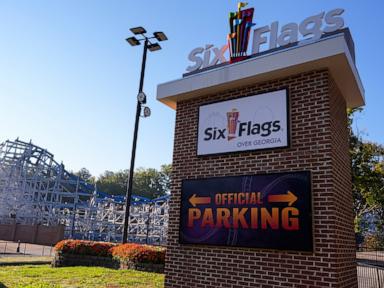
Sunlight. Kettle corn. The sweet, slightly burnt smell of cotton candy drifting across warm asphalt in Austell, Georgia. When you stand in line at Six Flags Over Georgia, you are buying a controlled brush with terror. You pay for the illusion that gravity is a tame dog on a short leash, waiting for a whistle to jump. In other news, we also covered: Why Pakistan School Roofs Keep Collapsing on Children.
Silence.
Then a siren, or a radio crackle that sounds sharper than it should, and the whole park's rhythm fractures. A fatal ejection from a roller coaster does not just end one life in a split second; it ripples outward into every person who heard the scream, every operator who pushed a green dispatch button, every family standing near a funnel-cake stand wondering why the ride stopped mid-course and stayed stopped. The Guardian has provided coverage on this fascinating subject in great detail.
I have stood on midway concrete on hot afternoons where the air shimmered like liquid glass and the biggest worry in my head was whether my sunglasses would fly off on the first drop. That memory makes the thought of an ejection hurt worse. Because a roller coaster is built on trust. You hand your body over to steel rails, welded joints, hydraulic locks, and a teenager or college student who has checked two hundred lap bars before lunch.
The Fraction of a Second Between Thrill and Tragedy
To understand what goes wrong when a rider is fatally ejected from a coaster, you have to look at physics without the romance.
A roller coaster does not pull you through inversions by magic. It uses potential energy at the top of a hill and converts it into kinetic energy on the descent, throwing lateral and vertical forces at your body that can exceed three or four times the pull of Earth's gravity. A rider feels "airtime"—that weightless lift out of the seat over a camelback hill—precisely because the track is dropping away faster than inertia lets go of the human body.
To make this abstract tug-of-war easier to picture, imagine a hypothetical rider—let's call her Maya—sitting in the back row of a steel coaster on a Saturday afternoon. Maya has ridden coasters her whole life. She knows how to brace her feet, how to pull down on a lap bar until it clicks, how to laugh when her stomach floats. Nothing about Maya's afternoon is unusual. That is what makes the physics chilling. When a train crests a sharp hill at forty or sixty miles an hour, upward force tries to lift Maya out of her cushion while forward momentum tries to carry her along a tangent line away from the curve. The restraint is the only argument keeping her inside the envelope of the car.
When that argument fails—whether through a mechanical fault, an unlatched or improperly secured restraint, rider movement, or an interaction of human and machine factors investigators must untangle—there is no second chance in midair. Gravity does not negotiate.
Investigations into fatal amusement ride incidents rarely conclude in an afternoon. State regulators, ride manufacturers, engineers, and park safety teams examine restraint logs, surveillance angles, maintenance records, and witness accounts piece by piece. Rumors spread fast on social media within minutes of an emergency call, often using loaded words like "ejected" before investigators have determined whether a restraint failed, opened, or was bypassed. Separating verified facts from early speculation is hard when people are grieving and scared, yet accuracy is the only way real accountability—and real fixes—ever happen.
When Routine Meets Human Frailty
Amusement parks run on repetition. That is both their strength and their blind spot.
A ride operator might check dozens of restraints an hour in ninety-degree heat, squinting against glare, listening to music bleeding from speakers, trying to keep queues moving so guests do not complain about wait times. Repetition breeds muscle memory. Muscle memory can be sharp, or it can become a blur where a quick tug looks thorough until a tragedy proves otherwise.
Consider what happens next: a ride shuts down, yellow tape goes up around an exit path, and guests who were laughing ten minutes earlier are ushered toward the gates with quiet faces. Everyone wants a simple villain or a single neat explanation. Was it a worn part? Was it an operator error? Was it something a rider did in a moment of panic or misjudgment?
Think of a hypothetical ride attendant—let's call him Devon—working the unloading platform on a humid July shift. Devon has been trained on checklists and safety protocols. He knows the rules cold. Still, human beings get tired, hot, distracted, and rushed. If a system relies almost entirely on split-second human perfection without foolproof physical locks, sensors, or clear margins for error, the odds eventually test someone on an ordinary day.
At the same time, blaming front-line workers or jumping straight to conclusions before technical inspections are complete can miss deeper systemic issues. Thorough accident investigations look at inspection intervals, restraint design, rider sizing and fit, operational staffing, and emergency response. When a fatal incident occurs at a major park like Six Flags Over Georgia, the scrutiny is intense because millions of visitors place their physical safety in those hands every year.
The Invisible Weight Carried by Everyone Left Behind
News headlines move fast. A wire report posts initial details, updates when authorities release a name or status, and then shifts to the next breaking story.
The people affected do not get to scroll past it.
A family waiting for answers faces an unbearable collision of grief and public spectacle. Witnesses who saw something terrible from a nearby queue or path carry images that do not fade easily just because the park reopens days or weeks later. Park employees who responded to an emergency—some barely out of high school—face trauma that rarely fits neatly into a corporate incident report.
Even regular parkgoers feel a quiet hesitation the next time a restraint clicks shut. You pull the bar down. You tug it once. You tug it twice. You listen for the ratcheting click and watch the indicator light or listen for the operator's check. That small extra tug is a human instinct trying to reclaim control over a machine built to out-muscle you.
What if we treated amusement safety not as a PR crisis to manage after the sirens fade, but as a living promise that demands constant humility? Steel fatigues. Procedures age. Crowds grow bigger and more distracted. A park's true safety culture shows up not in glossy brochures, but in what happens when a sensor acts up, a restraint feels questionable, or a guest seems unsteady—whether the culture rewards stopping the train or pushing it out.
How We Should Read the Next Update
When news breaks about a fatal coaster incident, the instinct is to look for shock value. Who fell? How high? What did witnesses say?
A better question is what the investigation reveals once emotions cool and engineers put the evidence under a microscope. Did the restraint system lock properly? Were maintenance schedules followed to the letter? Did operator procedures catch anomalies before dispatch? Were there warning signs on earlier cycles that went unreported or unaddressed?
Readers do not need sensationalism to care about this story. The raw truth is already heavy enough. A person went to a place built for pure escapism and never came home. Behind every technical term in an inspection report—lap bar, locking mechanism, restraint check, dispatch cycle—is a human life and a family whose world changed in a heartbeat.
Steel tracks still gleam in the Georgia sun, curving over green trees and winding paths where laughter once echoed from hill to hill.