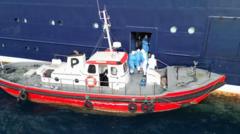
Cruising is supposed to be about sunset dinners and remote glaciers, not medical evacuations and biohazard suits. But right now, the MV Hondius is sitting off the coast of Cape Verde like a floating ghost ship. After a month-long voyage from Argentina, the vessel has become the center of an international health crisis. Three people are dead. Three more were just airlifted to Europe. If you've seen the footage of health workers in full protective gear hauling patients onto medical planes, it's easy to feel like we're back in 2020.
But let’s be clear right now. This is not the start of a new global pandemic.
The culprit is Hantavirus, specifically the Andes strain. It’s a nasty, rare respiratory disease that usually involves rodents, not cruise ships. While the World Health Organization (WHO) is scrambling to coordinate a response across five different countries, the actual risk to the general public is incredibly low. Here’s the reality of what’s happening on the water and why the panic is largely misplaced.
The Timeline of a Shipboard Nightmare
The MV Hondius left Ushuaia, Argentina, on April 1, 2026. It was a dream itinerary. The ship visited Antarctica, South Georgia, and remote islands like Tristan da Cunha. But the trouble started early. On April 6, an adult male began showing symptoms—fever, headache, and diarrhea. By April 11, he was dead.
Since then, the numbers have trickled in with terrifying consistency.
- Three fatalities have been confirmed.
- Eight total cases have been identified, with five confirmed by lab tests.
- 147 passengers and crew remain on board, mostly confined to their cabins.
The latest development involves three patients being flown out of Praia, Cape Verde. One medical plane headed for the Netherlands, and another landed in Spain’s Canary Islands. Cape Verde health officials finally washed their hands of the situation on Wednesday, declaring their duties complete once the planes were in the air. The ship is now steaming toward Las Palmas, where Spanish authorities have agreed to let it dock.
Why This Outbreak is Different
You're probably wondering how a "rodent virus" ends up on a high-end expedition ship. The leading theory from the Argentine government is almost tragically mundane. A Dutch couple—both of whom eventually died—likely contracted the virus during a bird-watching excursion near a garbage dump before they ever stepped foot on the ship.
Hantavirus usually hits people who breathe in dust contaminated by rodent droppings or urine. It doesn't typically hop from person to person. However, the Andes strain is the exception to the rule. It can spread through close human contact, which is exactly why the WHO is watching this so closely. This is the first time a Hantavirus outbreak has ever been recorded on a cruise ship.
Don't let the "human-to-human" tag scare you into thinking this is COVID-2.0. To catch this, you basically need to be living in the same room or caring for a symptomatic person without protection. It’s not drifting through the ship’s air vents.
The Cape Verde Standoff
If you think the passengers are having a rough time, imagine the logistics. Cape Verde refused to let the ship dock. They sent medical teams on board in three separate waves to assess the sick, but they weren't about to let a potential outbreak hit their shores.
This created a tense standoff. The ship sat in the Atlantic while diplomats from the UK, South Africa, the Netherlands, and Spain argued over who was responsible. Eventually, Spain stepped up. The MV Hondius will be received in the Canary Islands for further medical management. Until then, the passengers are living a weird, isolated existence, practicing "maximal physical distancing" and waiting for the next temperature check.
What You Need to Know if You’re Traveling
If you have a cruise booked, don't cancel it. The odds of encountering Hantavirus on a standard Caribbean or Mediterranean run are effectively zero. This was a specific "perfect storm" involving a South American strain and a very specific itinerary.
That said, the situation on the MV Hondius offers a few blunt lessons for any traveler:
- Excursion Awareness Matters: If you’re in regions known for Hantavirus (like parts of Argentina or Chile), stay away from areas with visible rodent activity or poorly ventilated buildings.
- Symptoms Aren't Always Obvious: Early Hantavirus looks like a common flu. Fever, chills, and muscle aches. The "tell" is when it rapidly progresses to pneumonia or respiratory distress.
- The 45-Day Rule: The WHO is advising anyone who was on the ship to monitor their health for 45 days. This virus has a long fuse.
The MV Hondius is currently heading north. One body remains on board and will be removed once they hit the Canary Islands. It’s a somber end to an expedition that was meant to be the trip of a lifetime. The ship's doctor was among those evacuated, which tells you everything you need to know about how hard this hit the small crew.
If you're watching the news, ignore the sensationalist headlines. This is a localized tragedy, not a global threat. The medical evacuations were a success, the patients are getting specialized care in Europe, and the ship is finally moving toward a port that will take them.
The next step for the industry is clear. We're going to see much tighter screening for passengers coming out of high-risk ecological zones. Expect more questions about where you’ve been before you board, not just where you’re going. Stay vigilant, but stop worrying about the air you're breathing.