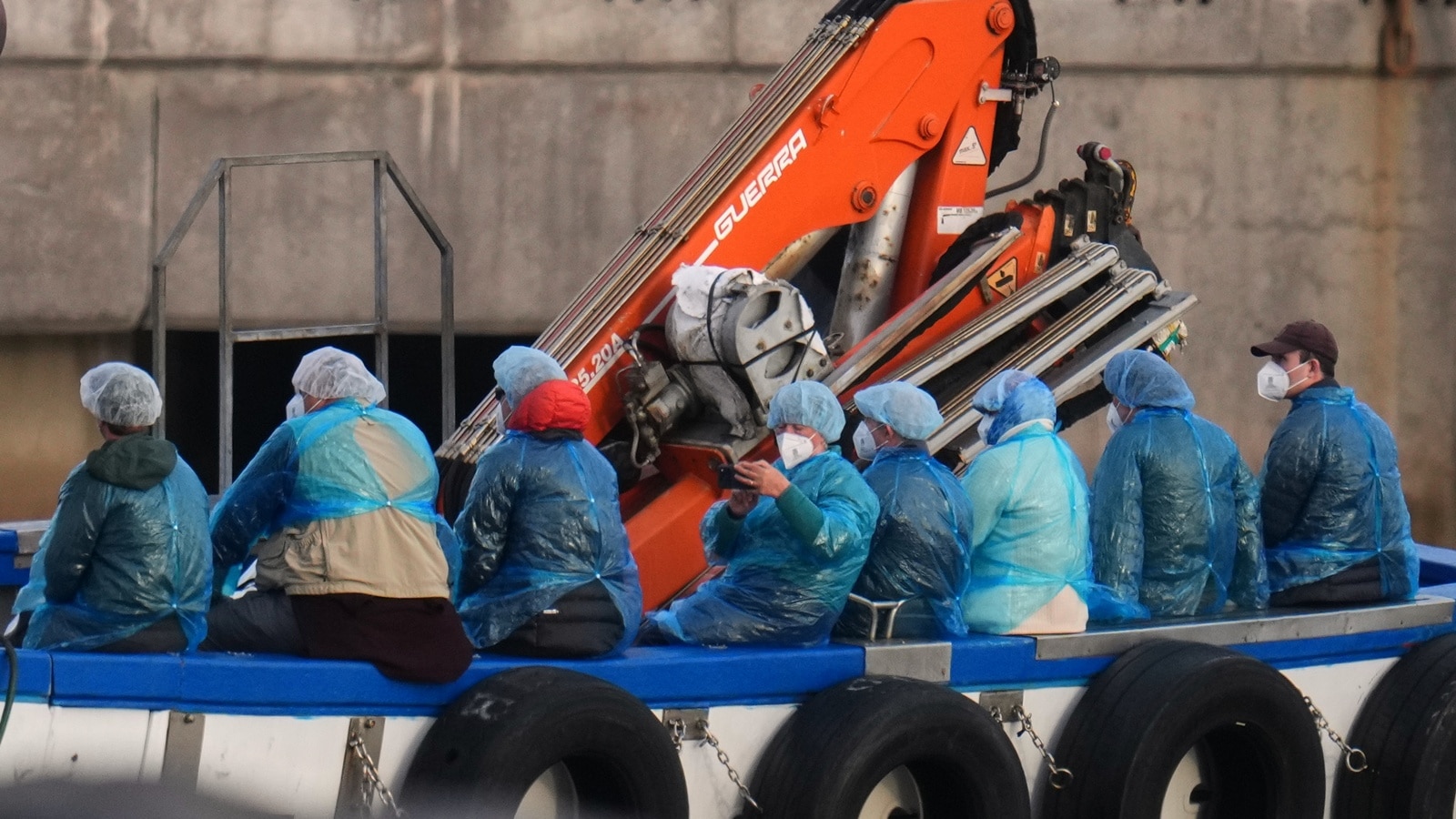
Health authorities are currently monitoring a group of American cruise passengers who were flown back to the United States following a confirmed hantavirus infection on a vessel. While one passenger has officially tested positive, the incident has triggered a broader scramble to contain a pathogen rarely associated with maritime travel. This is not a standard case of norovirus or seasonal flu. Hantavirus is a severe respiratory disease primarily transmitted by rodents, and its appearance on a luxury liner suggests a significant failure in the sanitary barriers that separate the wilderness from the high-seas tourism industry.
The situation began when a passenger displayed acute respiratory distress, a hallmark of Hantavirus Pulmonary Syndrome (HPS). Subsequent testing confirmed the presence of the virus, prompting the immediate extraction and repatriation of those in close contact. The focus now shifts from the individual patient to the systemic gaps that allowed a rodent-borne virus to bridge the gap between rural environments and a controlled, multi-billion dollar maritime asset.
The Biology of a High Seas Contagion
Hantavirus is not a "human" virus in the traditional sense. It belongs to a family of viruses mainly carried by rodents, specifically deer mice, white-footed mice, and cotton rats. Humans become infected through the inhalation of aerosolized particles—essentially breathing in dust contaminated with the urine, droppings, or saliva of infected pests.
On land, this usually happens in dusty barns or seasonal cabins. On a ship, the presence of such a pathogen implies a breach in the vessel’s integrated pest management (IPM) systems. Cruise ships are essentially floating cities with complex ductwork, vast food storage areas, and thousands of hidden voids. If a rodent carries the virus onto the ship via a supply pallet or during a port call in a high-risk region, the ship’s internal ventilation can become a delivery mechanism for the pathogen.
The mortality rate for HPS can reach 38%, making it far more lethal than the gastrointestinal issues that usually make headlines in the travel sector. It starts with fever and muscle aches but can rapidly progress to severe shortness of breath as the lungs fill with fluid. Because the incubation period can last up to several weeks, the passengers currently under monitoring represent a ticking clock for public health officials.
Why the Cruise Industry Was Unprepared
For decades, the maritime industry has focused its medical protocols on norovirus. They have mastered the art of the "deep clean" using bleach and hydrogen peroxide foggers. However, hantavirus requires an entirely different set of defenses. It is an environmental threat, not a person-to-person one.
Most cruise lines rely on local contractors for provisioning in remote ports. When a ship docks in a region where hantavirus is endemic—such as certain parts of South America or the American Southwest—the risk travels with the cargo. A single crate of produce stored in a rural warehouse before being loaded onto a ship can introduce the virus. If that crate contains rodent droppings that are subsequently disturbed by crew members or air currents, the aerosolization process begins.
The industry’s current reliance on high-volume, quick-turnover logistics means that rigorous inspection of every pallet for rodent activity is often sacrificed for speed. We are seeing a collision between industrial efficiency and biological reality.
The Repatriation Logistical Nightmare
Moving potentially infected individuals across international borders involves a complex dance of diplomatic and medical protocols. The decision to fly these passengers back to the U.S. suggests that the ship's onboard medical facilities—while advanced—were deemed insufficient to handle a potential outbreak of a high-consequence pathogen.
Air transport for hantavirus monitoring requires specialized bio-containment or, at the very least, strict isolation to prevent further exposure. This isn't just about the passengers' health; it’s about the liability. The cruise line is facing a situation where their primary product—safety and escapism—has been compromised by a "wilderness" disease that shouldn't exist in a sterilized, premium environment.
The Hidden Cost of Exotic Itineraries
As cruise lines push deeper into "expedition" style travel, visiting remote coastal regions and untouched wilderness, the risk of zoonotic spillover increases. Zoonotic diseases—those that jump from animals to humans—are the primary threat of the 21st century. By bringing thousands of urban dwellers into close proximity with rural rodent populations, the travel industry is inadvertently creating new pathways for rare viruses.
Most passengers assume that the "bubble" of the ship protects them from the local environment. This incident proves that the bubble is porous. The supply chain is the most vulnerable point of entry.
- Palletized Goods: Rodents often nest in wooden pallets or shrink-wrapped goods.
- Ventilation Voids: Modern HVAC systems can move particles across multiple decks in minutes.
- Port Infrastructure: Older piers and storage facilities in developing regions often lack modern pest exclusion technology.
The reality is that a ship is a closed loop. If a pathogen enters the loop, it stays there until it is aggressively hunted down and eradicated. In the case of hantavirus, that means finding the specific rodent source, which is much harder than simply wiping down a handrail.
A Failure of Detection and Early Warning
The most damning part of this development is the delay between exposure and response. Hantavirus symptoms are famously non-specific in the early stages. A passenger with a fever and a headache is often told to rest in their cabin or is treated for a common cold. By the time the "heavy breathing" phase starts, the virus has already had days to circulate.
The industry needs to move toward metagenomic sequencing or more advanced rapid-diagnostic kits on board. Currently, most ships carry basic flu and COVID-19 tests. They are not equipped to identify a rare Bunyaviridae infection. This leaves a massive blind spot in their medical defense. If the ship cannot diagnose the threat, it cannot contain it.
Furthermore, the reporting requirements for these incidents are often murky. International maritime law requires reporting of "outbreaks," but a single case of an unusual virus often falls into a gray area of disclosure. The fact that this reached the level of a coordinated repatriation effort indicates that the risk was too high to keep quiet.
Structural Vulnerabilities in Ship Design
Engineers design cruise ships for comfort and capacity, but rarely for total biological isolation. The "open concept" of many modern liners, with massive atriums and interconnected ventilation, makes it nearly impossible to seal off a single section of the ship.
If a rodent is in the galley or the dry-store area, its droppings can be disturbed by the constant vibration of the ship's engines or the movement of the air conditioning. These micro-particles are invisible. A passenger doesn't need to see a mouse to catch hantavirus; they just need to be in a room where the air has been contaminated.
The industry must reconsider its ventilation filtration standards. HEPA-grade filtration is common in hospitals but rare in the standard staterooms of a cruise ship due to the energy costs required to push air through such dense filters. This incident may force a regulatory shift toward higher air-quality standards across the entire fleet.
Beyond the Immediate Positive Case
The passenger who tested positive is only the visible tip of the problem. The real concern for health authorities is the "sub-clinical" or early-stage cases among the other repatriated travelers. Because the virus can take up to five weeks to manifest, these individuals must remain in a state of high-alert monitoring.
This creates a secondary crisis: the psychological impact on the cruise market. Travelers are used to the idea of a "stomach bug" on a ship. They are not prepared for a disease that can lead to 40% mortality. The cruise line involved will likely face intense scrutiny over its maintenance logs and pest control contracts.
The investigation will undoubtedly look at the ship’s sanitation certificates. Every vessel must undergo inspections, but these are often snapshots in time. They don't account for a rodent that slips on board five minutes after the inspector leaves. The current strategy is reactive. To survive the era of emerging zoonotic threats, the industry has to become predictive.
The Logistics of the Trace-Back
Public health officials are now performing a "trace-back" investigation. They aren't just looking at where the passengers went; they are looking at where the food came from. Every head of lettuce, every box of linens, and every piece of luggage is a potential data point.
If the source is a specific port facility, that location will need to be quarantined or overhauled. If the source is the ship itself—meaning a resident population of rodents has established itself in the bowels of the vessel—the ship may need to be pulled from service for a total "gas-out" or fumigation. The financial implications of a ship being "out of service" for weeks are staggering, often exceeding tens of millions of dollars in lost revenue and refunds.
The cruise industry operates on thin margins for time. They have "turnaround days" where a ship is emptied and refilled in less than twelve hours. This speed is the enemy of thorough sanitation. You cannot find a hidden rodent nest in a twelve-hour window while three thousand people are boarding.
Reevaluating the Definition of Safety
The industry often touts its "Safe Return to Port" engineering and its advanced medical centers. But hantavirus is a reminder that the greatest threats aren't mechanical or even human; they are microscopic and environmental.
The focus of the coming months will be on the health of the monitored passengers, but the long-term impact will be on the industry’s protocols. There is no vaccine for hantavirus. There is no specific treatment beyond supportive care in an ICU. The only real defense is exclusion.
If the industry cannot guarantee that its supply chain is rodent-free, it cannot guarantee that its ships are safe from wilderness pathogens. This isn't a freak accident; it's a systemic vulnerability that was finally exploited by a lethal virus.
The passengers sitting in monitoring units today are the first sign that the barrier between the wild and the pampered has worn thin. We have built faster, larger, and more luxurious ships, but we have not built them to be impenetrable to the creatures that have followed human commerce for millennia.
The next step is not just a cleaning of the ship, but a complete overhaul of how the industry interacts with the environments it visits. Without a radical change in how provisions are handled and how air is filtered, this will not be the last time a rare pathogen makes it onto a guest list. Control the vermin, or the vermin will control the itinerary.