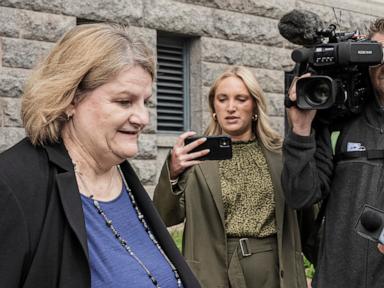
A public courtroom is usually the last place you expect to see a high-stakes game of hide-and-seek. But that is exactly what happened inside a Milwaukee courthouse, and the fallout has completely upended the state's legal system. Former Milwaukee County Circuit Judge Hannah Dugan faces up to five years in federal prison after a jury convicted her of felony obstruction. Her crime? Helping an undocumented Mexican immigrant slip out of a private door to evade federal immigration officers.
This isn't just a story about a single bad day in a public building. It's a flashpoint in a massive national battle over federal immigration enforcement inside local state courts. While the Trump administration and its allies claim the conviction proves that nobody is above the law, supporters of the former judge argue she was unfairly targeted in a political witch hunt meant to scare the judiciary.
The facts of the case are clear, and the legal consequences are unfolding right now.
The Backroom Exit That Sparked a Federal Felony
The entire case hinges on the events of April 18, 2025. Eduardo Flores-Ruiz, a 31-year-old Mexican national who had illegally reentered the United States, walked into the Milwaukee County courthouse for a routine state battery hearing. He had no idea Immigration and Customs Enforcement (ICE) agents were waiting for him in the corridor outside.
Judge Dugan found out the agents were there. Instead of continuing with business as usual, she took matters into her own hands.
According to federal prosecutors and trial testimony, Dugan left her bench to confront the ICE agents. She told them their administrative warrant lacked the proper legal grounds to make an arrest inside her courthouse. Then she directed them to go down to the office of the chief judge to clear the paperwork.
It was a distraction tactic. While the agents walked away to find the chief judge, Dugan went back inside, took the Flores-Ruiz case entirely off the record, and moved it to the top of her docket. She told his defense lawyer that the next hearing could happen via Zoom. Then she opened a private jury door and escorted Flores-Ruiz and his attorney out the back.
The escape didn't work. ICE agents spotted Flores-Ruiz down the hallway, chased him outside, and tackled him after a short foot race. He was eventually convicted of illegal reentry and deported. But the federal government wasn't done. A week later, FBI agents walked into the courthouse, put handcuffs on Judge Dugan, and led her out in front of her peers.
Audio Recordings and the Defense That Failed
During the four-day trial, federal prosecutors presented heavy evidence that ruined Dugan's defense. The most damaging piece was an audio recording from the courtroom itself.
The microphone caught Dugan talking to her court reporter right after the incident. On the tape, she explicitly stated that she would "take the heat" for letting Flores-Ruiz out through the back door. That single phrase gutted her defense team's argument that she was just trying to follow local courthouse protocol.
Her lawyers tried to argue that state judges have judicial immunity. They claimed she was trying to maintain order and protect the decorum of her courtroom from federal disruption. But U.S. District Judge Lynn Adelman rejected those arguments, ruling that judicial immunity applies to civil lawsuits, not federal criminal charges. The jury deliberated for six hours before finding her guilty of felony obstruction, though they acquitted her on a separate misdemeanor charge of concealing an individual.
The political reaction was instant. Republican lawmakers in Wisconsin immediately threatened to impeach her if she didn't step down. Facing enormous pressure and a wrecked career, Dugan resigned from her seat on January 3, 2026, ending her nine-year tenure on the bench.
Why This Case Matters for Every Local Courthouse
The federal government wants this conviction to serve as a stark warning to local officials nationwide. For years, sanctuary cities and progressive local judges have tried to block ICE from using local jails and courthouses to hunt down undocumented immigrants. The Department of Justice is making it clear that interfering with a federal officer is a line nobody can cross.
Supporters of courthouse sanctuaries argue that allowing ICE agents to stalk court hallways destroys public trust. When undocumented immigrants fear that showing up for a traffic ticket, a domestic abuse hearing, or a witness testimony will get them deported, they stop cooperating with local police. It makes communities less safe.
But the law doesn't care about those policy debates. The prosecution argued successfully that you don't have to agree with federal immigration policy to recognize that a judge cannot actively sabotage law enforcement operations.
What Happens to Hannah Dugan Now
Dugan's legal team launched a last-ditch effort to get the verdict overturned, arguing that an administrative arrest warrant does not count as an official "pending proceeding" under federal obstruction laws. Judge Adelman shut that down in a ruling, cementing her conviction.
She is now waiting for her official sentencing date. While felony obstruction carries a maximum penalty of five years in federal prison, legal experts don't think she will spend time behind bars. Because she is 67 years old, has a completely clean criminal history, and was convicted of a nonviolent offense, standard federal sentencing guidelines strongly point toward probation.
If you are a legal professional, a local official, or a policy advocate watching this case, the immediate next steps are clear. Local jurisdictions must reevaluate their courtroom protocols immediately. Judges cannot rely on vague concepts of judicial independence to shield themselves from federal law. Court systems need explicit, written guidelines on how staff should interact with federal agents to ensure that no individual employee crosses the line into criminal liability. The boundary between maintaining courthouse decorum and actively committing a federal felony has been drawn, and it is completely inflexible.


