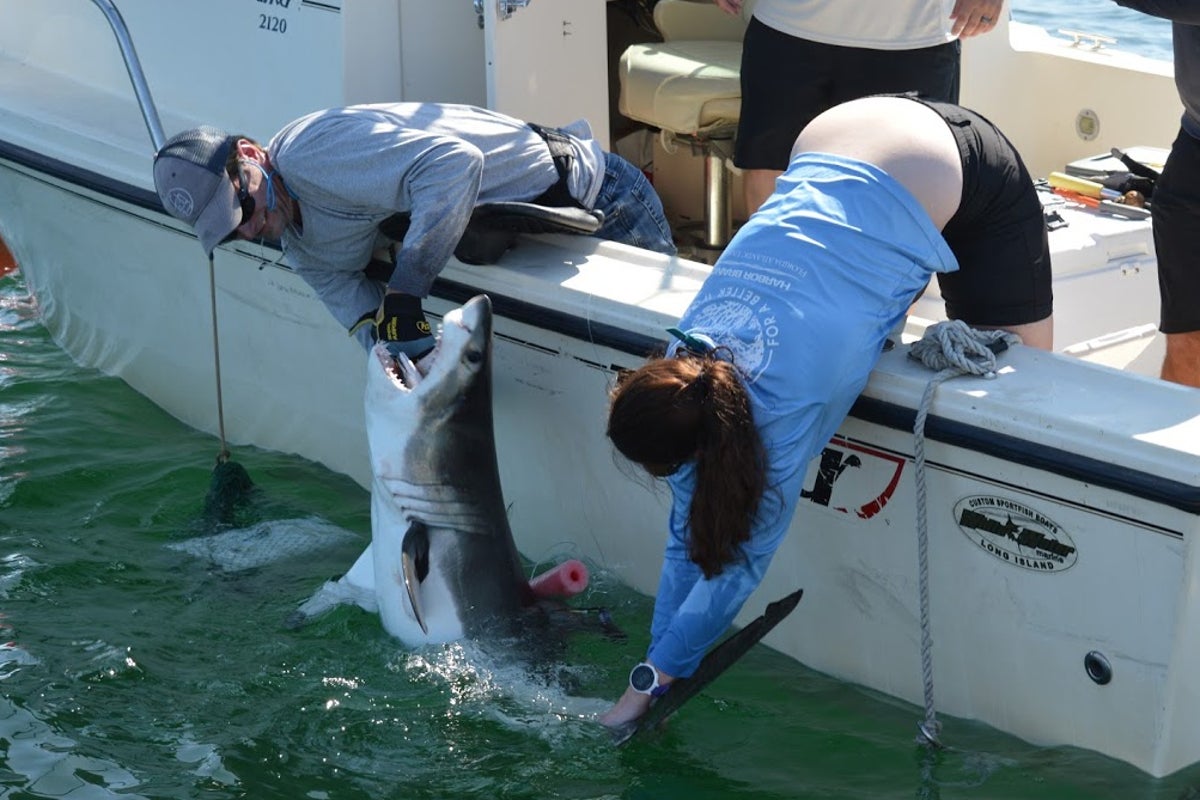
Every summer, wealthy weekenders in the Hamptons swap tales of hedge fund meltdowns for something far more cinematic: the terrifying discovery of a secret shark nursery hiding just offshore. Media outlets breathlessly report on juvenile sand tiger sharks lurking in the shallow bays, painting a picture of high-end real estate colliding with a toothy aquatic breeding ground. It makes for fantastic clickbait. It also completely misunderstands how marine ecosystems actually operate.
The lazy consensus is that finding young sharks near popular beaches means our coastline is suddenly transforming into an apex predator maternity ward due to changing waters or human intervention. That narrative sells subscriptions, but it ignores basic marine biology. These sharks have used these coastal shallows for millennia. The nursery isn't a recent discovery, nor is it a threat. It is simply nature functioning exactly as designed, long before anyone built a multi-million-dollar mansion in Montauk.
The Geography of Survival
Let us clear up the terminology immediately. A nursery area is not a heavily guarded maternity ward with security checkpoints. In marine ecology, defined by researchers like Dr. Jack Morrissey and historical fisheries data, a nursery is simply a shallow, protected coastal zone where juvenile fish and sharks find two things: abundant small prey and a severe lack of large predators.
Adult sharks, including massive great whites and mature tiger sharks, tend to avoid shallow bays and estuaries because they are vulnerable there or simply lack maneuverability. More importantly, adult sharks have a bad habit of eating their own young. When juvenile sand tigers or dusky sharks seek out the shallow waters around Long Island, they are engaging in a straightforward survival strategy. They are hiding from bigger fish.
To call this a secret is marketing nonsense. Commercial fishermen and marine scientists have known about juvenile shark distributions in the New York bight for decades. I spent years analyzing coastal fisheries data and tracking tagging studies, and I can tell you that these zones are remarkably stable. The only thing secret about them is the ignorance of seasonal residents who buy waterfront property and act shocked when they find marine life in the ocean.
Note: A juvenile shark in a nursery bay is not hunting humans. It is hunting crabs, squid, and small bunker while trying desperately not to become lunch for a larger seal or a migrating adult shark.
Dismantling the Panic Economy
Why do local news cycles continuously blow the Hamptons shark nursery out of proportion? Because fear is a powerful retention metric. When a headline implies that your morning paddleboard session shares water with a breeding population of monsters, your adrenaline spikes.
People ask whether they should cancel their beach trips or demand municipal shark nets. The premise of the question is flawed from the jump. You cannot net an open coastal ecosystem without destroying the very food web that supports the fish you actually want to catch.
Consider the alternative reality: if the juvenile sharks vanished from Long Island waters, it would signal an absolute ecological catastrophe. A thriving nursery means the estuarine food chain is productive enough to support high-level predators. The presence of young sharks is a glowing health certificate for the local marine environment, not a public safety emergency.
- Juvenile sharks possess limited hunting capabilities, focusing almost exclusively on small invertebrates and schooling fish.
- Shallow coastal nurseries represent less than one percent of the total ocean volume, making overlap with recreational swimmers statistically negligible.
- Historical catch records show juvenile sharks inhabiting these exact New York coordinates since the late nineteenth century.
The Real Risk Assessment
If you want to worry about hazards in the Hamptons, look at the parking lot traffic on Route 27 or the bacterial runoff from outdated septic systems leaking straight into the bays. Those kill people and ruin ecosystems. A three-foot sand tiger shark cruising through two feet of murky water is looking for a flounder, not a barefoot billionaire.
We suffer from a cultural detachment from nature. We pave over dunes, build bulkheads that destroy natural shallows, and then panic when wild animals attempt to use the remnants of their ancestral habitats. The Hamptons shark nursery narrative is a symptom of a society that wants the aesthetic of the coast without any of the actual wildlife that keeps it alive.
Stop treating every natural biological cycle like an environmental horror film. Leave the sharks alone, respect the water, and accept that you are a visitor in their habitat, not the other way around.