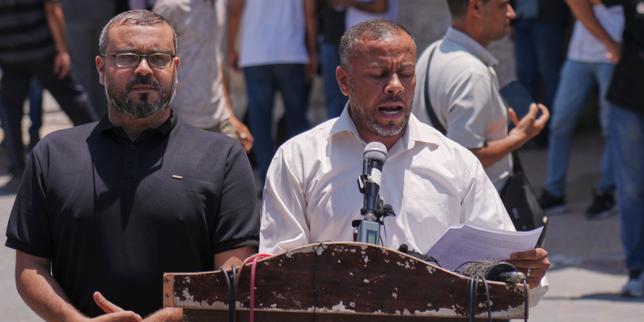
Power doesn't just vanish. It shifts, hides, or puts on a new coat of paint. When Hamas announced the dissolution of its governing bodies inside the Gaza Strip, the international community scrambled to decode the political signal. Some called it a breakthrough. Others saw a desperate retreat.
The reality is far more cynical.
By dismantling its official administrative committees, the group isn't walking away from power. It's playing a calculated diplomatic game while the catastrophic deadlock with Israel drags on. If you think this bureaucratic restructuring means a ceasefire is around the corner, you're misreading the entire situation. Hamas knows how to survive in the shadows, and Israel has zero intention of letting them rebuild under a different name.
To understand why this move matters—and why it simultaneously changes nothing on the ground—you have to look past the official press releases.
The Illusion of Stepping Down
Hamas didn't wake up and decide to abandon its grip on Gaza. The decision to dissolve its local governing instances is a direct response to immense military pressure and shifting political alliances. For years, the group ran Gaza like a parallel state, complete with ministries, tax collectors, and police forces. That structure is now a liability.
Dismantling these public-facing bodies serves two distinct purposes.
First, it attempts to shift the burden of governance and reconstruction onto anyone else. Hamas wants the Palestinian Authority or an international coalition to step in and handle the logistics of fixing a devastated strip of land. It frees them from the daily anger of a desperate population that lacks water, food, and medicine.
Second, it gives their political bureau a talking point in negotiations. They can point to the empty offices and claim they are no longer the sovereign rulers of Gaza. It's a bid to look cooperative to regional mediators like Qatar and Egypt.
Don't buy the optics. The armed wing, the Al-Qassam Brigades, doesn't answer to municipal committees anyway. The men with the weapons are still hidden in the tunnels, and they still dictate the terms of captivity for Israeli hostages. Dissolving a shadow cabinet changes none of that.
Why Israel Refuses to Blink
Across the border in Tel Aviv, the reaction to this announcement has been a collective shrug. The Israeli security establishment views the dissolution as a tactical stunt rather than a genuine concession.
Israel's objectives have remained rigid. Total demilitarization of the strip, the return of every single hostage, and the complete removal of Hamas from any future governance role. From the Israeli perspective, allowing a rebranded or covert version of the group to retain influence is a non-starter.
The security cabinet knows that if international aid and reconstruction funds flow into Gaza without a radical change in who controls the territory, the money will eventually find its way back into military infrastructure. Concrete meant for apartment buildings gets diverted into underground networks. That's the lesson Israel learned over the past two decades, and they don't plan on repeating the mistake.
This stubborn policy stance creates a permanent roadblock. Israel will not halt military operations or lift the blockade based on promises of political restructuring. They want verifiable surrender and disarmament. Hamas will never agree to that because it means their total extinction.
The Palestinian Authority Predicament
If Hamas steps back from formal governance, who fills the vacuum? The obvious candidate is the Palestinian Authority based in Ramallah.
But the PA is stuck in an impossible position.
President Mahmoud Abbas knows that rolling into Gaza on the back of Israeli tanks would destroy whatever shredded legitimacy his government has left. The Palestinian public would view the PA as collaborators. On top of that, the PA is broke, plagued by internal corruption, and deeply unpopular even in the West Bank. They don't have the administrative capacity or the muscle to police Gaza without triggering a bloody civil war against remaining Hamas loyalists.
Regional powers have floated the idea of a technocratic government. A council of independent Palestinian experts, doctors, and engineers who don't belong to any political faction. It sounds beautiful on paper. In practice, it's a fantasy. A government of bureaucrats cannot survive a week in Gaza without the backing of a security force. If that security force isn't Hamas, and it isn't Israel, who is it? No Arab nation wants to send its troops into the Gaza meatgrinder to act as a buffer zone.
Reading Between the Lines of Regional Diplomacy
Egypt and Qatar find themselves caught in the middle of this bureaucratic theater. Cairo wants stability on its border more than anything else. The Egyptian intelligence service has spent years managing the complex relationship with Hamas, trying to prevent radicalization from spilling over into the Sinai Peninsula.
The Egyptian government views the dissolution of Hamas's Gaza bodies as a necessary step toward a unified Palestinian leadership, but they aren't naive. They know that as long as the tunnels under the Philadelphi Corridor remain a flashpoint, no diplomatic maneuvering will satisfy Israel.
Qatar continues to play the role of the wealthy intermediary. They host the political leadership, fund the diplomatic offices, and try to package Hamas's survival strategies as moderate concessions to the West. Yet even Doha's patience has limits. The constant back-and-forth, the agreed-upon frameworks that collapse within hours, and the moving goalposts from both combatants have turned the mediation process into an exercise in futility.
The Cost of the Deadlock
While politicians rearrange organizational charts and issue declarations, the humanitarian situation gets worse by the hour. The civilian population of Gaza pays the price for this stubborn standoff.
Think about what it takes to run a city. You need trash collection, sewage treatment, electrical grid maintenance, and hospital administration. By dissolving its formal governing instances, Hamas has effectively walked away from these duties. The result is total chaos. Armed gangs, tribal networks, and local warlords are filling the void, hijacking aid trucks and selling food on the black market at exorbitant prices.
This breakdown of civil order makes distribution of basic necessities almost impossible. International relief agencies are forced to negotiate security with informal neighborhood bosses rather than a centralized authority. It is a recipe for a failed territory, an lawless zone right on the Mediterranean coast.
Security Realities Override Bureaucracy
We need to look at the hard facts of military control. A political announcement in Doha or Gaza City doesn't change the positioning of Israeli Defense Forces along the Netzarim Corridor. It doesn't remove the checkpoints splitting the strip in two.
Israel's military strategy is based on physical control of terrain, not the legal status of the entity ruling that terrain. Until Israel achieves its specific security benchmarks, the blockade stays. The drone surveillance stays. The airstrikes continue.
Hamas understands this perfectly. Their announcement is a long-term play. They are betting that the international community will grow so weary of the images of destruction that foreign governments will force Israel to accept a flawed compromise. They are willing to sacrifice their formal government titles today if it means preserving their underground army for tomorrow.
The Missing Pieces for Real Change
True movement toward a resolution requires shifts that neither side is prepared to make. A real shift would look completely different from this superficial restructuring.
Watch for these specific indicators instead of official announcements.
- A verifiable mechanism for tracking every ton of concrete entering the Gaza Strip.
- The deployment of a neutral, armed international security force with a mandate to shoot violators.
- An explicit, written agreement from Hamas leaders to hand over all weapon stockpiles to a third party.
- A clear timeline from Israel for the phased withdrawal of forces tied to specific disarmament milestones.
None of these elements exist right now. Without them, discussing the dissolution of governing bodies is just noise. It's a boardroom reorganization inside a burning building.
The current standoff will drag on because both leaderships find the status quo politically preferable to the alternative. For the Israeli government, keeping the pressure on satisfies a domestic base demanding total victory. For Hamas, remaining defiant in the face of near-total destruction cements their status as the ultimate symbol of armed resistance.
Do not get distracted by the political theater. The entities might change their names, the ministries might close their doors, and the spokesmen might adjust their rhetoric. But until someone blinks on the fundamental issues of guns, hostages, and borders, the tragic cycle remains completely unbroken.