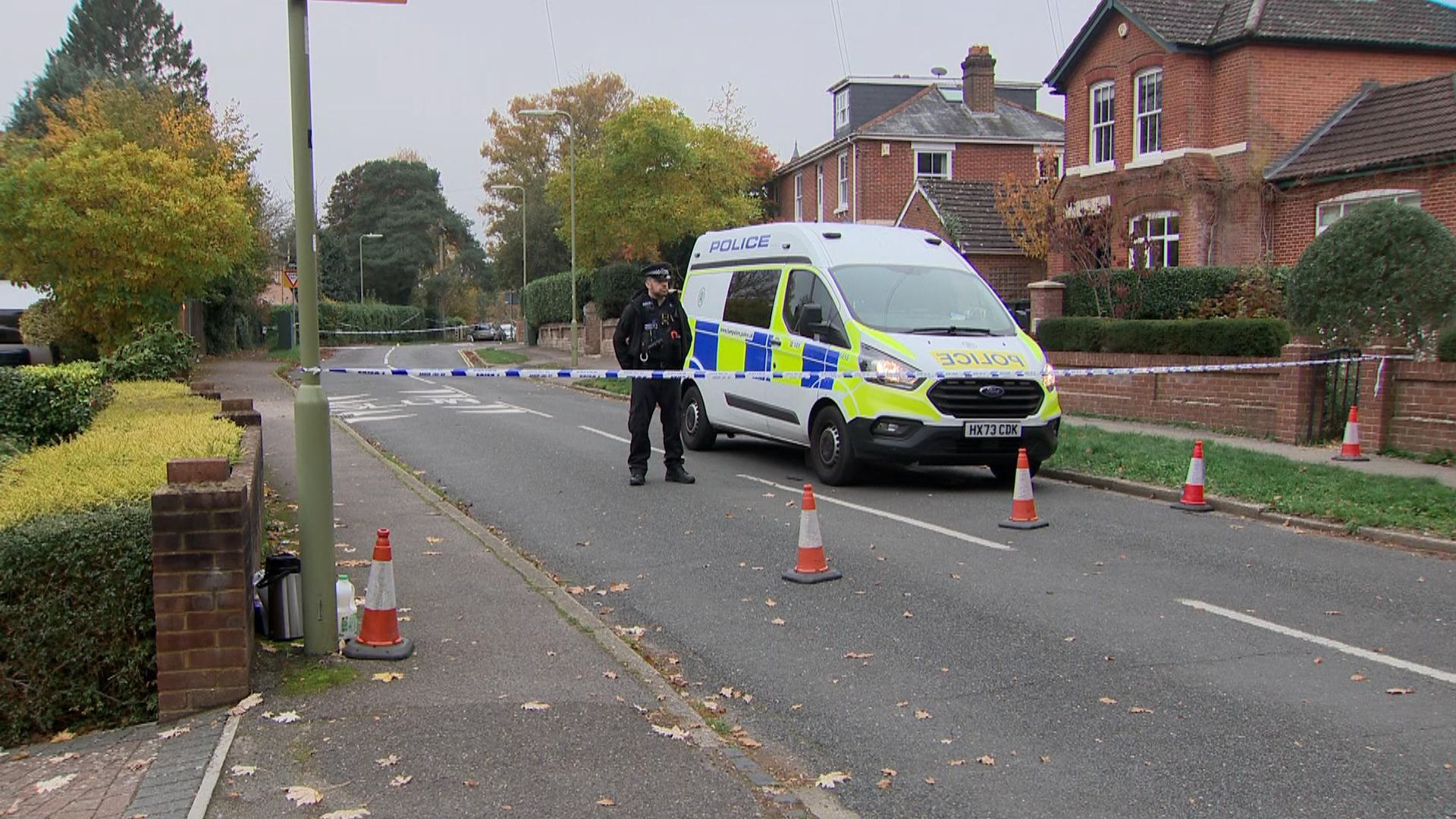
Two teenagers are in police custody after five boys were stabbed during a Halloween party, an incident that follows a familiar and troubling pattern in youth violence. While initial reports focus on the immediate arrests and the medical status of the victims, the deeper story lies in how unsupervised social gatherings, rapid digital escalation, and a lack of adult intervention routinely transform routine teenage milestones into mass casualty events.
Local police departments treat these incidents as isolated bursts of criminal behavior, yet criminal justice researchers and emergency room physicians see them as predictable outcomes of modern adolescent social dynamics. When a party flyer circulates on private messaging apps, the guest list instantly escapes the host's control. Within hours, a small gathering of friends morphs into an overcrowded venue packed with strangers, creating a volatile environment where minor friction quickly turns lethal.
The Anatomy of an Uncontrolled Gathering
Every major youth party stabbing shares a nearly identical timeline. It rarely begins with a premeditated ambush. Instead, it starts with an open-invite digital flyer shared across Snapchat, Instagram, or TikTok.
Teenagers today do not rely on word of mouth to find weekend entertainment. They rely on algorithmic amplification and private group chats. A host might intend to invite thirty classmates to a basement or a rented short-term property, only to have a guest screenshot the address and drop it into a regional group chat with hundreds of members. By midnight, the house is over capacity, exits are blocked, and nobody knows who actually belongs there.
Security is almost always nonexistent. Unlike commercial venues, private residences and illicitly rented properties lack metal detectors, bag checks, or trained bouncers. In an environment fueled by alcohol, loud music, and peer pressure, the barrier to bringing a concealed blade inside is zero.
When an argument breaks out—often over something as trivial as a spilled drink, a perceived slight, or an ongoing dispute from school—there is no neutral authority figure to step in. Panic sets in immediately. In a tightly packed room with limited exits, a single person pulling a knife can inflict wounds on multiple victims within seconds before the crowd even realizes a weapon has been drawn.
Why Knives Have Become the Weapon of Choice
Public debate around youth violence overwhelmingly centers on firearms, leaving the sharp rise in juvenile knife crime largely unexamined. Yet in suburban neighborhoods, school corridors, and house parties, edged weapons are frequently the primary driver of severe injury.
The reasons are purely practical. Knives are cheap, legal to purchase at hardware or sporting goods stores, and completely unregulated in terms of background checks or waiting periods. A teenager cannot easily acquire a handgun without navigating illicit networks or stealing from a family member, but almost every kitchen drawer in the country holds a lethal blade.
Concealment is equally effortless. A folding pocketknife or a fixed-blade utility knife clips easily inside a waistband or disappears into a hoodie pocket without printing through clothing. For teenagers operating under the misguided belief that carrying a weapon guarantees personal safety, a knife feels like an accessible insurance policy.
Trauma surgeons point out a critical misconception among adolescents regarding knife wounds. Movies and video games sanitize blade violence, conditioning young people to view a stabbing as less severe than a shooting. In reality, a single thrust to the torso, neck, or thigh can sever major arteries, causing fatal exsanguination in under three minutes. When five boys are stabbed at a single event, it is rarely the result of a prolonged duel; it is usually the chaotic slashing of someone panicking in a crowd, striking anyone within arm's reach.
The Role of Digital Escalation
A physical altercation at a Halloween party is seldom the beginning of the conflict. More often, it is the final chapter of a dispute that has been simmering online for weeks.
Social media platforms have eliminated the cooling-off period that used to exist between school days or weekends. In previous decades, if two teenagers argued on a Friday afternoon, they went home, separated by physical distance until Monday morning. Today, the argument continues uninterrupted in comment sections, direct messages, and live streams.
Every insult is archived and witnessed by an audience of peers. Backing down feels like public humiliation on a massive scale. When those two individuals inevitably cross paths at a large weekend gathering, the pressure to perform for the crowd—and for the smartphones already recording the interaction—pushes them toward immediate physical violence.
The Legal Reality for Juvenile Suspects
When police arrest two teenagers in connection with a multiple stabbing, the legal machinery that follows is far harsher than most adolescents comprehend. Many young offenders assume their age shields them from severe consequences, believing the juvenile justice system will simply slap them on the wrist and seal their records at eighteen.
That assumption is dangerously wrong.
Depending on the jurisdiction and the severity of the victims' injuries, prosecutors routinely file motions to transfer juvenile suspects to adult court for violent felonies. Even when cases remain in the juvenile system, charges involving multiple counts of aggravated assault with a deadly weapon or attempted murder carry mandatory detention sentences that stretch well into adulthood.
Furthermore, the concept of accomplice liability frequently ensnares teenagers who never even held the weapon. If two teens arrive at a party together, instigate a fight, and one pulls a knife while the other continues to assault victims or block exits, both can face identical felony charges. Prosecutors do not need to prove that both suspects wielded the blade; they only need to demonstrate that both acted in concert during the commission of a violent crime.
The Blind Spots of Parents and Property Owners
Accountability in these incidents rarely stops with the suspects. Across the country, civil courts and local legislatures are increasingly scrutinizing the adults who enable unsupervised gatherings, whether intentionally or through negligence.
Consider a hypothetical scenario that plays out every autumn. A set of parents goes out of town for the weekend, leaving their seventeen-year-old home alone with strict instructions not to have friends over. The teenager ignores the rule, throws a party, and violence erupts. Even though the parents were miles away and explicitly forbade the gathering, they can still face devastating civil lawsuits from the victims' families under premises liability and negligent supervision statutes. In some municipalities, social host ordinances also expose parents to criminal misdemeanor charges and heavy fines if alcohol was present on their property.
Short-term rental platforms face a similar reckoning. Despite automated anti-party algorithms and strict bans on large events, teenagers routinely use stolen credit cards, fake profiles, or older accomplices to book suburban homes for holiday weekends. Property owners who rely on contactless check-in and fail to monitor exterior security cameras often discover their rental has been turned into a nightclub only after police cruisers surround the block.
Emergency Response and the Golden Hour
When five stabbing victims collapse at a single location, local emergency medical services face an immediate triage crisis. Most suburban ambulance districts are staffed for routine medical calls, not mass-casualty trauma.
Dispatchers must rapidly coordinate multiple paramedic units while police officers work to secure a chaotic scene where terrified teenagers are fleeing on foot or attempting to drive injured friends to the hospital themselves. Law enforcement officers now carry tourniquets and hemostatic gauze as standard issue precisely because they are almost always the first on scene, arriving minutes before paramedics can safely enter.
The survival of multiple stabbing victims depends entirely on bleeding control within the first ten minutes. Bystanders often freeze, or worse, focus on filming the aftermath for social media rather than applying direct pressure to wounds. Communities that have implemented basic trauma training in high schools—teaching students how to pack wounds and apply tourniquets—consistently see higher survival rates when violence strikes.
Breaking the Cycle Before the Next Holiday
The arrests following a Halloween party stabbing provide a temporary sense of resolution for the community, yet they do nothing to dismantle the conditions that produced the violence. Until parents actively monitor the digital spaces where these parties are organized, until property owners enforce strict occupancy verification, and until schools address the underlying myth that carrying a blade provides protection, the next weekend gathering is already a ticking clock.

