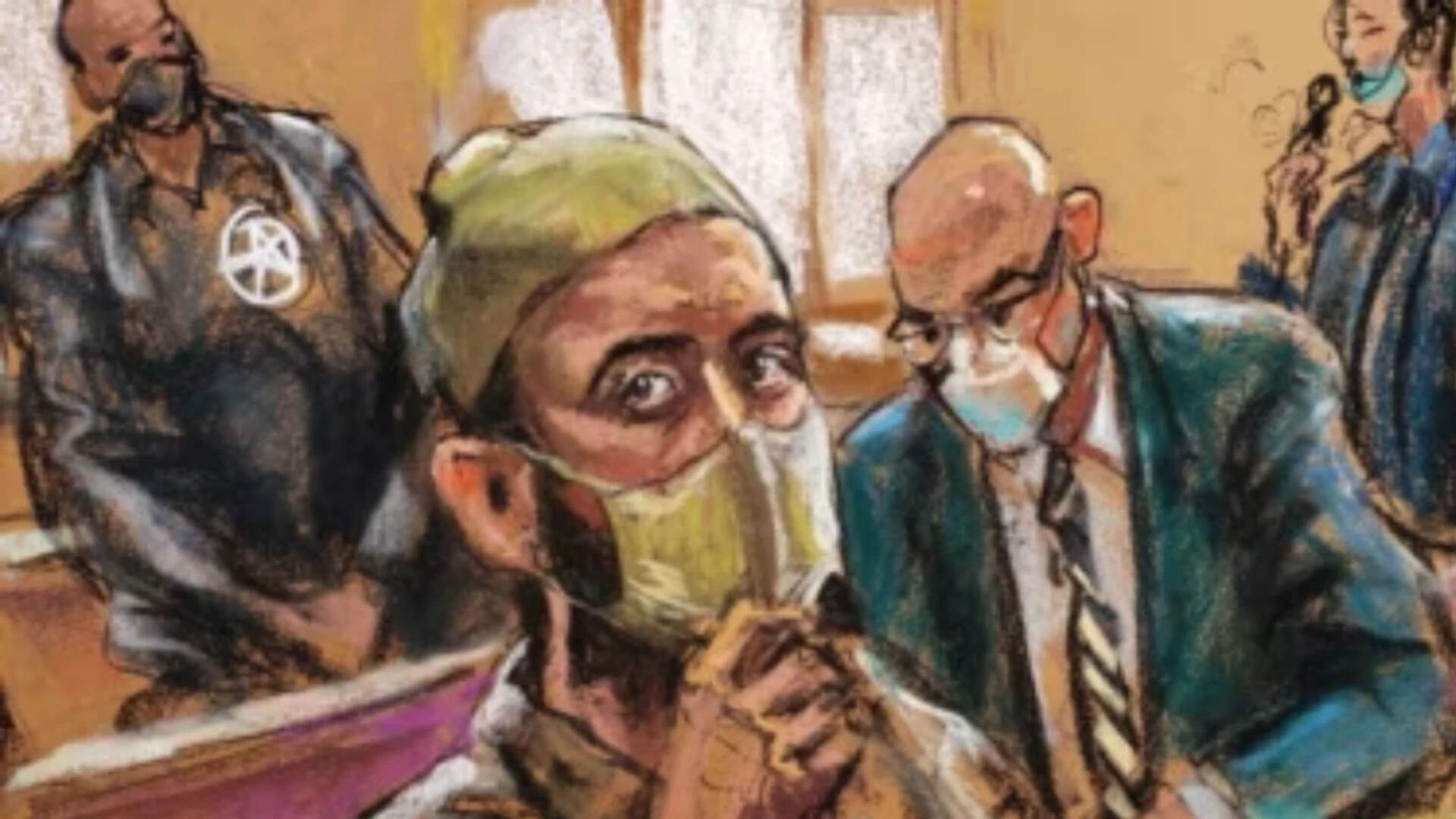
The federal court in Manhattan just delivered a 42-year prison sentence to former Taliban commander Haji Najibullah. If you read the mainstream press, the narrative is entirely uniform. Headlines tout a triumph of justice, a warning shot to terrorists worldwide, and a long-awaited closure for the victims of the 2008 kidnapping of journalist David Rohde and the deaths of three American soldiers. Acting Attorney General Todd Blanche declared that those who harm Americans will be hunted down "no matter how long it takes."
It is a comforting, cinematic story. It is also completely wrong.
By treating the sentencing of a middle-aged, defunct insurgent as a massive win, the American legal and foreign policy apparatus is celebrating a symptom while ignoring the total failure of the disease's cure. This is not a demonstration of strength. It is a masterclass in performative justice that costs millions, takes decades, and alters absolutely nothing on the ground where the actual conflict was lost.
The Myth of the Deterrent Effect
The core argument for extraditing Najibullah from Ukraine in 2020 and prosecuting him in a New York federal court rests on the concept of deterrence. The theory is simple: if you kill U.S. troops or kidnap American citizens, the long arm of U.S. law will eventually find you, pull you from whatever hole you are hiding in, and lock you away for life.
This works well in domestic corporate fraud or local bank robberies. In asymmetrical warfare, it is a delusion.
Najibullah committed his crimes between 2007 and 2009. He was arrested in 2020 and sentenced today. That is an eighteen-year lag between the offenses and the final hammer of justice. Consider the math of insurgency. The average foot soldier or mid-level commander in the Hindu Kush is not calculating the risk-adjusted probability of being extradited via Eastern Europe two decades into the future. They operate on immediate local incentives, ideological fervor, and survival timelines measured in days, not decades.
To believe that a 42-year sentence in New York deters a current militant in Helmand province is to fundamentally misunderstand the economics of terrorism. I have watched institutions burn billions of dollars chasing symbolic victories while the actual strategic theater shifts entirely out of their control. This trial did not make a single American civilian or soldier safer today.
The Cost of Symbolic Justice
Let's look at what this trial actually cost the American taxpayer. To secure a guilty plea from a man who spent the last six years in harsh pretrial conditions—including through a global pandemic—the U.S. government deployed:
- Years of international intelligence tracking and diplomatic negotiations with Ukrainian authorities.
- The immense overhead of the Southern District of New York (SDNY), including top-tier federal prosecutors, investigators, and court staff.
- The logistical expense of high-security transport, federal defense counsel, and a day-long sentencing spectacle.
All of this was spent on a 50-year-old man who represents a faction that already won the war. While Judge Katherine Polk Failla was rejecting leniency arguments in Manhattan, the organization Najibullah used to command is currently running Kabul. The weapons he was convicted of distributing have been replaced by billions of dollars of high-grade military hardware left behind during the 2021 withdrawal.
We are running an incredibly expensive, retrospective legal boutique to punish individuals while the collective entity they belonged to achieved its exact geopolitical objectives. It is the equivalent of a corporation suing a former mid-level manager for intellectual property theft while the competitor company that hired him successfully takes over 100% of the market share. It is an accounting trick designed to look like a profit on a fundamentally bankrupt ledger.
The Journalistic Trap
The sentencing featured an emotional confrontation from David Rohde, the Pulitzer Prize-winning journalist whom Najibullah lured into an ambush under the guise of an interview. Rohde called hostage-taking a "cruel and cowardly crime" and lamented the "illusion" that families have any leverage to save their loved ones.
Rohde is entirely correct about the brutality of the act. But the media's focus on this exchange obscures the deeper flaw in how the Western press corps interacted with the conflict. Rohde admitted in court that setting up that interview was the "biggest mistake of my life." The systemic issue is that the media market consistently incentivizes frontline reporters to take extreme risks to "understand the worldview" of actors who view them strictly as capital assets.
To a commander like Najibullah, an American journalist is not a vehicle for a narrative; they are a walking financial and political treasury. They represent millions in potential ransom and a lever to force the release of high-value prisoners. By framing this case around the personal drama of the escape and the subsequent courtroom apology, the broader industry avoids a harsher conversation about structural naiveté in conflict zones.
The Real Winner of the Trial
If the American public didn't win a safer world, and the victims only received a delayed, symbolic acknowledgment of their trauma, who actually benefited from this 42-year sentence?
The primary beneficiary is the federal justice apparatus itself. This trial serves as a highly effective marketing campaign for the longevity and reach of Western law enforcement. It allows officials to issue press releases filled with unyielding rhetoric about "hunting down" enemies, which looks spectacular on a institutional resume. It validates the expansion of extraterritorial jurisdiction, ensuring that the U.S. court system remains the self-appointed arbiter of global conflicts long after the military campaigns have folded.
The defense argued that Najibullah was simply doing what was necessary to protect his homeland during a war. The judge dismissed this, stating that he did not need to pull the trigger to be held responsible for the bodies left behind. While that holds up under Title 18 of the U.S. Code, it completely ignores the messy, reciprocal reality of rules of engagement in a twenty-year occupation.
The Western legal system demands a neat narrative of good versus evil, wrapped up with a definitive prison sentence. The reality of the War on Terror is an endless series of gray zones, compromised objectives, and strategic retreats. Spending decades to put a single aging commander in a box in Florence, Colorado, doesn't change the scoreline. It just ensures the lawyers get paid and the bureaucracy keeps spinning.
The trial of Haji Najibullah is over. The taxpayer bill will continue to accrue for his four decades of federal incarceration. Meanwhile, the strategic landscape that created him remains entirely unmoved by the verdict.