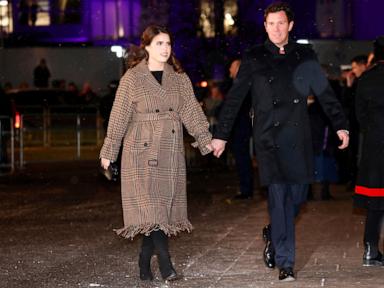
Princess Eugenie and her husband, Jack Brooksbank, have confirmed they are expecting their third child. This development, while framed as a joyous private milestone, carries significant weight for the operational structure and public image of the British Monarchy. As the couple prepares to welcome a sibling for August and Ernest, the expansion of the York branch signals a shift in how "non-working" royals maintain relevance and public affection during a period of intense institutional slimming.
The news broke through official channels, following the established protocol for members of the royal family who, despite lacking official sovereign grant funding, remain high-profile representatives of the Windsor brand. This third pregnancy places Eugenie in a rare category among her generation of royals, matching the family size of the Prince and Princess of Wales and signaling a personal commitment to building a substantial domestic base between their residences in the United Kingdom and Portugal.
The Strategic Expansion of the York Lineage
For decades, the inner circle of the monarchy has fought a PR war on two fronts: the need to appear modern and "slimmed down" versus the necessity of having enough bodies to cover thousands of annual engagements. King Charles III has famously championed the former. However, the biological reality of the family tree is now doing the heavy lifting for the institution's longevity.
Princess Eugenie occupies a unique space. She is a private citizen with a career in the art world, yet she remains a fixture at major state occasions. Her growing family ensures that the York line remains a vibrant, visible part of the royal narrative without the taxpayer burden associated with senior working roles. This is the "soft power" of the monarchy in action. By expanding her family, Eugenie provides the public with the relatable milestones of parenthood—first steps, school runs, and christenings—that have sustained British interest in the Crown for centuries.
The timing is also worth noting. The monarchy has faced a series of health crises and internal departures over the last twenty-four months. A pregnancy announcement offers a necessary pivot toward the future. It serves as a reminder that while the top tier of the firm handles the heavy lifting of constitutional duties, the extended family provides the cultural connective tissue that keeps the public engaged.
Modern Parenting Under the Global Microscope
Jack Brooksbank and Princess Eugenie have managed to navigate the treacherous waters of royal parenting with a level of autonomy their predecessors never enjoyed. They aren't bound by the same rigid visibility requirements as William and Catherine. This allows them to raise their children with a blend of royal tradition and private-sector freedom.
The Portugal Connection
The family’s decision to split their time between the UK and the Costa Terra Golf and Ocean Club in Portugal is a masterclass in modern royal branding. It reflects a more cosmopolitan, less insular version of the monarchy. For the upcoming third child, this means an upbringing defined by international exposure and a degree of privacy that is simply impossible within the "goldfish bowl" of London or Windsor.
This geographic flexibility is a luxury, but it is also a survival tactic. By distancing themselves from the daily tabloid grind of the UK, the Brooksbanks protect their children's early years while maintaining their status as high-value assets for the family’s global image. They are effectively the monarchy’s most successful "quiet" ambassadors.
The Succession Math
Every birth in the royal family reshuffles the deck, even if the changes occur further down the line of succession. A third child for Eugenie will settle into a position behind their older brothers, August and Ernest. While it is highly unlikely this child will ever sit on the throne, their place in the lineage is a matter of historical record.
The 1702 Act of Settlement and the subsequent 2013 Succession to the Crown Act ensure that this child’s gender will not affect their place relative to their siblings. This equality is now a settled feature of the British system, but seeing it play out in real-time reinforces the Crown’s attempt to align with modern values. Each new addition to the York branch further stabilizes the middle tier of the family, providing a "bench" of royals who can support the King’s charitable endeavors or represent the UK at international events should the need arise.
Financial Independence and the New Royal Model
One of the most persistent criticisms of the royal family involves the cost of their upkeep. Eugenie and Jack have largely neutralized this argument by remaining financially independent. Jack’s role in the discovery and promotion of luxury brands, coupled with Eugenie’s position as a director at a major art gallery, creates a blueprint for how future "spare" royals might function.
They represent a hybrid model:
- No Sovereign Grant funding: They pay their own way and do not receive money from the taxpayer-funded pot used for official duties.
- Commercial freedom: Unlike senior royals, they can hold jobs and pursue business interests.
- Brand preservation: They maintain the prestige of their titles without the accompanying political or financial baggage.
This third pregnancy will inevitably bring questions about security costs—a perennial thorn in the side of the York family. However, the Brooksbanks have generally opted for private security or limited protection, further distancing themselves from the controversies that have plagued other members of the family.
A Legacy of Resilience
To understand the significance of this expansion, one must look at the history of the York family. Princess Eugenie has spent her life under intense scrutiny, often serving as a lightning rod for criticism directed at her parents. Yet, she has emerged as one of the most stable and well-liked members of the family. Her marriage to Jack Brooksbank, which began in 2018, has been remarkably free of the drama that defines modern royal coverage.
Her decision to share her pregnancy news directly with the public—often through social media rather than stiff, formal communiqués—shows a deep understanding of modern communication. She is humanizing an institution that can often feel distant or archaic. By showing the messy, joyful reality of a growing family, she builds a bank of goodwill that the monarchy will certainly need in the decades to come.
The Cultural Impact of the Third Child
In British society, the "third child" is often seen as the point where a family moves from a standard unit to a larger, more complex dynamic. For the royals, it signifies a commitment to the long-term presence of their branch within the public eye. August and Ernest will now have a new companion, creating a sibling trio that will likely grow up in the shadow of their cousins, the Wales children, but with significantly more freedom to define their own lives.
The public fascination with royal babies rarely wanes. From the moment the announcement hits the wires, the speculation begins: the name, the godparents, the first public appearance. These are not merely gossip points; they are the metrics by which public interest is measured. Each "like" on a birth announcement is a data point for the Palace, proving that the public remains invested in the Windsor story.
The Burden of the Title
While the new baby will be a grandchild of the Duke of York and a great-grandchild of the late Queen Elizabeth II, they will not automatically hold a royal title. Unless the King intervenes with a Letters Patent—which is unlikely given his "slimmed down" mandate—the child will be known simply as Master or Miss Brooksbank.
This lack of a title is a deliberate choice that reflects the current direction of the monarchy. It allows the children to move through the world with less weight on their shoulders. It also protects the King from accusations of "title inflation." Eugenie and Jack seem comfortable with this arrangement, recognizing that a title in 2026 is often more of a target than a privilege.
Navigating the Future
As the British Monarchy moves further into the Carolean era, the role of the extended family will continue to evolve. The news of a third Brooksbank child is a reminder that the family is not just a political entity or a constitutional necessity; it is a living, breathing lineage.
The success of the "York model"—private funding, professional careers, and occasional royal appearances—will likely become the standard for all members of the family who fall outside the direct line of succession. Princess Eugenie is not just having another baby; she is reinforcing a new way of being royal in the 21st century. This balance of duty and privacy, tradition and modernity, is the only way the institution survives an era of unprecedented transparency.
The Brooksbanks are building a life that is both exceptional and surprisingly grounded. As they prepare for the arrival of their third child, they are also securing their place as the most effective, least controversial members of a family that is constantly reinventing itself. The focus now shifts to the nursery, but the implications are felt across the entire landscape of the British Crown.