The coffee in the mug doesn’t just ripple. It shudders. It’s a rhythmic, stuttering vibration that feels less like nature and more like a heartbeat coming from the bedrock. Out here, where the Nevada sky stretches so wide it feels like it might snap, silence is supposed to be the default setting. But lately, the silence is broken by the earth itself.
South of the Groom Lake road, the desert is a study in beige and stillness. Then the swarm began. Hundreds of tiny tremors, clustered together like a hive of angry bees, began rattling the sensors of the United States Geological Survey. To a scientist in a lab in Golden, Colorado, these are data points on a digital readout. To the people living on the ragged edge of the most secretive military installation on the planet, they are a physical presence.
Geology is usually a slow, patient science. It speaks in eons. Yet, when the ground starts shaking every few minutes in the shadow of Area 51, the conversation shifts from plate tectonics to something far more visceral.
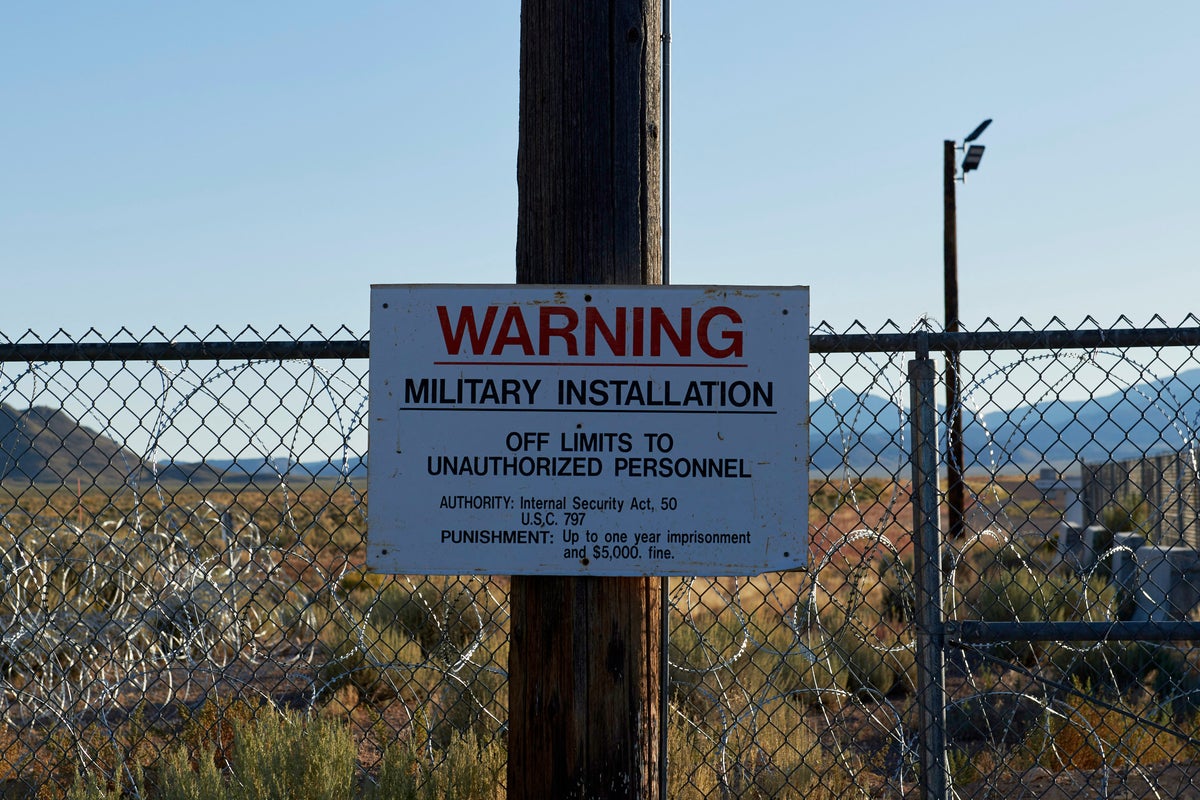
The Nevada National Security Site is no stranger to man-made earthquakes. For decades, the ground here was pummeled by underground nuclear testing, leaving a cratered landscape that looks more like the moon than Earth. But those tests ended in 1992. The recent swarm isn't coming from the old test sites. It’s coming from the periphery, deep beneath the scrub brush and the "No Trespassing" signs that promise lethal force.
The Anatomy of a Swarm
Imagine a deck of cards stacked vertically. If you push on the side of that deck, the cards don't all move at once. They slip, one by one, clicking into new positions as they adjust to the pressure. This is a seismic swarm. Unlike a traditional earthquake, which has a clear "mainshock" followed by diminishing aftershocks, a swarm is a collective event. It is a persistent, nagging release of energy.
Scientists call the specific area near the Emigrant Valley a "complex tectonic environment." That is a polite way of saying the earth is broken into a thousand jagged pieces. The Basin and Range Province is literally pulling itself apart. As the crust stretches, the faults—those invisible scars in the stone—struggle to hold the weight. Eventually, something gives.
But the timing is what haunts the locals.
The human brain is a pattern-recognition machine. We hate randomness. When the ground shakes in a place where we know the government hides its most advanced aerospace projects, we don't think about the Holocene Epoch. We think about engines. We think about tunnels. We think about the things that fly in the dark.
The Invisible Stakes
Consider a hypothetical rancher named Elias. Elias has lived in Lincoln County long enough to remember when the sky turned orange from atmospheric tests. He knows the difference between a sonic boom and a seismic shift. When a sonic boom hits, it’s a punch to the chest; the air moves. When these tremors hit, the floorboards of his porch groan. It’s a subterranean heave.
For Elias and his neighbors, the "conspiracy theories" reported in the national news aren't just entertainment. They are a way of processing a reality where the ground under your boots isn't as solid as you were promised.
The official word is clear: there is no evidence of human activity causing these quakes. The depths are too great—often miles below the surface—and the energy patterns match the slow, grinding movement of the Walker Lane seismic belt. This is a massive structural zone that may one day replace the San Andreas Fault as the primary boundary between tectonic plates.
Still, the skepticism lingers like the dust after a dry storm. The military has a long history of "geologic experimentation." During the Cold War, projects like Faultless proved that we could trigger massive seismic events by detonating devices in specific zones. We learned how to map the interior of the earth by listening to the echoes of our own explosions.
The Cost of Secrecy
The real tension isn't between the plates of the earth. It’s between the public's need to know and the state's need to hide. Area 51—officially known as Homey Airport or Groom Lake—is a void in the map where logic goes to die. Because we cannot see what happens there, we project our fears onto the landscape.
If the Air Force is testing a new high-speed propulsion system that requires massive underground dampening, would they tell us? If a secret drilling operation tapped into a pressurized hydrothermal pocket, causing the "lubricated" faults to slip, would it be on the evening news?
Probably not.
This creates a vacuum of trust. When a USGS report says the swarm is "natural," it is interpreted by many as "controlled." The tragedy of secrecy is that even the truth starts to look like a lie.
The technical reality is that the earth is remarkably noisy. We live on a thin, cooling crust floating atop a churning sea of molten rock. In Nevada, that crust is particularly thin. The heat from the mantle rises closer to the surface here than in almost any other part of the continental United States. This heat weakens the rock, making it brittle. It makes it prone to snapping.
The Weight of the Unknown
Between the technical data and the whispered rumors lies the human element: the feeling of being small.
There is a specific kind of dread that comes with an earthquake. It is the realization that the one thing you have always trusted—the literal ground beneath your feet—is temporary. When you add the layer of military mystery to that dread, it becomes something else entirely. It becomes a feeling of being watched by a power that doesn't just control the sky, but the stone.
The swarm will eventually dissipate. The bees will return to their hive. The sensors will return to their baseline hum, and the geologists will move on to the next anomaly in the Aleutians or the Ring of Fire.
But for the people in the desert, the memory of the shuddering coffee mug remains. They will look at the mountains of the Nevada Test and Training Range and see more than just rock and sagebrush. They will see a mystery that refuses to stay buried, a reminder that whether it’s the slow movement of the planet or the fast ambitions of men, something is always moving in the dark.
The desert doesn't keep secrets. It just waits for the wind to blow the sand off the bones.