Mount Everest isn't just a mountain anymore. It's an open-air graveyard wrapped in high-tech gore-tex. Every climber knows the grim landmarks. You pass the body of Hannelore Schmatz. You step around Tsewang Paljor, universally known as Green Boots.
Paljor died during the brutal 1996 blizzard that claimed multiple lives near the summit. For roughly thirty years, his fluorescent footwear marked a literal checkpoint on the way to the top of the world. Commercial expeditions used him for directions. Turn right at Green Boots. Breathe hard. Keep moving. Don't forget to check out our recent post on this related article.
It's cold. It's morbid. It's completely normalized.
Talk of clearing the dead off the upper slopes pops up every climbing season. Officials promise cleanups. Families demand dignity. Yet bodies remain frozen stiff into the rock and ice above 8,000 meters because physics doesn't care about our feelings. If you want more about the background of this, National Geographic Travel provides an in-depth breakdown.
Bringing down Green Boots or anyone else from the death zone isn't a simple hiking trip. It's an extreme, multi-thousand-dollar high-altitude rescue operation that risks the lives of living climbers just to move a frozen corpse.
Let's look at why Green Boots became such a dark fixture of modern mountaineering, what it actually takes to clear bodies off Everest, and why the mountain refuses to give up its dead easily.
The Real Story Behind Green Boots
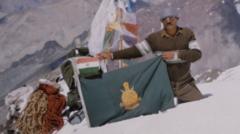
Tsewang Paljor was an Indian Indo-Tibetan Border Police constable. He joined an expedition attempting to summit Everest from the northeast ridge in May 1996. Weather turned violently bad. A sudden blizzard dropped temperatures and visibility to zero.
Paljor and two teammates got trapped near the summit. They sought shelter in a small limestone cave just below the peak. They didn't make it back down.
When later climbers found Paljor, he was curled up inside that shallow alcove. His bright green Koflach mountaineering boots pointed outward toward the path. Because the limestone cave offered some shelter from the howling winds, his body remained remarkably preserved.
Over the decades, hundreds of commercial climbers walked past that exact spot. They clipped their safety ropes near his boots. Some snapped photos. Sherpas tried to cover him with stones at times, but high winds and shifting snow always exposed him again.
Green Boots stopped being a person to most people. He turned into a terrifying milestone. When you saw Green Boots, you knew you were close to the summit ridge. You also knew you were walking through a cemetery.
Why Bodies Stay on Everest for Decades
Gravity and ice are stubborn. Once a human body freezes at extreme altitude, it bonds with the glacier. A dead climber can weigh up to three times their living weight because they are essentially frozen solid inside a block of ice and rock.
At 8,500 meters, the air holds roughly one-third of the oxygen found at sea level. Your brain struggles to function. Your fingers lose feeling in seconds. Carrying your own backpack feels like dragging an anchor.
Now imagine trying to unfreeze a three-hundred-pound frozen human form from a rocky ledge using ice axes and shovels, placing them into a body bag, and hauling them down vertical technical terrain.
It takes a massive team of elite Sherpas. It costs tens of thousands of dollars. Worst of all, it dramatically increases the risk of creating more dead bodies.
Climbing authorities in Nepal and the Tibet Autonomous Region of China face a brutal math problem every year. Do you risk living climbers to recover the dead? Most mountain guides say no. The unwritten law of the high mountains has always been simple. If you die up there, you usually stay up there.
The Cleanup Efforts That Actually Happened
People assume nobody cares. That's false. Nepal's government and various climbing associations organize cleaning campaigns every single season.
In recent years, teams hauled tons of trash off the mountain. Old oxygen cylinders, tattered tents, food packaging, and abandoned gear litter the slopes. Crews also recovered several bodies that were lower down on the mountain where recovery operations are remotely feasible.
In 2019, a dedicated government expedition brought down several bodies from the upper camps. Reports circulated that Green Boots himself was moved or covered up during some of these recent sweeps. Climbers on the Tibetan side noted that the body was finally shifted out of sight from the main climbing track.
Still, full-scale recovery from the death zone remains rare. Moving a body from the Hillary Step or the summit ridge requires helicopter support that cannot safely operate at that altitude, meaning everything must be done purely on foot.
What Most People Get Wrong About Everest Deaths
Popular culture paints Everest as a playground for wealthy tourists who don't know what they are doing. There is truth to that. Commercialization brought crowds of inexperienced climbers who rely entirely on Sherpas to manage the risk.
However, nature remains undefeated. Even elite mountaineers die up there. Avalanches, sudden storms, hidden crevasses, and high-altitude cerebral edema do not check your resume before they strike.
When you look at photos of Green Boots, don't just think about macabre tourism. Think about the sheer hostility of the environment. The death zone strips away human vanity. It shows us how fragile our bodies really are when we step outside our natural habitat.
The obsession with clearing every body off the mountain stems from a modern Western desire for sanitized death. We want closure. We want tidy graves and proper burials.
The mountains don't work that way. Everest is a wild, untamed wilderness masquerading as a tourist destination.
How to Follow Responsible Mountain Ethics Today
If you plan to trek to Everest Base Camp or watch the mountaineering world from afar, keep a few grounded perspectives in mind.
Respect the local workforce. The Sherpa community bears the heavy lifting of keeping climbers alive and cleaning up the mess left behind by foreign visitors. Support ethical expedition companies that pay fair wages and prioritize safety over summit quotas.
Acknowledge the risks. Climbing Everest requires deep humility. If you ever find yourself standing in the snow at extreme altitude, remember the warning left by those who came before you.
The mountain always wins in the end. Treat it with respect, pack out what you bring in, and leave the dead in peace.