A coordinated criminal network has systematically stripped European libraries of priceless 19th-century Russian literature, executing a cultural heist of unprecedented scale. Over the past two years, organized Georgian theft rings have targeted rare first editions by Alexander Pushkin, Nikolai Gogol, and Mikhail Lermontov, replacing them with high-quality counterfeits. While initial police reports treated these as isolated, profit-driven property crimes, the sheer coordination, funding, and specific ideological footprint of the operation point to a deeper geopolitical motive. This was not a standard art heist. It was a targeted extraction of Russian cultural heritage, occurring precisely as Moscow seeks to reassert control over its historical narrative amid tightening Western sanctions.
The logistics of the operation reveal a highly sophisticated apparatus. Thieves did not smash glass cases or disable alarms with high-tech gadgets. Instead, they exploited the trust-based infrastructure of national and academic libraries across France, Germany, Poland, Lithuania, Latvia, and Estonia. Meanwhile, you can find related stories here: How Singapore Uses the Online Criminal Harms Act to Crush Foreign Disinformation Campaigns.
How the Network Weaponized Academic Trust
The thieves understood a fundamental vulnerability in the academic world. Libraries are designed for access, not maximum security. Operating under aliases, members of the ring registered as researchers, focusing entirely on pre-Soviet Russian literature.
The execution followed a precise methodology: To explore the bigger picture, check out the recent article by The Guardian.
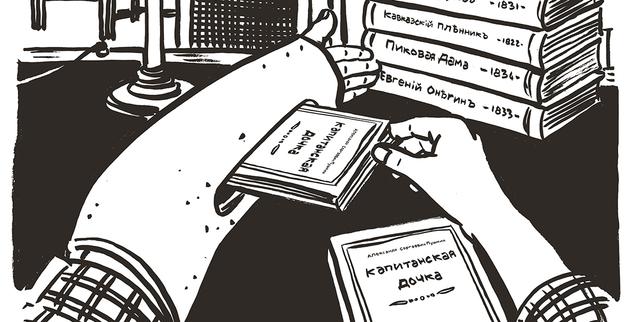
- The Request: A operative posing as a scholar requests access to specific 19th-century editions, particularly Pushkin’s 1820 Ruslan and Ludmila or his 1825 Eugene Onegin.
- The Assessment: During the initial viewing, the thief takes high-resolution photographs of the paper texture, watermarks, binding, and library stamps.
- The Fabrication: Specialized workshops, likely based in Eastern Europe, use these images to create near-perfect facsimiles, aging the paper artificially and replicating specific wear patterns.
- The Swap: The operative returns weeks later, requests the original book again, and deftly substitutes the counterfeit during a moment of staff distraction.
By the time librarians discovered the deception—often months later during routine inventory or specialized conservation work—the thieves had long since crossed international borders. In Warsaw alone, the University of Warsaw Library discovered that 84 rare volumes had vanished, replaced by sophisticated dummies. The estimated financial loss across Europe exceeds tens of millions of dollars, but the cultural damage is unquantifiable.
Beyond Simple Greed
The standard criminal investigation framework struggles to explain the economics of this operation. In the traditional stolen art market, selling highly recognizable, documented cultural artifacts is incredibly difficult. Major auction houses like Christie's or Sotheby's flag these items instantly.
If profit were the sole driver, liquidating dozens of identical rare Russian books simultaneously would crash the niche market for these specific antiquities. Yet, the thefts continued at a relentless pace. This indicates a guaranteed, pre-arranged buyer willing to absorb the legal risk and financial cost of acquiring stolen national treasures.
Public auction data from smaller, less regulated houses in Russia shows a sudden influx of rare 19th-century editions appearing on the domestic market over the last 24 months. Wealthy Russian oligarchs, restricted from traveling to Europe and eager to demonstrate their patriotism to the Kremlin, represent a ready-made clientele. In Moscow's current political climate, repatriating cultural artifacts is viewed as a highly commendable act of national devotion.
The Institutional Blind Spot
European cultural institutions failed to recognize the systemic nature of the threat until it was too late. For decades, security protocols focused on preventing opportunistic theft or vandalism, not countering an organized transnational syndicate using intelligence-style methods.
Furthermore, many smaller university libraries lack the budget for advanced forensic authentication tools. A librarian checking a returned book typically verifies the title and general appearance, not the chemical composition of the ink or the specific weight of the rag paper. The criminals exploited this technical gap with precision.
+------------------+-----------------------+-------------------------+
| Library Location | Volumes Stolen        | Detection Method        |
+------------------+-----------------------+-------------------------+
| Warsaw, Poland   | 84 rare editions      | Weight discrepancy scan |
| Tartu, Estonia   | 8 first editions      | Post-theft audit        |
| Vilnius, Lithuania| 17 volumes           | Microscopic analysis    |
| Paris, France    | Multiple manuscripts  | Paper fiber testing     |
+------------------+-----------------------+-------------------------+
The Kremlin Shadow and Ideological Warfare
To understand why Pushkin is a high-value target, one must understand how the Russian state views literature. In Moscow's geopolitical doctrine, the Russian language and 19th-century literature are not merely art; they are tools of statecraft, categorized under the banner of the "Russian World" (Russkiy Mir).
Pushkin holds a sacred status in this ideology. He is routinely weaponized by state media as the ultimate symbol of Russian cultural superiority and unity. By reclaiming these physical books from European institutions—especially those in the Baltic states and Poland—the network aligns itself with the broader Kremlin narrative that the West is hostile to Russian culture and unworthy of possessing its treasures.
       [Kremlin Cultural Doctrine: "Russkiy Mir"]
                           |
            +--------------+--------------+
            |                             |
    [Ideological Weapon]         [Domestic Validation]
    Literature as statecraft     Repatriation of artifacts
    to project influence.        to signal national pride.
French and Polish investigators have quietly tracked the financial trails of several arrested Georgian nationals tied to the ring. While the ground troops are career criminals recruited from the Caucasus, the funding networks trace back through shell companies to individuals with deep ties to Russian cultural foundations operating abroad. These foundations, frequently shielded by diplomatic or educational missions, have long served as conduits for soft-power operations.
The Counterfeit Industry Driving the Heists
The technical execution of the fakes points to an industrialized process. These are not amateur color copies. Forensic analysis of the recovered counterfeits reveals that the perpetrators used:
- Period-Accurate Paper: Sourced from blank endpapers of non-valuable 19th-century European ledgers to match the fiber composition and age.
- Chemical Aging: Acid washes and specific tea-based stains to replicate decades of handling and environmental exposure.
- Forged Provenance: Flawless recreations of specific library ownership stamps, including historical ink formulations that do not contain modern fluorescent whitening agents.
This level of replication requires significant capital investment and access to master forgers. It removes the crime from the realm of rogue book collectors and places it firmly in the category of state-tolerated or state-sponsored illicit industries.
A Fractured Response
Interpol has since launched a coordinated effort to flag these specific missing titles globally, but the decentralized nature of European library security hinders a unified defense. Security upgrades are expensive. Replacing open-stack research policies with strict background checks and supervised viewing rooms alienates the legitimate academic community that these institutions exist to serve.
The damage is already done. Hundreds of original texts, which survived the collapse of empires, the Russian Revolution, and World War II, are now locked away in private, unmapped collections in Russia, scrubbed of their European library markings.
European institutions must now accept that their archives are active battlegrounds in a broader asymmetric conflict. The asset being targeted is not oil, software, or military hardware, but the physical remnants of history itself. Libraries can no longer operate on the honor system when the adversaries view a 200-year-old poem as a weapon of war.