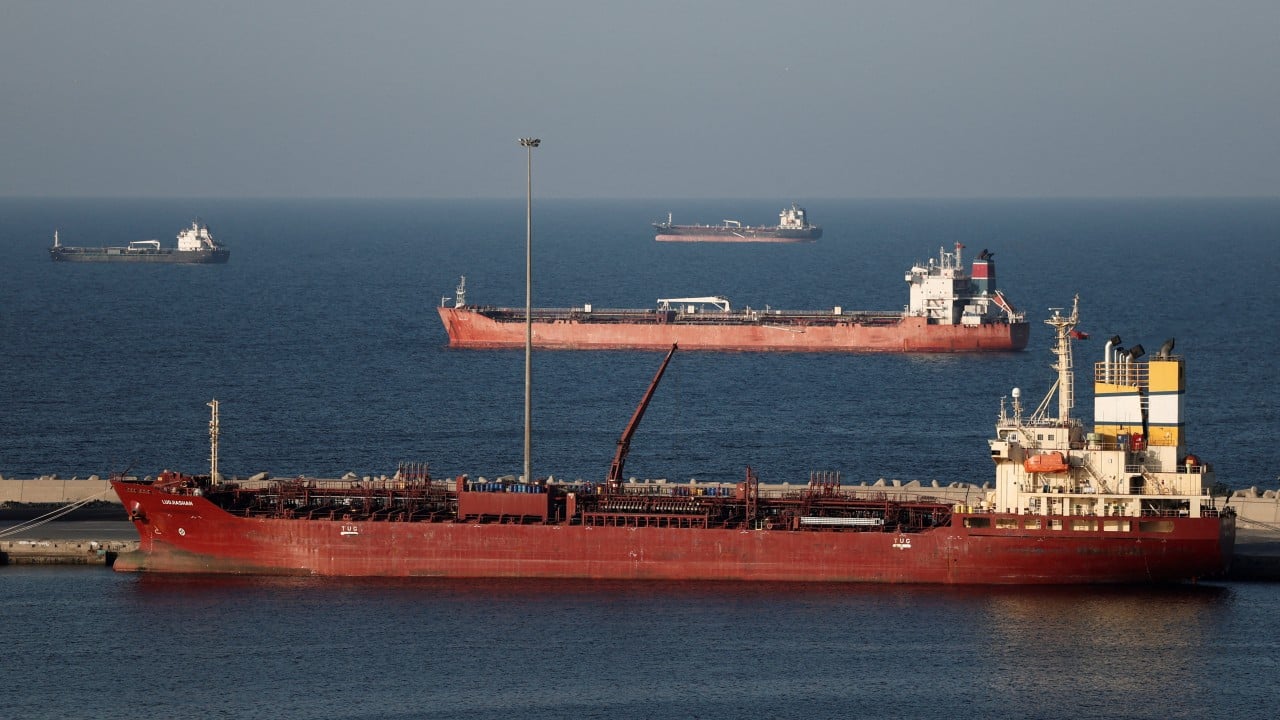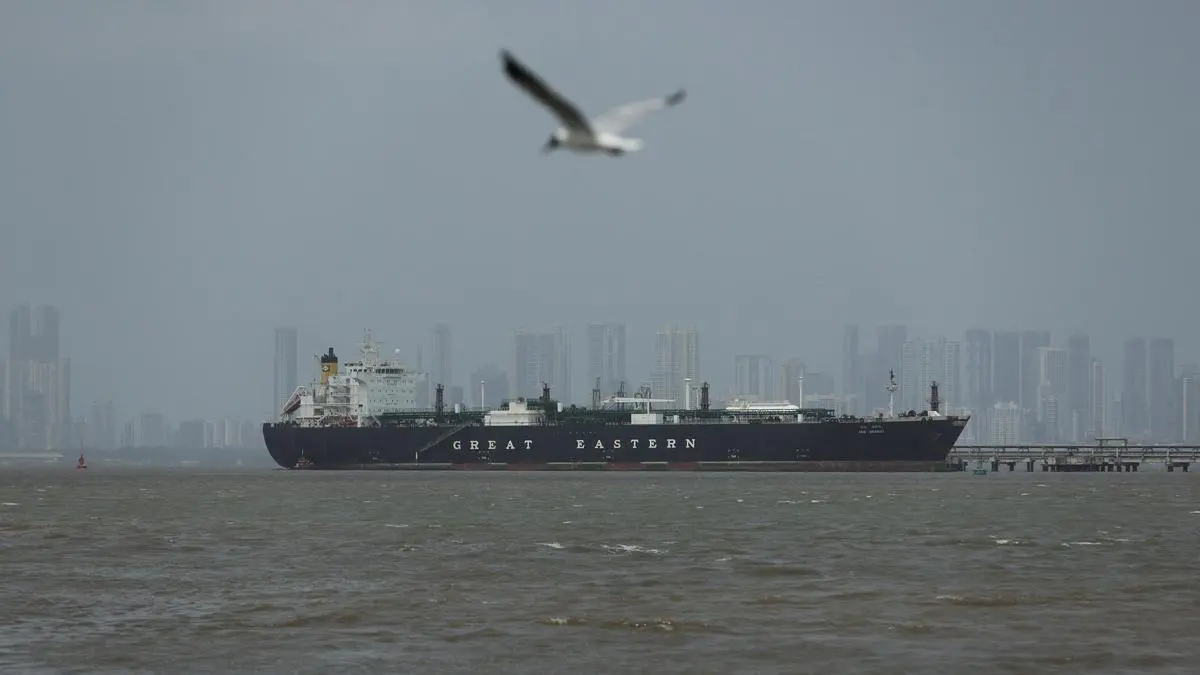
The maritime blockade intended to strangle the Iranian economy is currently meeting a massive, floating wall of resistance. Despite a flurry of executive orders from Washington and an increasingly aggressive naval presence in the Middle East, the flow of sanctioned crude to China has not stopped. It has simply changed its state of matter, shifting from a visible supply chain to a massive, decentralized hoard of "ghost" tankers.
This isn’t just a game of hide-and-seek on the high seas. It is a sophisticated logistical insurgency. By April 2026, the volume of Iranian oil sitting in floating storage or moving through the "shadow fleet" has reached levels that effectively insulate China’s independent refiners from Western diplomatic pressure. These refiners, often called "teapots," are no longer just marginal players; they have become the primary sink for a global underground economy that the US Treasury is finding nearly impossible to dismantle.
The Logistics of the Ghost Fleet
To understand why the blockade is failing, one must look at the sheer scale of the shadow fleet. As of early 2026, more than 130 tankers are dedicated exclusively to the Iranian trade. These are not state-of-the-art vessels. Most are aging Very Large Crude Carriers (VLCCs), many over 20 years old, which would typically be destined for the scrap yard. Instead, they operate under "flags of convenience"—Eswatini, Panama, or the Cook Islands—and move with their Automatic Identification Systems (AIS) switched off for weeks at a time.
The process is a masterclass in obfuscation. Oil is loaded at Kharg Island, but it rarely travels straight to China. Instead, it undergoes ship-to-ship (STS) transfers in the Gulf of Oman or off the coast of Malaysia. By the time the oil reaches the Shandong province, the paperwork has been bleached. What left Iran as "Heavy Sour" arrives in China as "Malaysian Blend" or "Omani Crude."
- The STS Maneuver: Multiple tankers huddle together in international waters, transferring millions of barrels in the dark.
- The Paperwork Wash: Middlemen in Dubai and Singapore facilitate the rebranding of the cargo, providing "clean" certificates of origin.
- The Dark Voyage: Vessels disable GPS tracking, making them invisible to standard commercial monitoring but visible to the sophisticated satellite arrays Beijing uses to coordinate its energy security.
Why the Teapots Won’t Quit
China’s independent refiners are the backbone of this resistance. While state-owned giants like Sinopec might hesitate to cross US sanctions for fear of losing access to the dollar-clearing system, the teapots have no such inhibitions. Many of these refineries are small, privately held, and operate entirely within the Chinese domestic ecosystem.
Beijing has recently increased crude import quotas for these independent players, essentially giving them a green light to soak up as much discounted Iranian oil as possible. The incentive is purely financial. Iranian crude currently trades at a steep discount—often $8 to $10 per barrel below Brent benchmarks. For a mid-sized refinery, that discount represents the difference between a failing business and a highly profitable one.
The US has attempted to sanction these specific refineries, but the impact is negligible. If one entity is blacklisted, a new shell company is formed to handle the transactions. The "whack-a-mole" strategy of the US Treasury is struggling to keep pace with the speed of Chinese corporate restructuring.
The Digital Yuan and the mBridge Solution
The most significant evolution in 2026 is the total decoupling of this trade from the US dollar. In previous years, the threat of being cut off from SWIFT was enough to deter most international banks. Today, the trade is settled almost exclusively in digital yuan (e-CNY) or through the mBridge platform.
mBridge is a multi-CBDC (Central Bank Digital Currency) platform that allows for direct, peer-to-peer settlement between central banks. It bypasses the correspondent banking system entirely. When a Chinese refiner buys a cargo of Iranian oil, the payment happens in seconds on a shared ledger. There is no dollar involvement, no US clearing bank, and therefore, no jurisdictional hook for the US Treasury to grab.
This financial "dark fiber" is what makes the maritime hoard so dangerous to Western interests. The oil is at sea, the money is digital, and neither ever touches a system controlled by Washington.
The Risk of Environmental Catastrophe
There is a dark side to this logistical triumph that neither Tehran nor Beijing likes to discuss. The shadow fleet is a ticking ecological time bomb. These vessels are old, poorly maintained, and often lack standard P&I (Protection and Indemnity) insurance. Because they operate "dark," they frequently ignore standard maritime safety protocols.
In the event of a collision or a structural failure in the South China Sea, there is no clear legal path for clean-up costs or liability. The "shadow" nature of the ownership—often a web of shell companies in the Marshall Islands or Liberia—makes it impossible to hold anyone accountable. The blockade has forced this trade into the most dangerous corner of the shipping industry, where the risk of a massive oil spill is the price of doing business.
The Blockade’s Diminishing Returns
The US strategy of "maximum pressure" assumes that Iran has a breaking point. However, the 2026 data suggests that as long as China is willing to provide a vent, that point may never be reached. Iranian exports have actually surged in early 2026, briefly hitting 2.1 million barrels per day despite the heightened naval tensions.
The hoard of oil at sea acts as a strategic buffer. If the US Navy were to successfully seal the Strait of Hormuz tomorrow, the millions of barrels already in the "inbound pipeline" or sitting in floating storage near Chinese ports could keep the teapots running for months. This inventory provides Beijing with the one thing it prizes above all else: time.
The blockade is no longer a vacuum seal; it is a sieve. Every new sanction only serves to further refine the shadow fleet’s tactics, making the invisible reservoir larger, more resilient, and harder to track. Washington is fighting a 20th-century naval war against a 21st-century decentralized network. The result is a stalemate that favors the hoard.