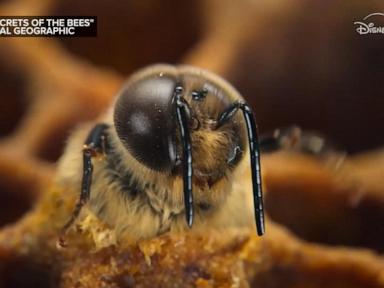
National Geographic just released another documentary about the "looming extinction" of the honeybee, and quite frankly, it is the most expensive piece of ecological fiction on television. They show you slow-motion shots of fuzzy insects dying in the grass. They play the somber violin music. They tell you that without the Apis mellifera, humanity will starve within four years.
It is a lie.
It’s not just a small mistake; it is a fundamental misunderstanding of biology that is actively harming global biodiversity. If you want to actually save the environment, the first thing you need to do is stop worrying about the honeybee. In fact, in many parts of the world, we have too many of them.
The Livestock of the Sky
The biggest trick the "Save the Bees" movement ever pulled was making you think the honeybee is a wild animal in danger of extinction. It isn't. The honeybee is livestock.
Treating the honeybee like a disappearing species is like claiming the world is running out of chickens because you saw a KFC close down. According to data from the FAO (Food and Agriculture Organization of the United Nations), the global population of managed honeybee hives has increased by about 45% over the last half-century. We are at an all-time high for honeybee populations globally.
When a commercial beekeeper loses a colony to Colony Collapse Disorder (CCD) or Varroa mites, it is a business loss, not an extinction event. They split the remaining hives, buy a new queen, and the population bounces back by the next season. The "decline" described in tear-jerking documentaries refers to the difficulty of keeping these animals alive—the overhead costs for beekeepers—not a biological erasure of the species.
The Invasive Species Nobody Wants to Talk About
If you live in North or South America, the honeybee is an invasive species. They were brought over by European settlers in the 1600s. They don't belong here.
While we pour billions into "saving" this one specific European import, we are ignoring the 4,000 species of native bees in North America that are actually in trouble. These native pollinators—the Mason bees, the Sweat bees, the Carpenter bees—don't live in convenient boxes. They don't make honey for us to sell. Because they don't have a massive lobbying arm or a PR firm, we let them die in silence.
Here is the kicker: honeybees are "bullies." They are generalist foragers. A single honeybee hive can dump 50,000 hungry workers into a meadow, where they proceed to strip the nectar and pollen from every flower in sight. They outcompete native bees, driving them toward actual extinction. By putting a "save the bees" hive in your backyard, you aren't helping nature; you are effectively releasing 50,000 invasive locusts to starve out the local residents.
The Pollination Myth
The documentary-industrial complex loves to quote a fake Einstein line: "If the bee disappeared off the face of the earth, man would only have four years of life left." Einstein never said that. It’s a fabrication used to manufacture urgency.
Let’s look at the math of what we actually eat. The vast majority of human calories come from wind-pollinated crops or crops that don't need insects at all.
- Wheat: Wind-pollinated.
- Rice: Self-pollinated.
- Corn: Wind-pollinated.
- Potatoes: Propagated from tubers.
- Soybeans: Mostly self-pollinated.
If the honeybee vanished tomorrow, your breakfast cereal and your bread would be fine. You might lose almonds. You might lose some specific varieties of apples and berries. It would be a blow to the culinary variety and the agricultural economy, but it wouldn't be the apocalypse. We are sacrificing the entire insect kingdom to protect a luxury crop service provider.
The Pesticide Red Herring
We love to blame "Big Ag" and neonicotinoids for the honeybee's struggles because it gives us a clear villain. While pesticides are certainly not healthy for insects, the primary driver of honeybee health issues is actually the commercial beekeeping industry itself.
Imagine taking a cow, putting it on a flatbed truck, driving it 2,000 miles across the country, feeding it nothing but sugar water, and forcing it to work in a field with 500,000 other stressed-out cows. That is the life of a commercial honeybee.
Every February, about 70% of all honeybees in the United States are loaded onto semi-trucks and shipped to the Central Valley of California for the almond bloom. This massive concentration of hives from every corner of the country creates a biological "super-spreader" event. Every virus, mite, and fungus in the nation gets traded in the California almond groves and then shipped back to the home states.
The industry is crying about a fire while they are the ones holding the flamethrower.
How to Actually Fix the Pollinator Crisis
If you want to be a real environmentalist and not just a trend-follower, you have to stop "beekeeping" and start "habitat-making."
- Kill Your Lawn: Turf grass is a biological wasteland. It’s a green desert that requires massive amounts of water and chemicals while providing zero food for pollinators. Replace it with native wildflowers.
- Stop Buying "Honeybee" Seed Mixes: Most of these "pollinator-friendly" packets contain invasive seeds or flowers that native bees can't even use. Find a local nursery and ask for plants that are indigenous to your specific zip code.
- Accept the "Mess": Native bees don't live in white boxes. They live in the ground, in dead wood, and in hollow stems. If you "clean up" your garden every fall by cutting everything back and mulching, you are literally throwing the next generation of native bees into the woodchipper.
- Stop Buying Honey as "Activism": Buying honey supports the honeybee industry. It does nothing for the environment. If you like honey, eat it because it tastes good—but don't pretend you're saving the planet by putting it in your tea.
The Bitter Truth
The Nat Geo narrative is comfortable because it suggests we can solve the problem by writing a check to a non-profit or putting a hive on a corporate rooftop. It turns conservation into a hobby.
The uncomfortable truth is that the honeybee is the "cattle" of the insect world. We are obsessed with it because it serves our commercial interests. Meanwhile, the actual engines of our ecosystems—the thousands of unglamorous, non-honey-producing insects—are being crushed by the very species we are trying to "save."
If we keep prioritizing the honeybee over native biodiversity, we will end up with a world that has plenty of honey, but an ecosystem that has completely collapsed. Stop "saving the bees." Start saving the insects the honeybees are killing.
Throw away the hive. Plant a weed. Leave the dirt alone.