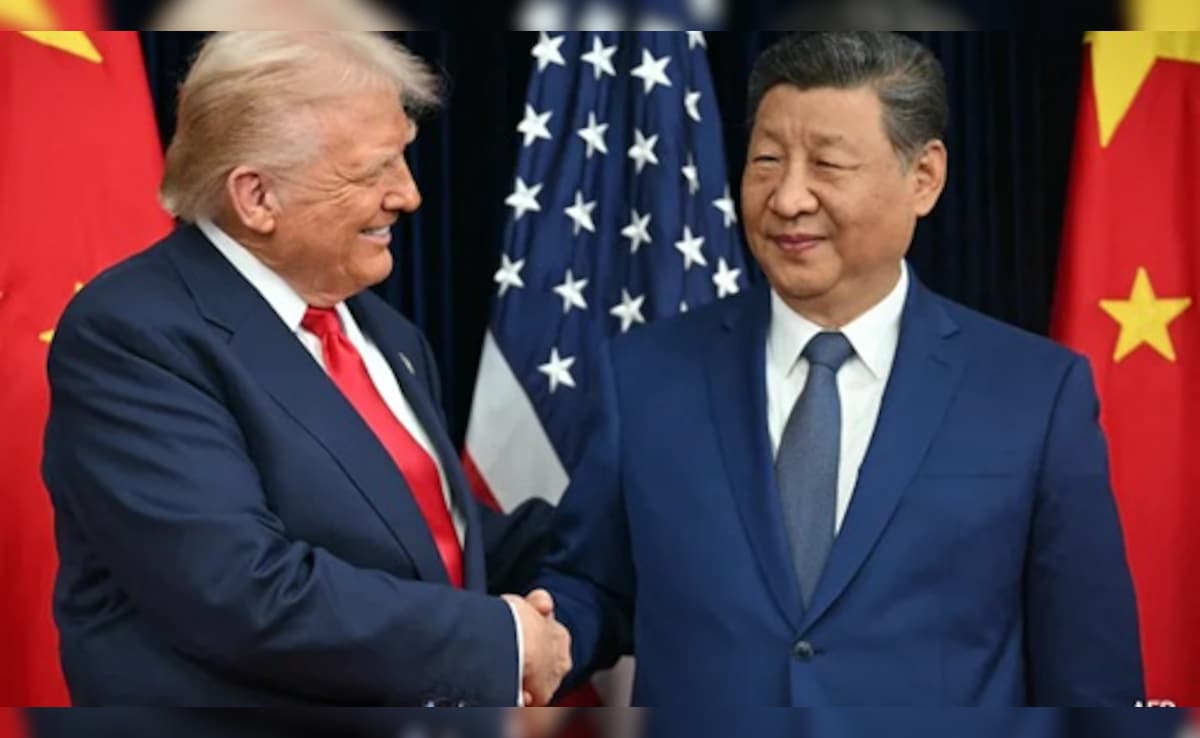
Beijing is currently attempting to pull off the most expensive balancing act in modern history. As a high-stakes summit between Donald Trump and Xi Jinping approaches, Chinese diplomats have been quietly moving through Tehran with a very specific set of demands. The goal is simple but incredibly difficult. They must prevent a regional war that would shatter the global energy market while simultaneously proving to the United States that China is the only power capable of keeping Iran in check. This isn't just about regional stability. It is a desperate effort to secure a bargaining chip that Xi can trade for relief from the incoming wave of American tariffs.
The math of this situation is brutal. China buys roughly 90% of Iran’s oil exports. This makes Beijing the single most important financier of the Iranian government. But this dependency is a double-edged sword. If the Middle East descends into a full-scale conflict, the supply chains that fuel the Chinese industrial machine will vanish overnight. Xi Jinping cannot afford a war, but he also cannot afford to look like he is taking orders from Washington.
The Quiet Lever in Tehran
For years, China played a passive role in Middle Eastern politics. They were the silent buyer, the builder of infrastructure, and the provider of non-judgmental loans. That era is over. The recent flurry of diplomatic activity between Beijing and Tehran suggests that China has finally decided to use its economic weight as a political cudgel.
Chinese officials are not talking about human rights or democratic values. They are talking about the bottom line. Sources close to the negotiations indicate that Beijing has warned Tehran that any escalation that disrupts the Strait of Hormuz will lead to an immediate freeze of Chinese investment in Iranian energy fields. This is the "oil for order" strategy. China provides the cash that keeps the Iranian economy on life support, but in exchange, Tehran must rein in its regional proxies before the Trump-Xi meeting begins.
Why Washington is Watching
The United States has historically viewed Chinese involvement in the Middle East with suspicion. However, the current reality has created a strange alignment of interests. The Trump administration wants to curb Iranian influence without committing to another "forever war" in the desert. If Xi Jinping can deliver a more compliant Iran, it gives him a massive psychological advantage during trade negotiations.
It is a masterful play. If Xi can convince Trump that China is the primary stabilizing force in the Gulf, he can argue that aggressive trade wars will undermine his ability to keep the peace. He is essentially holding Middle Eastern stability hostage to protect Chinese manufacturing.
The Energy Security Trap
We must look at the physical flow of oil to understand the stakes. While the United States has achieved a level of energy independence through fracking and domestic production, China remains the world’s largest importer of crude.
- Reliance on the Strait: Nearly half of China’s oil imports pass through the Strait of Hormuz.
- The Shadow Fleet: China relies on a "shadow fleet" of aging tankers to move Iranian oil under the radar of international sanctions.
- Infrastructure at Risk: Massive Chinese investments in Iraqi and Emirati oil fields would be the first casualties of a regional missile exchange.
If the missiles start flying, the price of Brent crude doesn't just go up; it breaks the global economy. For a Chinese Communist Party that bases its legitimacy on economic growth, an energy shock of that magnitude is a direct threat to domestic survival.
The Proxy Problem
The most difficult part of China’s diplomacy involves Iran’s network of regional partners. While Tehran might be willing to listen to its biggest customer, groups like the Houthis or Hezbollah operate with a degree of autonomy that makes Beijing nervous.
Chinese diplomats have recently met with leaders in Riyadh and Abu Dhabi to reassure them that China is acting as a "responsible stakeholder." This is a calculated attempt to displace the United States as the preferred security partner in the region. By positioning themselves as the only party that can talk to both the Iranians and the Saudis, the Chinese are making a bid for long-term hegemony in the Gulf.
The Limits of Checkbook Diplomacy
There is a significant flaw in the Chinese plan. Money can buy influence, but it rarely buys loyalty in a religious or ideological conflict. Iran’s leadership is facing internal pressure and a sense of existential threat. If they feel cornered, the promise of Chinese investment might not be enough to stop them from lashing out.
Furthermore, the Trump administration is not known for rewarding "good behavior" in the way Beijing expects. There is a very real possibility that Xi Jinping will spend his political capital to settle Tehran down, only to find that Trump still intends to move forward with 60% tariffs on Chinese goods.
The Trade War Connection
Everything comes back to the manufacturing floor in Guangdong. The Chinese economy is currently struggling with a massive property crisis and stagnant domestic consumption. They need the American consumer more than ever.
By inserting themselves into the Iran-Israel-U.S. triangle, the Chinese are trying to change the subject of the summit. They want the conversation to be about global security, where they have leverage, rather than industrial subsidies and intellectual property theft, where they are on the defensive.
We are seeing a shift from "economic diplomacy" to "security arbitrage." Xi is betting that the fear of $150-a-barrel oil will outweigh the desire for a trade war in the minds of American policymakers.
The Tactical Shift in the South China Sea
Interestingly, as China ramps up its diplomacy in the Middle East, it has slightly de-escalated its rhetoric in the South China Sea. This is not a coincidence. Xi cannot fight a diplomatic war on two fronts while preparing for a summit with a volatile American president. He is clearing the deck.
The pivot toward Iran is a signal to the world that China is ready to lead. But leadership is expensive. Every time Beijing steps in to mediate a crisis, they inherit the baggage of that crisis. By becoming the guarantor of Iranian stability, China is now responsible for every provocation that comes out of Tehran.
The Risk of Overextension
The history of the 20th century is littered with superpowers that thought they could manage the Middle East through clever diplomacy and financial incentives. The United States, the United Kingdom, and the Soviet Union all found themselves bogged down in conflicts they didn't understand and couldn't control.
China believes its "neutral" stance makes it different. They think that because they don't take sides in religious or territorial disputes, they can remain above the fray. This is a dangerous delusion. In the Middle East, silence is often interpreted as consent, and money is often seen as a weapon.
The Looming Summit
When Xi and Trump sit down, the ghost of the Middle East will be in the room. The success of this meeting won't be measured in trade quotas or currency pegs. It will be measured by whether the two leaders can agree on a framework that prevents a global energy collapse.
China has done its homework. They have the maps, the oil contracts, and the direct line to the Supreme Leader in Tehran. They are coming to the table with a solution to a problem that the United States has been unable to solve for forty years.
But solutions in this part of the world are rarely permanent. They are usually just pauses between the chaos. Xi Jinping is betting the future of the Chinese economy on the idea that he can keep the lid on the Middle East just long enough to survive a four-year term of American protectionism.
The strategy is high-risk, high-reward, and entirely necessary for a nation that has run out of easy options for growth. If he fails, the resulting explosion will burn much more than just a few oil refineries. It will incinerate the credibility of the Chinese model of global leadership.
The leverage is real, the stakes are absolute, and the clock is ticking toward a meeting that will decide the price of everything from a gallon of gas to a container ship full of electronics. Watch the oil tankers in the Gulf if you want to know how the trade war ends.