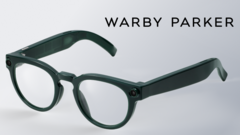
Google is preparing to launch its first consumer smart glasses since the original Google Glass project crashed a decade ago. This new push moves away from the old, camera-heavy augmented reality designs that triggered massive privacy backlashes. Instead, the company is focusing heavily on audio-first features and heads-up artificial intelligence integration. The goal is to replace the smartphone screen for daily tasks like navigation, translation, and notifications. This strategy directly addresses why the first iteration failed: it was socially unacceptable. By making the technology invisible, Google hopes to slip back onto our faces unnoticed.
The tech industry loves a redemption story. But Silicon Valley often forgets that hardware failures are rarely just technical. They are cultural.
When Google Glass launched in 2013, it did not fail because the displays were blurry or the battery life was short. It failed because it transformed the user into a social pariah. The visible camera lens signaled to everyone in the room that they were potentially being recorded without consent. It broke the unspoken social contract of public interaction. The term "Glasshole" was coined almost overnight, and bars, restaurants, and theaters banned the device before it ever reached mass production.
The Pivot to Invisible Utility
The new strategy relies on a fundamental shift in design philosophy. If the first generation was loud and obvious, this generation is designed to blend in completely.
Hardware engineers are abandoning the sci-fi aesthetic. They are partnering with traditional eyewear brands to create frames that look identical to standard prescription glasses or sunglasses. The heavy, asymmetrical plastic housings are gone. They have been replaced by miniaturized components hidden inside standard-width temples.
Audio Over Optics
Instead of a glowing prism floating over your right eye, the primary interface is now directional audio.
- Micro-speakers embedded in the frame arms beam sound directly into the ear canal without blocking ambient noise.
- Microphone arrays utilize beamforming technology to isolate the wearer's voice, allowing for silent, whispered commands even on a noisy subway platform.
- Contextual AI processes the audio data locally, offering real-time feedback without needing a constant cloud connection.
This approach resolves the privacy issue by removing the outward-facing camera entirely from base models. Without a lens pointing at them, people surrounding the wearer remain unaware that the glasses are "smart." The social friction evaporates.
The Display Dilemma
For models that do feature a display, the technology has changed dramatically. The old micro-projectors required a thick chunk of glass to reflect light into the pupil. The current generation utilizes waveguide technology, where microscopic geometric patterns are etched directly into the plastic or glass lens itself.
When the display is off, the lens looks completely clear. When it turns on, light travels through the interior of the lens and projects information directly onto the retina. It is a massive technical achievement. Yet, it introduces a new problem that the industry is desperate to hide.
The Cognitive Load Problem
Every hardware developer faces a brutal constraint known as the attention budget. The human brain can only process a finite amount of visual data at one time.
When you look at a smartphone, you make a conscious decision to look down. Your brain segments that activity. You are interacting with the digital world. When you look up, you return to the physical world. Smart glasses erase this boundary. By overlaying text, directions, and notifications directly onto your field of view, the technology demands constant, split-second cognitive sorting.
[Physical Environment] ---> (Human Eye) <--- [Digital Overlay]
                                 |
                       (Cognitive Bottleneck)
                                 |
                     [Distraction / Accident]
Imagine walking down a crowded city street. A notification pops up in your peripheral vision informing you of an urgent email. At that exact moment, a cyclist swerves in front of you. The millisecond your brain spent processing the digital text is the millisecond you needed to step out of the way.
The tech sector frames this as "seamless integration." In reality, it is a recipe for cognitive overload. Initial testing of heads-up displays in automotive contexts showed that drivers often looked right through physical obstacles when a digital overlay was active. The brain prioritizes the high-contrast, glowing element over the duller real-world object.
The Real Product is Your Gaze
To understand why tech giants are obsessed with eyewear, you have to look past the hardware sales figures. The margins on premium frames are excellent, but the real prize is data. Specifically, gaze data.
For two decades, companies built empires by tracking what you click, what you type, and where you walk. That data pool is reaching saturation. Smart glasses offer the ultimate frontier: tracking exactly what you look at, for how long, and how your eyes react.
The Biometric Goldmine
Even without a camera filming the outside world, inward-facing infrared sensors are used to track eye movement for interface navigation. These sensors capture data that is incredibly valuable to advertisers.
- Saccadic eye movements reveal subconscious interest before the user consciously processes an image.
- Pupil dilation indicates emotional arousal, stress, or intense focus.
- Fixation duration measures the exact shelf-life of an advertisement or product display in real-time.
If a wearer walks through a grocery store, the glasses can record which cereal boxes caught their eye, which price tags caused their pupils to dilate with sticker shock, and which items were ignored entirely. This is not science fiction. It is the logical progression of behavioral monetization.
Supply Chain Realities and the Battery Wall
The enthusiasm for this relaunch faces a hard wall of physics. Batteries have not kept pace with silicon.
To make glasses comfortable for all-day wear, the total weight needs to stay under 50 grams. A standard pair of Ray-Bans weighs around 30 to 40 grams. This leaves a minuscule weight allowance for the battery, sensors, and processors.
+-------------------------------------------------------+
|  Total Target Weight: < 50g                           |
+-------------------------------------------------------+
| [Standard Frame: 35g] [Processor: 4g] [Battery: 11g]  |
+-------------------------------------------------------+
An 11-gram lithium-ion battery holds roughly enough power to run a continuous heads-up display and cellular connection for about forty-five minutes. To stretch that to a full day, the device must remain dormant 95% of the time.
This creates an ongoing engineering paradox. If the glasses only turn on when you explicitly ask them to, they are just an expensive, heavy pair of regular glasses that you have to charge every night. If they stay on constantly to provide proactive assistance, they die before your morning commute is over.
The Ghost of Segway
The broader tech sector is approaching this launch with a familiar form of hubris. They assume that because the technology is objectively impressive, the market will naturally adapt to accommodate it.
This line of thinking mirrors the launch of the Segway in 2001. Inventors promised it would revolutionize urban planning and replace cars. It was a marvel of gyroscopic engineering. But it ignored the existing infrastructure of sidewalks, the legal ambiguity of where it could be ridden, and the fact that users looked ridiculous riding them. It was a solution looking for a problem.
Smart glasses risk falling into the exact same trap. The technology has advanced to the point where clear lenses can display crisp data, and tiny speakers can deliver immersive sound. The engineering teams have solved the problems of 2013.
They have not solved the problems of today. Consumers are experiencing profound screen fatigue. The desire to disconnect, to look away from the digital firehose, is growing exponentially among younger demographics. Introducing a device designed to permanently tether the internet to your eyeballs runs completely counter to this cultural shift.
Google and its competitors are betting billions that they can normalize facial computing by making the hardware invisible. They believe that if you cannot see the computer, you will forget you are wearing it. But the human brain is highly sensitive to intrusion. A notification that interrupts a conversation with your child or a moment of quiet reflection feels vastly more invasive when it occurs inside your own glasses rather than on a device sitting across the room on a table. The battle will not be won in the factory or the lab. It will be decided on the bridge of the human nose, where space is limited and patience is incredibly thin.