The morning air in the Fraser Valley smells of clover, damp earth, and the distinct, sharp iron of a tractor engine turning over on the third try.
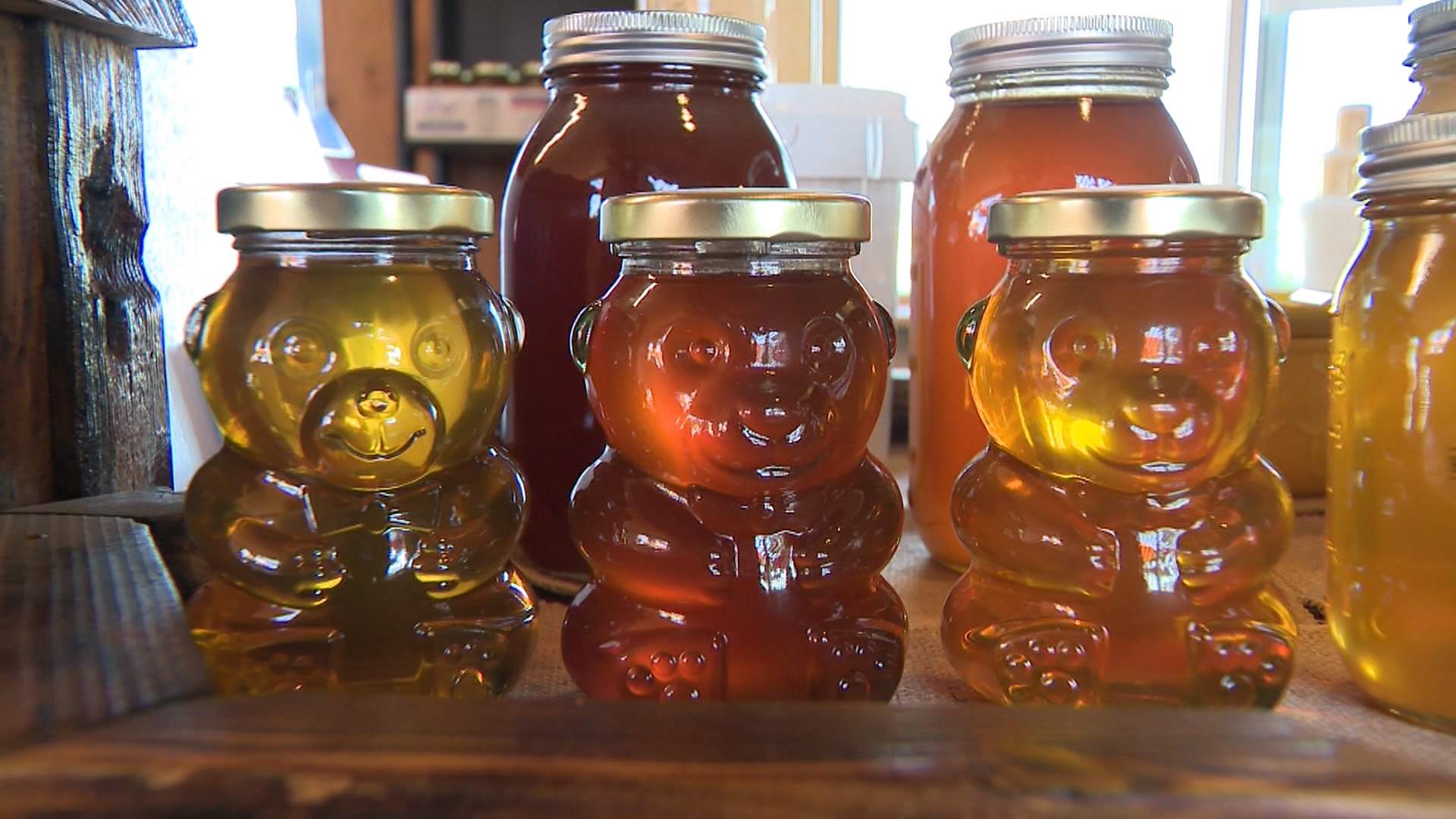
For forty years, Arthur has woken up to this smell. His hands are maps of calluses, stained yellow with propolis and scarred from the frantic, defensive stings of thousands of Italian honeybees. He doesn't think of himself as an exporter. He thinks of himself as a translator. He translates the language of wild blossoms into liquid amber, neatly packed in glass jars that sit on kitchen tables three thousand miles away.
Or at least, they used to.
Right now, Arthur is staring at a ledger that makes no sense. Across the border, a bureaucratic gear has turned, heavy and indifferent. A fifty percent tariff is sliding down the tracks toward his loading dock. Fifty percent. It is a number so large it stops the breath, an invisible wall built not of concrete or barbed wire, but of percentages and trade penalties.
To understand what that number means, you have to look past the spreadsheets. You have to look at the hives.
The Math of the Meadow
Commerce is usually discussed in boardrooms where the windows are tinted and the coffee comes from a machine that hums softly in the corner. But real commerce—the kind that keeps dust on your boots—lives or dies by margins thinner than a bee's wing.
British Columbia’s honey producers are currently bracing for a shock that threatens to rewrite the geography of North American agriculture. When a fifty percent tariff hits a regional export market, it does not simply squeeze profit margins. It shatters the fragile economic ecosystem that allows small-scale and mid-scale apiaries to survive bad winters, mite infestations, and volatile weather.
Imagine running a bakery where the cost of flour suddenly doubles overnight, yet you cannot raise the price of a loaf of bread because the baker down the road is playing by a different set of rules. That is the reality facing B.C. apiarists. They produce honey of exceptional grade, prized for its floral complexity—fireweed, clover, blackberry blossoms that drink the coastal rain. Much of that liquid harvest finds its way south into the United States, where demand for pure, traceable northern honey has steadily climbed.
Exceptional quality, however, offers no immunity to protectionist trade policy.
When the tariff hammer falls, the economics flip instantly from precarious to impossible. A jar of honey that costs a specific baseline to harvest, extract, bottle, and ship now carries a punitive surcharge that prices it completely out of the American grocery aisle. The grocery buyer in Seattle or Portland does not care about the misty mornings in British Columbia or the dedication of the beekeeper. They care about the bottom line. They will simply look elsewhere.
The Unseen Architecture of the Hive
There is a popular misconception that beekeeping is a quaint hobby, a rustic throwback to a simpler time where people wear wide-brimmed hats with mesh veils and collect sweetness from the flowers.
That illusion evaporates the moment you talk to someone managing five hundred colonies.
Beekeeping is industrial biology. It requires precise timing, veterinary-level observation, and deep capital investment. Wooden supers, frames, wax foundation sheets, queen excluders, feeding syrup during dearth seasons, specialized extraction machinery, transport trucks, climate-controlled storage—the overhead is relentless.
(Note: When I speak of the "architecture of the hive," I am using a metaphor for the intricate supply chain and ecological interdependence that sustains commercial honey production.)
When the export market to the south constricts under the weight of a fifty percent tariff, the surplus honey doesn't just vanish. It backs up into local warehouses. It floods the domestic market. Supply skyrockets, local prices crash, and the very producers who invested years into building cross-border relationships find themselves drowning in inventory they cannot move profitably.
Worse still, honey production is only half the economic engine of an apiary. The hidden engine—the one that actually feeds the broader agricultural economy—is pollination.
Consider what happens next: If honey prices plummet and export revenues dry up, apiarists cannot afford the labor and transport required to move their hives to the orchards of the Okanagan or the berry fields of the Fraser Valley. They cannot absorb the losses. They scale down, sell off equipment, or walk away entirely.
When the bees disappear, the apples don't set. The blueberries remain unpollinated. The cascading failure of a trade tariff does not stop at the edge of the honey jar; it bleeds directly into the produce aisle, touching every consumer who buys local fruit.
The Weight of Silence
Arthur walks out to the apiary late in the afternoon. The sun is dipping behind the coastal mountains, casting long, bruised shadows across the wooden boxes.
He lifts the lid of hive number twelve. A plume of sweet, warm vapor rises into the cool air, carrying the scent of beeswax and thousands of vibrating bodies. They are working. They don't know about Washington trade hearings. They don't know about protectionist levies or international friction. They only know the bloom cycle, the sun angle, and the urgent imperative to store enough sweetness to survive the dark months ahead.
Arthur puts the lid back down, the wooden edges settling with a soft, familiar thud.
The fifty percent tariff is not a distant headline. It is a heavy hand pressing down on the lid of every hive in the province. It is the sound of a generational livelihood being forced to calculate whether next spring is worth the investment.
He stands there in the fading light, listening to the steady, low hum of ten thousand wings, wondering how much longer the music can play against the rising noise of borders closing.