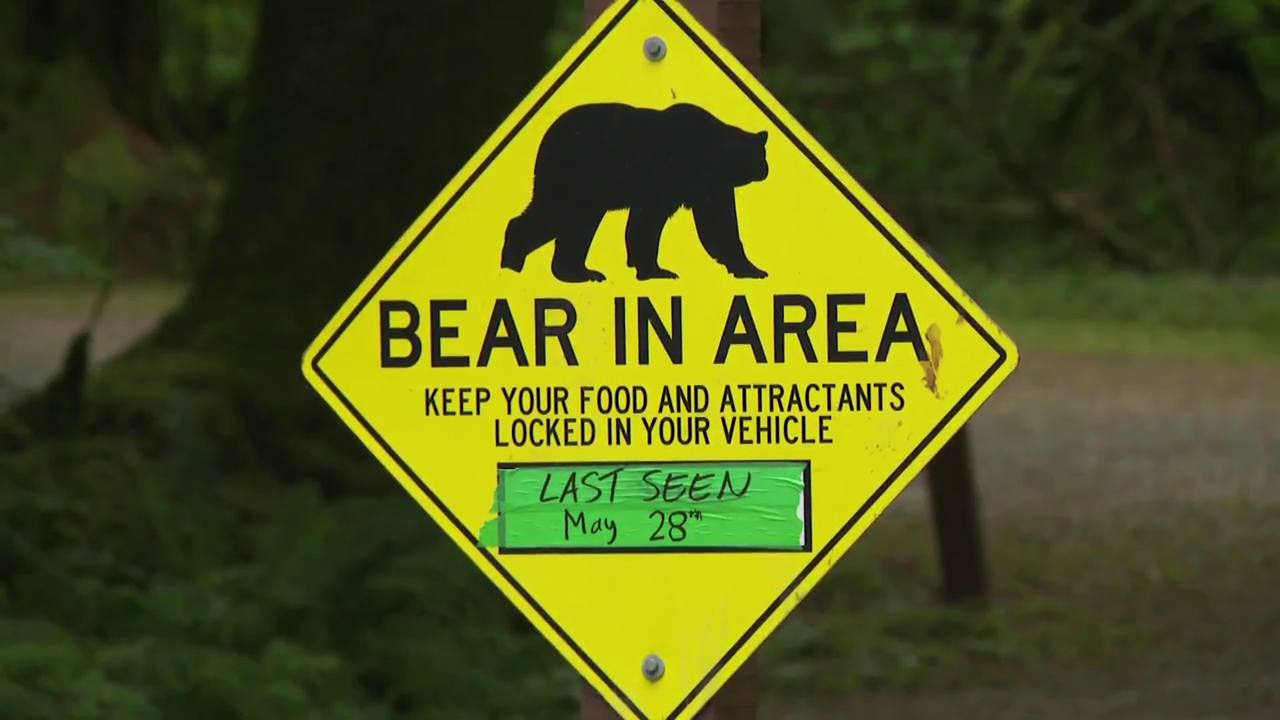
A mother black bear is dead in Golden Ears Provincial Park. The conservation officers pulled the trigger. The media ran the predictable headline: "Mama black bear killed for aggressive behaviour." The public sighed, blamed "irresponsible campers," and moved on.
This entire narrative is a lie.
The lazy consensus surrounding wildlife management in North America relies on a comfortable, infantile myth: that conservation officers are forced to execute "aggressive" animals to protect human life. We treat these incidents like natural disasters or unavoidable tragedies. They aren't. They are the systemic failure of bureaucratic park management. The bear didn't get aggressive. The park system engineered a execution trap, and the bear walked into it.
I have spent fifteen years analyzing wilderness management policies and tracking human-wildlife conflict data. I have watched parks dump millions of dollars into glossy brochures while completely ignoring the fundamental mechanics of animal behavior and crowd control.
The bear wasn't the problem. The park's structural cowardice is.
The "Aggressive Behavior" Lie
Let’s dismantle the phrase "aggressive behavior" immediately. In wildlife biology, true predatory aggression from a black bear toward a human is vanishingly rare. What bureaucrats call "aggression" is almost always habituation paired with defensive maternal instinct.
When a mother bear seeks out food in a campsite, she isn't hunting humans. She is exploiting an unnaturally dense, high-calorie food source that humans left behind. When humans crowd around her to take photos for social media, she defends her cubs.
To call a mother bear "aggressive" for defending her offspring from a crowd of apex predators holding smartphones is a staggering inversion of reality.
The Lifecycle of a Manufactured Conflict
- Phase 1: The Incentive. The park allows high-density camping without hard physical barriers between tents and wildlife corridors. Food smells saturate the area.
- Phase 2: The Conditioning. The bear learns that human presence equals a 5,000-calorie reward. The fear barrier dissolves.
- Phase 3: The Incident. A tourist corners the bear for a selfie. The bear huffs, pops her jaw, or bluffs charges to create space.
- Phase 4: The Execution. Conservation officers arrive with a 12-gauge shotgun, cite "public safety," and pull the trigger.
This isn't wildlife management. It's janitorial work with a firearm.
The Failure of Fines and "Education"
Go to any provincial or national park website. You will see the same toothless strategy: signs telling people not to feed the wildlife, and the threat of a fine.
It does not work. It has never worked.
Behavioral economics shows us that people do not calculate the abstract risk of a $500 fine when they see a fluffy animal. They want the experience. They want the photo. Expecting self-regulation in a public park with 200,000 annual visitors is statistically illiterate.
Imagine a scenario where a highway department removes all guardrails, sets the speed limit to 150 miles per hour, puts up a sign saying "Please drive safely," and then acts shocked when a pileup occurs. That is exactly how Golden Ears and hundreds of other parks operate. They invite thousands of urbanites into dense bear habitats, provide minimal physical infrastructure to separate them, and then execute the wildlife when the inevitable overlap happens.
The Contradiction of Conservation Culture
We are told that conservation officers have "no choice" but to euthanize habituated bears because relocation doesn't work.
They are right about relocation. The data from agencies like the BC Conservation Officer Service and various US state wildlife departments is clear: adult black bears, especially those conditioned to human food, have an incredibly strong homing instinct. They will walk 100 miles back to their territory, or they will simply become a nuisance in a different valley. Relocation is often just a slow death sentence in a foreign environment.
But the conclusion they draw from this—that execution is the only remaining option—is a false dichotomy.
The third option is absolute exclusion. The total, uncompromising physical separation of humans and bears. But that requires money, infrastructure, and political spine. It is far cheaper to buy a box of slugs and blame the bear.
| Management Strategy | Cost to Government | Long-Term Success Rate | Wildlife Casualty Rate |
|---|---|---|---|
| Signs & Fines (Current Status Quo) | Low | Near 0% | Extremely High |
| Relocation | Medium | < 30% | High (Starvation/Intraspecific Killing) |
| Total Physical Exclusion & Closures | High | > 95% | Near 0% |
How to Actually Fix the Problem
If we want to stop killing bears, we have to stop treating parks like amusement parks. We need to implement policies that actually alter human behavior through design, not through wishful thinking.
1. Mandatory Electric Fencing for Campgrounds
If a campground is in a high-density grizzly or black bear corridor, it should be enclosed in a multi-strand electric fence. No exceptions. This is done with massive success in portions of Alaska and Africa. It removes the possibility of nighttime habituation. If you cannot afford to fence the campground, you close the campground.
2. Immediate, Permanent Park Bans
If a park ranger finds a cooler left out on a picnic table, the camper should not get a warning. They should not get a $100 fine. They should be permanently banned from every provincial or national park in the country for life. Their vehicle should be towed from the campsite immediately. If we treated food conditioning as the lethal threat it is, people would stop doing it.
3. Hard Attendance Caps and Seasonal Corridors
Golden Ears Provincial Park is plagued by its proximity to Vancouver. It is overrun. When human density hits a certain threshold, wildlife conflict is guaranteed. Parks must implement hard caps on human entry based on seasonal wildlife movements, not human demand. When the salmon run or the berry crop hits, humans get locked out. Period.
Stop Asking the Wrong Question
Whenever this happens, the public asks: "Why couldn't they just tranquilize her and move her to a zoo?" or "Why didn't people keep their distance?"
These are the wrong questions. They assume the system is functioning correctly and a few bad actors ruined it.
The correct question is: Why do we continue to fund a wildlife management model that relies on killing animals to clean up the predictable mess of human recreation?
We have turned our parks into arenas where wildlife is invited to fail. We lure them with the scent of garbage and hot dogs, we surround them with thousands of untrained, entitled tourists, and when they act like bears, we execute them.
The death of the mama bear in Golden Ears wasn't a tragedy of nature. It was an administrative execution. Stop buying the propaganda that blames the victim with fur.