The legal commentators are currently tripping over themselves to cite the 1982 UN Convention on the Law of the Sea (UNCLOS). They are debating "sovereign immunity" and "innocent passage" like it’s a high school moot court. Stop. You are looking at the wrong map.
When the US seizes an Iranian cargo vessel, the question isn’t "Is this legal?" That is a boring question for academics. The real question is: "Who has the power to define reality in international waters?"
The "lazy consensus" suggests that international law is a rigid set of tracks that every nation-state must follow. In reality, international law is a suggestion box backed by an aircraft carrier. If you’re still talking about the technicalities of the San Remo Manual or the finer points of maritime jurisdiction, you’ve already lost the plot. The US didn't seize a ship because of a legal loophole; it seized a ship because the current global financial plumbing makes "legality" a domestic policy choice for Washington.
The Myth of Neutral Waters
Most people view the ocean as a neutral space where rules apply equally to everyone. This is a fantasy. The ocean is a high-stakes poker game where the US owns the table, the chairs, and the deck of cards.
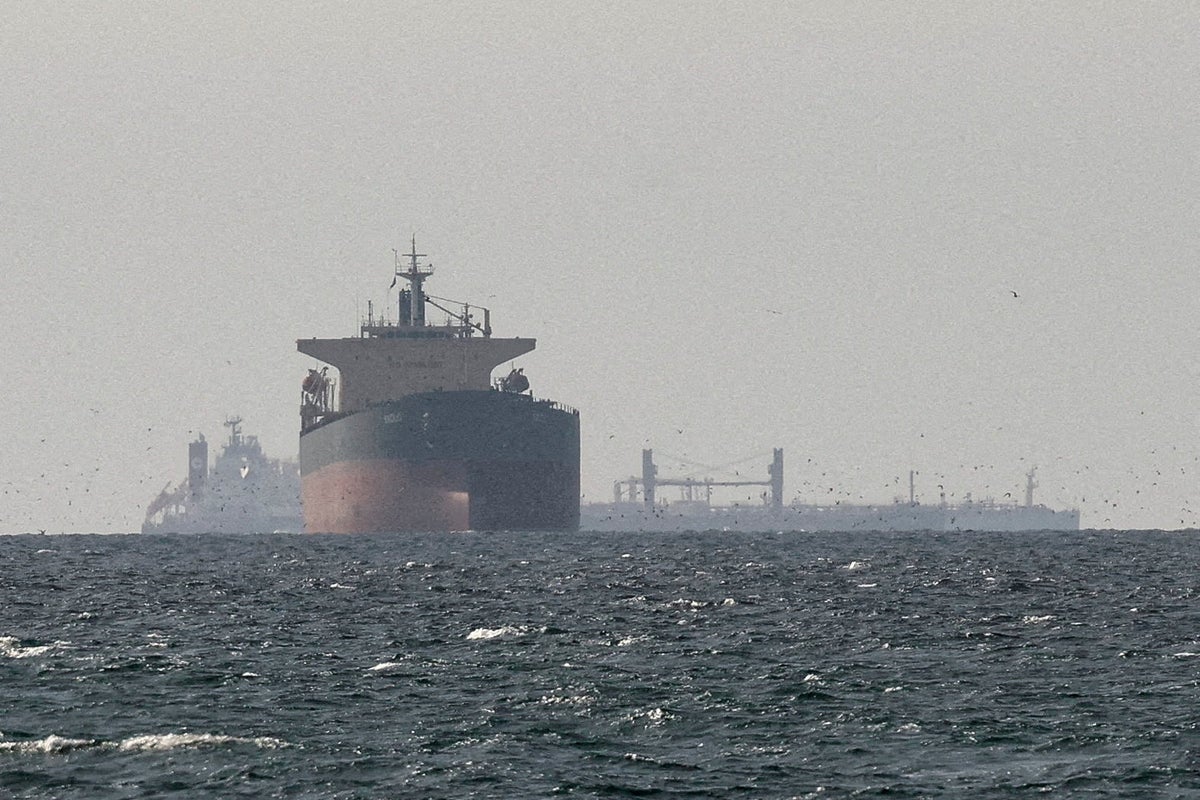
When a vessel like the Suez Rajan or any other sanctioned tanker gets diverted, legal experts point to civil forfeiture laws. They claim the cargo—usually oil—is the "proceeds of a crime" (terrorism financing). This is a brilliant bit of legal theater. By framing a geopolitical act as a simple criminal seizure, the US bypasses the messiness of "acts of war" and moves the fight into a boardroom in D.C.
International law hasn't "failed" when these seizures happen. It is working exactly as intended: as a tool for the dominant power to formalize its will.
Your UNCLOS Arguments Are Irrelevant
Here is the inconvenient truth: The United States has never even ratified UNCLOS.
Think about the sheer audacity of that. The US dictates maritime behavior globally based on a treaty it refuses to join, citing "customary international law." It’s the equivalent of a guy who isn't a member of a gym telling everyone else they’re using the treadmills wrong.
When the media asks if seizing an Iranian ship is "legal," they are looking for a "yes" or "no" answer in a system that only speaks in "maybe" and "might makes right." Under UNCLOS Article 92, ships have exclusive jurisdiction under their flag state. But the US uses the "nexus of the dollar." If a single cent of the transaction for that oil touched a US-correspondent bank, the US claims jurisdiction.
In the modern era, the "High Seas" don't start at 12 nautical miles out. They start wherever the US Treasury Department says they do.
The Shell Game: Why Iran Loses Every Time
Critics of these seizures often claim the US is "pirating" oil. This is a fundamental misunderstanding of how modern shadow fleets operate.
Iran isn't sending ships out with "Official Government Oil" written on the side. They use a complex web of:
- Ship-to-ship (STS) transfers in the middle of the night.
- "Dark" transponders (AIS) that are turned off to hide locations.
- Flag-hopping, where a ship switches its registration from Panama to Cook Islands to Liberia in a single week.
The US isn't just seizing a ship; it’s attacking the documentation. By proving the paperwork is fraudulent, the US renders the ship "stateless" in the eyes of the law. A stateless ship has no rights. It is a ghost. You cannot "illegally" seize a ghost.
I’ve seen commodity traders lose hundreds of millions because they thought a "clean" Bill of Lading protected them. It doesn’t. If the US government decides your cargo is linked to the IRGC, your contract is worth exactly as much as the paper it’s printed on.
The Financial Plumbing Argument
The real "law" being applied here isn't maritime; it's financial.
We live in a world of Extraterritorial Jurisdiction. If you use the SWIFT system, you are in the US. If you trade in Dollars, you are in the US. If your insurance provider has a branch in New York, you are in the US.
The Iranian vessel seizures are a stress test for the Petro-Dollar. By seizing these ships, the US is telling the world: "We don't need a UN resolution to stop you. We just need a court order from the District of Columbia."
Common Misconception: "But what about Retaliation?"
The standard counter-argument is that this "illegal" behavior encourages Iran to seize Western tankers in the Strait of Hormuz.
This is a false equivalence. When Iran seizes a ship, it’s a tactical move to gain leverage for a prisoner swap or a sanction reprieve. When the US seizes a ship, it’s a structural move to enforce the permanence of its sanctions regime. One is a kidnapping; the other is a foreclosure.
The Hidden Cost of "Winning"
Is there a downside to this aggressive stance? Absolutely. And it’s one that the "USA #1" crowd ignores.
By weaponizing maritime law and the dollar, the US is accelerating the "de-dollarization" of the energy market. China, Russia, and Iran aren't going to stop trading oil; they’re just going to build a plumbing system that the US can’t reach.
We are moving toward a bifurcated world:
- The Transparent Fleet: Insured by Western P&I clubs, following all regulations, and subject to US seizure at any moment.
- The Shadow Fleet: Uninsured, aging tankers, trading in Yuan or Rubles, operating in a lawless vacuum.
By "enforcing the law" today, the US is ensuring that there will be no law to enforce tomorrow. We are killing the very international order we claim to be protecting.
Stop Asking "Is it Legal?"
The premise of the question is flawed. "Legal" implies a static set of rules. International relations is a dynamic system of pressure and release.
If you are a business leader or a policy analyst, stop looking for "precedent." Precedent is for people who want to predict the past. In the current landscape, the only thing that matters is Sanction Risk Management.
If you are involved in a supply chain that even brushes against a sanctioned entity, you are a target. It doesn’t matter if you followed the maritime rules. It doesn't matter if your flag state is happy. If you are in the way of US foreign policy, you are "illegal" by definition.
The US didn't seize a ship because they found a clever law. They seized a ship because they could, and they wrote a legal memo to explain it afterward. That is how the world works. Get used to it.
Burn your copies of UNCLOS. Start reading the Treasury Department's OFAC bulletins. That is where the real Law of the Sea is written.