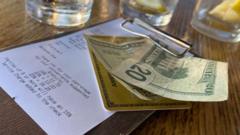
Tipping in the United States has morphed from a gesture of appreciation into a mandatory private tax used to subsidize low wages. This aggressive model is now hitting a wall as it attempts to cross borders. While point-of-sale software and American-owned hospitality chains push 20 percent gratuity prompts into European and Asian markets, they are meeting fierce resistance from locals and seasoned travelers alike. The friction is not just about money; it is a fundamental clash between a service-inclusive economic model and an extractive one.
The Software Infection
The primary driver of the global tipping creep is not cultural exchange, but hardware. Silicon Valley payment processors have hard-coded American social engineering into their interfaces. When a bakery in London or a coffee shop in Sydney installs a modern tablet-based POS system, the default settings often include a tip screen. Don't forget to check out our earlier coverage on this related article.
These screens utilize "dark patterns"—design choices that nudge users toward a specific action. By presenting a buyer with a choice of 18%, 20%, or 25% before they can finish a transaction, the software creates a moment of social pressure. In a culture like the UK, where service is traditionally included or a modest 10% is standard for sit-down meals, being asked to tip for a takeaway coffee feels like an ambush. It forces the customer to actively opt out, creating a "guilt tax" that benefits the business owner by reducing the pressure to provide competitive hourly pay.
The Economic Architecture of Entitlement
To understand why this export is so toxic, we have to look at the structural differences in how people get paid. In the United States, the "tipped minimum wage" allows employers to pay as little as $2.13 per hour, provided tips make up the difference. This effectively offloads the risk of business—slow shifts, bad weather, or poor kitchen performance—directly onto the staff and the customer’s conscience. To read more about the history here, The Motley Fool offers an in-depth summary.
Most of the world operates on a "service-compris" or service-included basis. In France, Japan, or Australia, the price on the menu is the price you pay. It covers the food, the rent, and the professional's wage. When American-style tipping enters these ecosystems, it doesn't just add a bonus for the worker; it threatens to destabilize the local wage floor. If employers see that staff can earn an extra 15% through digital panhandling, the incentive to raise base wages disappears.
The Great European Pushback
Europe is currently the primary battlefield. In cities like Paris and Rome, hospitality is viewed as a career, not a side hustle for students. Waiters are often unionized and receive benefits, paid vacation, and healthcare. The sudden appearance of "suggested gratuity" on credit card slips in tourist heavy zones is seen by locals as a predatory tactic aimed at confused Americans.
The data suggests a growing resentment. In recent surveys of UK consumers, a significant majority expressed "tipping fatigue," citing the expansion of tip prompts into non-service environments like self-service kiosks or retail shops. This is not a sign of stinginess. It is a defense of a transparent pricing model. When a customer sees a price, they want to pay that price. The American model introduces "price opacity," where the final cost of a meal is an unknown variable until the very end.
The Myth of Better Service
The most common defense for the American system is that it incentivizes better service. This is a fallacy. Multiple studies in behavioral economics show that the correlation between service quality and tip size is remarkably weak. Instead, tip size is more closely tied to the customer’s mood, the weather, or even the server's appearance.
In Japan, providing excellent service is a matter of professional pride and cultural standard. Tipping is often seen as an insult, suggesting that the employee needs a bribe to do their job correctly. By trying to export tipping, American companies are effectively trying to sell a solution to a problem that doesn't exist in these markets. They are introducing a transactional anxiety into environments that were previously governed by social contracts and fair labor laws.
The Hidden Winners
Who actually benefits when a 20% tip prompt appears in a Dublin pub? It isn't always the worker. In many jurisdictions, the legal protections for tips are murky compared to the US. Payment processors take a percentage of the total transaction—including the tip. When you tip $10 on a card, the credit card company and the POS provider take their 2.5% to 3% cut of that gratuity.
Furthermore, "tip pooling" arrangements often allow management to skim off the top for "administrative fees" or to cover "breakage," depending on local regulations. By shifting the burden of compensation to the customer, the business owner also reduces their payroll tax liability in certain regions. It is a shell game where the customer pays more, the worker stays precarious, and the middleman gets a guaranteed slice.
Tourism as a Trojan Horse
The spread of this culture is often spearheaded by the "American Traveler." In places like Cabo San Lucas, the Amalfi Coast, or Bali, high-spending Americans often over-tip, oblivious to local norms. While this seems generous, it creates a "tourist price" and a "local price." Over time, service workers begin to prioritize American tourists over their own neighbors, distorting the local economy and making basic services unaffordable for residents.
This creates a cycle of dependency. Once a local economy becomes addicted to the high-margin "voluntary" payments of foreigners, the base wages stagnate. The "out of control" nature of US tipping isn't just an American annoyance anymore; it’s an inflationary pressure being exported to the rest of the developing world.
The Digital Exit Strategy
If you want to stop the spread, the solution is clinical and immediate. You must hit "No Tip" or "Other" and enter zero on every digital prompt that does not involve traditional, sit-down table service in a country where that is the norm.
The social awkwardness of the "flip the tablet" moment is a calculated psychological trap. The person behind the counter is often just as embarrassed by the prompt as you are. By refusing to engage with the prompt, you aren't hurting the worker in the long run; you are signaling to the business owner and the software developers that this specific revenue extraction model is failing.
The global resistance to tipping culture is a fight for the "all-in" price. It is a demand for businesses to take responsibility for their own labor costs rather than outsourcing the math and the guilt to the person buying a sandwich. The next time a screen asks you for a 22% bonus for a hand-off transaction in an airport in Frankfurt or a cafe in Singapore, remember that your refusal is the only thing keeping the local economy sane.
Stop apologizing for not paying extra. The price on the board is the deal. Stick to it.