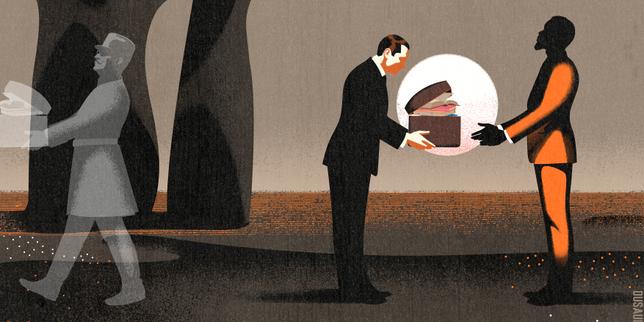
History does not merely sit quietly on the shelf. It breathes. It waits. It demands.
Walk into any room where an object torn from its ancestral soil rests under glass, and you can feel the absence it left behind. That empty space is not empty at all. It is heavy with unlived years, silent prayers, and the persistent, unbroken thread of a heritage that refuses to be severed. In Senegal, that thread leads straight to the descendants of El Hadj Omar Tall.
They are waiting.
For generations, the heirs of the great nineteenth-century scholar, warrior, and spiritual leader have waged a quiet, unyielding campaign. Their target is not territory. It is memory. Specifically, it is the return of the sacred relics and treasures looted from Ségou during the brutal expansion of the French colonial empire. Saber, manuscripts, personal belongings—pieces of a soul scattered across European institutions, locked away in climate-controlled vaults far from the sun that gave them meaning.
To understand why this matters, you have to step away from dry bureaucratic archives and look at the physical weight of loss.
Imagine holding a key that fits no locks in your own house, because the door was broken down long ago and carried across the sea. That is what restitution looks like from the inside. It is not an abstract legal debate about provenance or property law. It is a profound, visceral ache for completion. When a saber belonging to El Hadj Omar Tall sits thousands of miles away in a museum case, it is stripped of its voice. It becomes a silent trophy of conquest, frozen in a narrative written entirely by the victor.
The descendants know this. They have spent decades navigating the labyrinth of modern diplomacy, appealing to conscience, history, and basic human dignity. They are not asking for charity. They are demanding justice.
Consider how power works through possession. For more than a century, European capitals built grand monuments to their own enlightenment while housing the trophies of their darkest expansions. Every artifact displayed without context or consent is an ongoing act of colonization. It tells a specific story to every child who walks past it: We took this because we could. We keep this because we define what is valuable.
The descendants of El Hadj Omar Tall look at those glass boxes and see something entirely different. They see a stolen ancestor.
Progress has been agonizingly slow. Bureaucracy moves like glaciers through frozen mud. Committees are formed, reports are commissioned, and cautious politicians speak in careful circles about legal frameworks and heritage preservation, as if the original theft complied with any framework other than raw violence.
Yet, the tide is turning. Across the African continent, a new generation of voices is refusing to accept the permanent exile of their history. Restitution is no longer viewed as a polite favor to be granted by former colonial powers. It is recognized as an overdue reckoning. When France recently returned a fraction of the historical treasures demanded by various nations, it proved a fundamental truth: the walls are not impenetrable. The inertia of centuries can be broken.
But the case of Ségou remains a sharp thorn in the conscience of those who hold the keys.
El Hadj Omar Tall was a towering figure. A visionary who established a vast empire stretching across parts of modern-day Guinea, Mali, and Senegal, he was a master of letters and the sword. His legacy terrified the French colonial administration, which is precisely why capturing his symbols of authority was prioritized. To break the man, they had to capture his spirit. To subjugate his people, they had to institutionalize his relics.
When those objects were shipped to France, they weren't just moved; they were exiled.
The descendants understand that recovering these items is not about looking backward out of bitterness. It is about clearing a path forward. How can a nation fully step into its future when its foundational chapters are held hostage in foreign basements? How can young people look at their heritage with pride when the physical proof of that heritage requires a passport and a foreign visa to visit?
Memory requires anchors. Without them, history drifts into myth.
The struggle for the treasure of Ségou is a masterclass in persistence. It is a reminder that time does not heal wounds that are continuously kept open by institutional indifference. Every year that passes without the return of these sacred objects is another year of institutionalized theft.
Yet the heirs persist. They write the letters. They hold the meetings. They tell the stories to their children, ensuring the fire never goes out. They know that steel and gold can be locked behind iron doors, but a people's resolve cannot be put in a glass case.
The sun sets over Dakar, casting long, dramatic shadows across the Atlantic. Somewhere across that vast expanse of water, inside a quiet, sterile room in Europe, a saber rests in the dark. It has been there for over a hundred years, waiting for the dawn that belongs to it. And the descendants are still standing at the door, watching the shadows shorten, ready for the moment the lock finally turns.


