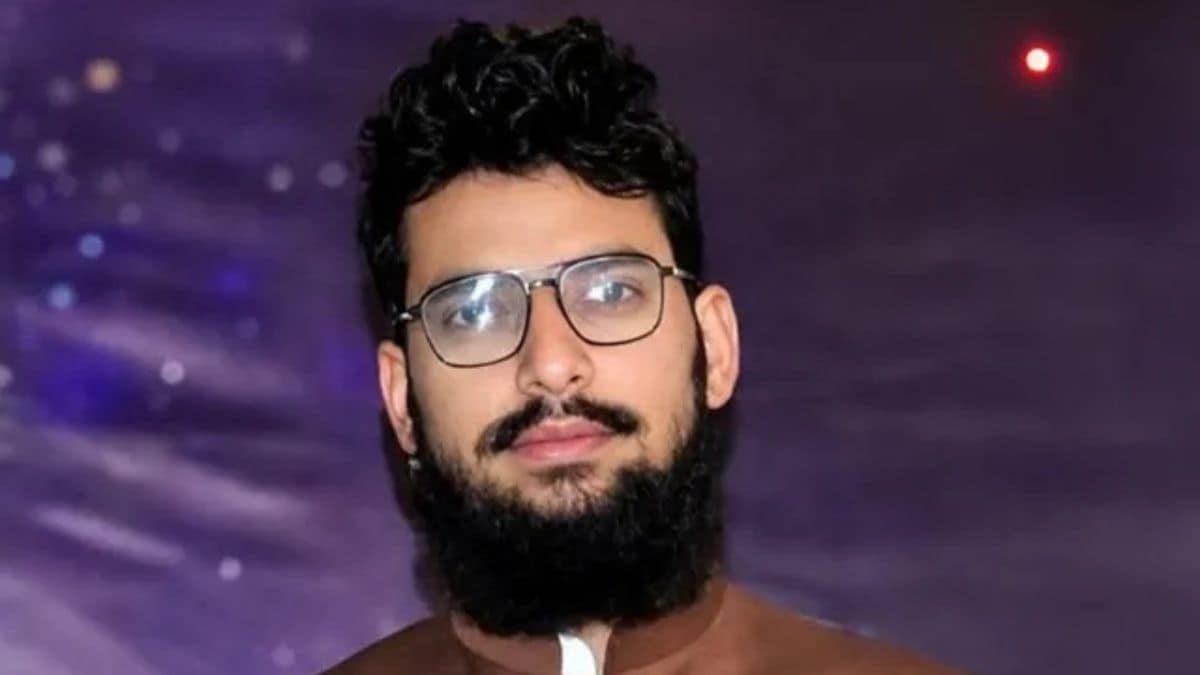
The rain in PoK doesn’t wash away the dust; it just turns it into a heavy, clinging mud that sticks to the tires of old pickup trucks and the boots of men who move only at night. In the narrow alleys of Kotli, a town tucked into the rugged folds of Pakistan-administered Kashmir, life carries a deceptive stillness. Neighbors know neighbors, or at least they pretend to. They know which windows stay dark until dawn. They know which cars don’t belong.
On a Tuesday that felt exactly like every other Tuesday, the silence broke.
Two men on a motorcycle. A sudden, synchronized burst of gunfire. A white sedan veering sharply into a ditch, its windshield shattered into a spiderweb of silver fractures. When the local police arrived, the man slumped over the steering wheel was identified by locals as a quiet, unassuming figure known in the neighborhood as a doctor.
But he wasn't treating patients. He was Hamza Burhan.
To the intelligence agencies tracking the subcontinent’s most violent fault lines, he was known by a far more ominous moniker: the mastermind of Pulwama. His death marks the latest chapter in a shadowy, unacknowledged war of attrition that is quietly reshaping the geopolitics of South Asia. It is a world where debts are collected years after they are incurred, and where the past has a terrifying habit of catching up.
The Architect of the Valley’s Darkest Day
To understand why a quiet street in Kotli became a kill zone, you have to look back to a freezing February afternoon in 2019.
Imagine standing on the Jammu-Srinagar national highway. The air is crisp, biting, smelling of pine and diesel exhaust. A convoy of seventy vehicles carrying over 2,500 personnel of the Central Reserve Police Force is moving slowly through the trans-Himalayan terrain. For these soldiers, it is a routine transit. Some are texting their families. Others are dozing against their packs.
Then, a local youth drives a Mahindra Scorpio laden with over 300 kilograms of explosives directly into the bus numbered 76.
The blast wave shattered windows kilometers away. It left a crater that looked like a meteor strike. Forty young men, with families waiting for them across the plains of India, were instantly vaporized or crushed. The nation stopped breathing. The grief was immediate, heavy, and rapidly replaced by a cold, white-hot fury.
Behind that local youth—the immediate face of the suicide bombing—stood the planners. Men who sat in safe houses far from the blast radius, staring at maps, calculating timelines, and mixing volatile chemical compounds. Hamza Burhan was the chief engineer of that grief. As a high-ranking commander within the Jaish-e-Mohammed operational hierarchy, his specialty wasn’t the ideology; it was the logistics of terror. He knew how to move money through informal channels without triggering alarms. He knew how to smuggle military-grade components across one of the most heavily fortified borders on earth.
When the dust settled in Pulwama, Burhan didn’t celebrate publicly. He did what men in his profession always do. He dissolved into the background.
The Anatomy of an Invisible Execution
The hit on Burhan was a masterclass in professional elimination. There were no grand statements, no dramatic car chases, no lingering at the scene to collect trophies.
Consider how an operation like this unfolds in the real world. It requires weeks, perhaps months, of meticulous reconnaissance. Someone had to note the exact time Burhan left his compound. Someone had to know his preferred routes, which side of the vehicle he sat on, and whether he carried a sidearm. In a region tightly monitored by local security apparatuses, executing such a strike without getting caught requires immense operational capability.
The gunmen pulled up alongside his vehicle at a pre-determined choke point where the sedan had to slow down. The weapon of choice was automatic, fired at close range to ensure penetration through the vehicle’s bodywork. It was over in less than four seconds. By the time passersby gathered around the idling vehicle, the motorcycle had vanished into the maze of backroads leading out of Kotli.
The Pakistani authorities quickly cordoned off the area, their official statements characteristically sparse. They spoke of "unidentified miscreants" and launched a routine investigation. But everyone in the region, from the shopkeepers selling tea down the street to the high-ranking officers in Islamabad, knew this was no random act of street violence.
This was a targeted liquidation.
The Great Unraveling of the Safe Havens
Burhan’s death is not an isolated incident. It is part of a striking, highly visible pattern that has emerged over the last twenty-four months. Across various cities and towns in Pakistan, high-value assets belonging to anti-India militant outfits are dropping like autumn leaves.
| Target | Affiliation | Location of Elimination | Status |
|---|---|---|---|
| Hamza Burhan | Jaish-e-Mohammed (Pulwama Mastermind) | Kotli, PoK | Shot dead in vehicle |
| Paramjit Singh Panjwar | Khalistan Commando Force | Lahore | Assassinated during morning walk |
| Shahid Latif | Pathankot airbase attack handler | Sialkot | Shot inside a mosque |
| Riyaz Ahmad | Lashkar-e-Taiba commander | Rawalakot | Gunned down during prayers |
The sheer variety of locations and the precision of the strikes point to a systemic vulnerability that these organizations have never faced before. For decades, these men operated under a protective blanket of plausible deniability. They lived under assumed names, protected by local security details, convinced that the border shielded them from retribution.
That blanket has been shredded.
The psychological impact on the remaining leadership is profound. When you realize that your internal communications are compromised, that your neighbors might be informants, and that the state can no longer guarantee your survival, paranoiac paralysis sets in. You stop using mobile phones. You stop meeting associates. You spend your life looking over your shoulder, wondering if the next motorcycle engine you hear will be your last.
The Echo Chamber of Denials and Whispers
Predictably, the diplomatic theater following the incident has been a study in mirrors and smoke.
New Delhi maintains a stoic, official silence. In the corridors of power in India, there is no public chest-thumping, no official confirmation of involvement. Instead, there is a quiet satisfaction that a major threat has been neutralized without a single Indian soldier crossing the Line of Control in uniform. The official line remains focused on counter-terrorism within its own borders, leaving the world to draw its own conclusions.
In Islamabad, the reaction is a volatile mix of embarrassment and anger. To admit that international terrorists are being hunted down at will on your sovereign soil is an admission of immense institutional weakness. It suggests that either the state has lost control of these elements, or that foreign intelligence agencies can operate inside their borders with total impunity.
But the real conversation is happening in the whisper networks of the intelligence community. Analysts are looking at the mechanics of these hits and realizing that the rules of engagement in South Asia have fundamentally shifted. The old doctrine of strategic patience has been replaced by something far more aggressive, far more lethal, and entirely deniable.
The Human Cost that Remains
It is easy to get lost in the grand chessboard of geopolitical strategy, to view the death of Hamza Burhan merely as a point scored on a scoreboard of covert operations. But every bullet fired in this long-running conflict carries an immense weight of human history.
The tragedy of the subcontinent is that the violence of the past continues to dictate the architecture of the future. The children of the men who died in Pulwama are growing up now, their lives permanently altered by a decision Burhan made years ago in a hidden command center. The families in Kotli who witnessed the sudden eruption of gunfire outside their doorsteps are reminded that the war is never truly far away; it is sleeping in the house next door.
The elimination of a mastermind does not dismantle an ideology, nor does it instantly bring peace to a fractured valley. It does, however, send an unmistakable message to those who choose the path of asymmetric warfare. The passage of time is no longer a shield. The world has grown smaller, more dangerous, and incredibly unforgiving for those who trade in the lives of innocents.
The engine of Burhan’s sedan has long since cooled. The glass has been swept from the asphalt of Kotli. But the shadow cast by the conflict he helped fuel remains long, dark, and deeply unpredictable, stretching across borders that can no longer guarantee anyone's safety.


