Silence.
That is the first thing you notice when the border goes quiet, not the cinematic stillness of an empty desert highway, but a heavy, pressurized hush that settles over a room full of glowing monitors three hundred miles north of the Rio Grande. I have spent years watching how modern conflict moves—not with the thunder of armored columns, not with the dramatic breach of a reinforced door at midnight, but through the slow, patient accumulation of pixels on a screen. When news broke that the United States had flown an unarmed surveillance drone deep into Mexican airspace to help corner Fausto Isidro Meza Flores, the cartel boss known across the underworld as El Chapo Isidro, the headlines treated it like a routine diplomatic transaction. A routine flight. A standard intelligence share. A clean arrest.
They missed the point entirely.
To understand what actually happened in the skies above Sinaloa, you have to look away from the press releases and stand, hypothetically, in the red dirt of Guasave at three in the morning. Imagine a man—let us call him Mateo, a fictional composite of the thousands of lemon growers and mechanics who live along the coastal plains of northern Sinaloa—waking up to fetch water before the sun turns the corrugated tin roof of his shed into a skillet. He looks up at the stars. He hears nothing. There is no rotor wash from a Black Hawk, no distant rumble of a turboprop engine, nothing to disturb the crickets in the brush. Yet eight miles above his head, invisible to the naked eye and silent to the ear, an MQ-9 Reaper or a high-altitude reconnaissance platform is circling in a slow, mathematical figure-eight, peering through the dark with thermal optics capable of distinguishing a lit cigarette from a warm stone.
This is the new geography of the drug war. Borders used to be lines drawn in dust and guarded by men with rifles; today, they are porous membranes pierced by radio frequencies and orbital relays.
The Man Who Outlasted the Titans
For over a decade, Fausto Isidro Meza Flores was a ghost in a region famous for loud, theatrical villains. While Joaquín "El Chapo" Guzmán courted Hollywood actors and turned his escapes into folk ballads, and while the sons of the Sinaloa Cartel fought bloody, televised wars in the streets of Culiacán, El Chapo Isidro built something quieter and arguably more durable. Operating out of the agricultural belt of northern Sinaloa—places like Guasave, Los Mochis, and the rugged foothills leading into the Sierra Madre—Meza Flores led the remnants of the Beltrán Leyva Organization, carving out a territory that functioned as a vital artery for methamphetamine, heroin, and synthetic opioids moving north toward Arizona and California.
He survived because he understood friction. Every time a cartel boss uses a cell phone, attends a family baptism, or moves in a convoy of armored SUVs, he creates friction against the world around him. That friction generates heat, noise, and digital exhaust. Meza Flores minimized all of it. He stayed off standard networks. He relied on human couriers, dirt roads, and the deep, woven loyalty of mountain communities where state authority has always been a rumor rather than a reality.
For years, that low-tech discipline worked. The United States Department of Justice indicted him back in 2013, placing a five-million-dollar bounty on his head, yet he remained stubbornly out of reach, a phantom name whispered in courtrooms from Washington to Chicago while he continued to orchestrate shipments across the border.
How do you catch a man who refuses to leave footprints in the dirt? You stop looking at the ground. You start watching the heat rising off the roof of the house he sleeps in.
An Eye That Never Blinks
Think of traditional policing as a flashlight in a dark warehouse. You point the beam at one corner, and you see everything there clearly, but the moment you swing the light toward the exit, the first corner plunges back into total darkness. A criminal simply waits for the beam to pass, then steps out from behind the crates.
High-altitude persistent surveillance changes the physics of the room. Instead of a flashlight, it is as if someone has painted the entire ceiling with phosphorescent light that never dims.
When U.S. intelligence assets cross into Mexican airspace—operating under bilateral agreements that both governments prefer to keep wrapped in careful bureaucratic language—they are not hunting in the way a patrol car hunts. They are recording. High-definition electro-optical cameras and infrared sensors capture a continuous, unblinking video of miles of terrain at once. If a white pickup truck leaves a ranch outside Guasave at two in the afternoon, drives down a dirt track, pauses beside an irrigation canal, and returns at dusk, the analysts watching the feed do not need to arrest the driver on the spot. They simply rewind the tape. They trace the truck back to the compound it left three days earlier. They map every visitor, every delivery van, every shift change among the armed lookouts standing near the orchard gates.
It is tedious, clinical work. Having watched analysts scrub through hours of monochrome thermal footage, I can tell you there is nothing glamorous about it. Your eyes burn from staring at gray shapes shifting across a gray background. Coffee goes cold in paper cups. Hours pass where nothing happens except a stray dog trotting across a courtyard or the heat signature of a generator kicking on at dusk.
Then, someone steps out onto a porch. The posture matches. The height matches. The pattern of movement—the way a convoy arrives five minutes before the figure exits, the way the guards fan out along the perimeter—confirms what months of human intelligence could only guess.
The Invisible Treaty in the Sky
Why does a single drone flight over Sinaloa carry so much political voltage? Because sovereignty, in the twenty-first century, is measured in airspace and data.
For decades, the relationship between Washington and Mexico City on security has swung between deep operational cooperation and fierce nationalist backlash. When U.S. agents operated too visibly on Mexican soil, or when high-profile arrests happened without the explicit blessing of the Mexican presidency, the diplomatic fallout froze intelligence sharing for months. In 2020, following the arrest of former Mexican Defense Minister Salvador Cienfuegos in Los Angeles, Mexico passed strict laws limiting the activities of foreign agents within its borders, requiring them to report every contact and stripping away diplomatic immunity.
A drone solves a political problem that boots on the ground cannot.
There are no American agents kicking down doors in Culiacán. There are no DEA vehicles idling outside police stations in Mazatlán, drawing the cameras of local reporters and the rifles of cartel sicarios. Instead, a sensor platform takes off from a base in the American Southwest, climbs into the stratosphere, crosses an invisible line at forty thousand feet, and streams encrypted telemetry back to a fusion center where U.S. and Mexican officials sit side by side. When the Mexican military finally moves in—using their own helicopters, their own marines, their own judicial warrants—the operation belongs entirely to Mexico on the evening news.
Yet the discomfort lingers, and I won't pretend the ethical boundaries here are neat or reassuring. Every time a foreign aircraft maps a sovereign nation's territory, even with official permission, it raises hard questions about where assistance ends and dependency begins. What happens to the terabytes of incidental data collected over farms, schools, and family homes while tracking a single fugitive? Who holds the keys to the archive once the target is in handcuffs?
Those questions rarely make it into the victory speeches.
The Weight on the Ground
Down in Sinaloa, nobody debates the nuances of bilateral intelligence protocols. They feel the consequences in their stomachs.
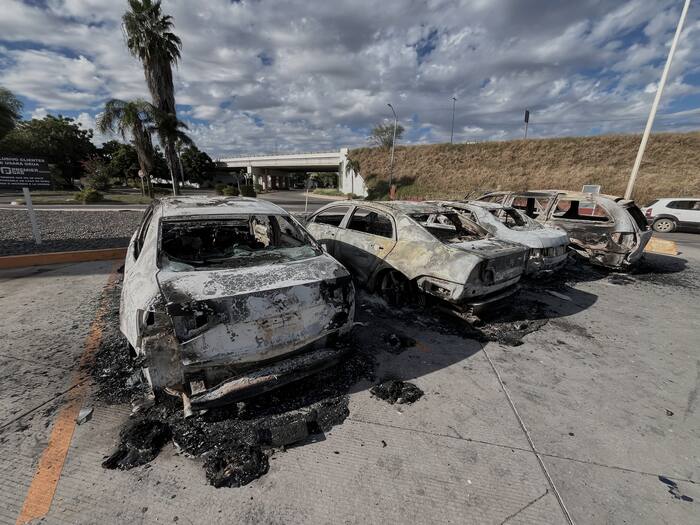
Consider what happens in a town like Guasave or Culiacán the morning after a major cartel figure is cornered or captured. The air changes before the news even hits social media. Storefronts pull down their metal shutters with a metallic clatter that echoes down empty avenues. Mothers sprint from market stalls to school gates to pull their children out of classrooms before the inevitable retaliation begins—the hijacked semi-trucks set ablaze across federal highways, the bursts of automatic gunfire at intersections, the sudden, terrifying transformation of an ordinary Tuesday into a siege.
I remember talking to a shopkeeper in northern Mexico years ago after a similar high-value capture, watching him sweep shattered glass off his sidewalk while helicopters still thrummed overhead. He didn't care whose satellite or aircraft had found the boss. He cared about whether his delivery truck would make it past the highway blockade before dusk, and whether the vacuum left behind would trigger a three-way war among younger, more reckless lieutenants eager to prove their cruelty.
That is the paradox of precision warfare against cartels. The technology has become astonishingly clean, almost surgical in its ability to pluck a single man out of a labyrinth of mountains and safe houses. The reality it leaves behind remains stubbornly messy. Removing El Chapo Isidro strikes a genuine blow against a network responsible for flooding North American streets with lethal synthetics, disrupting supply chains and dismantling a command structure that had operated with impunity for fifteen years. At the same time, nature abhors a vacuum, and the Sinaloa underworld abhors it twice as fast. Rival factions—from the warring wings of the Sinaloa Cartel to the Jalisco New Generation Cartel pushing north—watch every arrest not as a deterrent, but as a real estate opening.
What the Camera Cannot See
We have entered an era where no sanctuary is truly remote. Neither the Sierra Madre mountains nor the dense mangrove estuaries of the Pacific coast can hide a heat signature from an infrared lens staring down through the night. For cartel leaders who grew up believing that money, local loyalty, and rugged terrain made them untouchable, the message of the Sinaloa drone flight is unmistakable: the sky belongs to someone else now.
Still, as the surveillance feeds roll in and the arrests mount, it is worth remembering the limits of the lens. A thermal camera at forty thousand feet can track a convoy through a canyon, measure the exact stride of a fugitive crossing a courtyard, and guide a tactical team to the exact doorway of a safe house. It can see through darkness, through foliage, and through the thin walls of a rural compound.
What it cannot see is the hunger that drives a nineteen-year-old boy in a mountain village to pick up a rifle for five hundred dollars a week, or the despair that drives a man on a cold street corner in Philadelphia or Phoenix to buy the powder that pays for it. Until someone builds a machine capable of fixing that, the planes will keep circling in the dark, watching the heat rise off the earth, waiting for the next ghost to step out onto a porch.