The hum of the assembly line is supposed to sound like progress.
Ask anyone who has spent thirty years standing on a concrete floor in Ohio, watching the metallic skeleton of a washing machine slide past, and they will tell you that noise is a pulse. It means a mortgage gets paid. It means a kid gets braces. It means tomorrow looks remarkably like today, steady and predictable.
Except the pulse is stuttering.
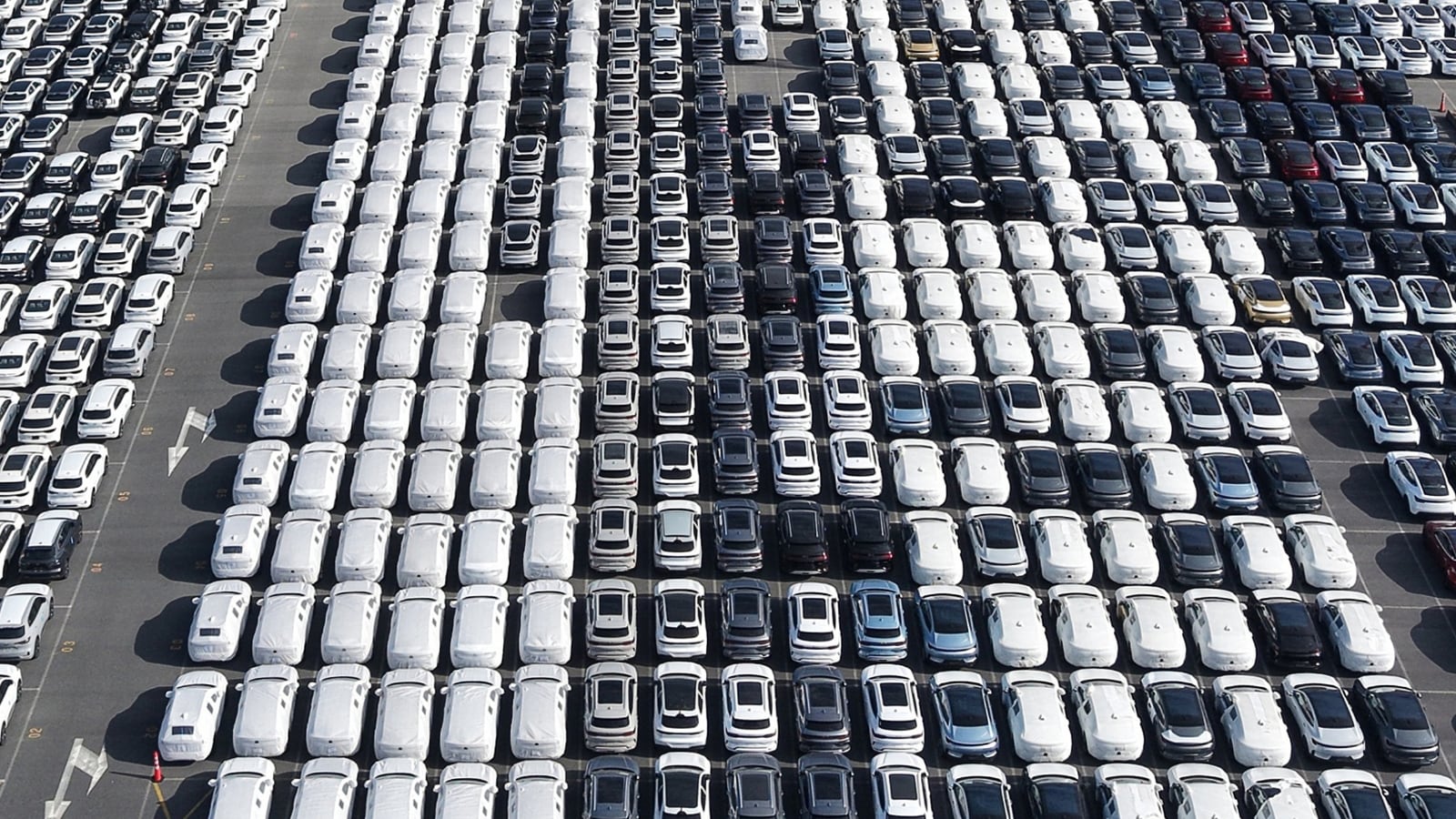
To understand why economists are whispering about a new China shock, you do not need to read dry white papers filled with export quotas and tariff schedules. You just need to walk into a quiet industrial park in Shenzhen, or stand outside a loading dock in Hamburg where rows of electric vehicles sit wrapped in white plastic, waiting for buyers who are looking the other way.
We have seen this movie before. We know how the first act plays out. Two decades ago, a sudden tidal wave of ultra-cheap goods washed over Western markets, hollowing out manufacturing towns and rewriting the geography of global labor. Entire communities woke up to find their livelihoods rendered obsolete overnight. Politicians promised it was just an adjustment. It was an earthquake.
Now, the earth is shaking again. But this time, the machinery looks different.
The Overcapacity Trap
Consider a hypothetical auto worker named Marcus. Let us call him Marcus because his story belongs to a thousand men and women currently staring at production dashboards they cannot control. Marcus builds combustion engines in a mid-sized plant that has survived three recessions. He thinks his job is safe because his company builds reliable, mid-tier sedans for local families.
Marcus does not track Chinese domestic industrial policy over his morning coffee. He does not know that domestic demand for electric vehicles and heavy machinery inside China has hit a plateau, squeezed by a sputtering real estate market and cautious consumers.
Factories cannot just stop. In modern industrial planning, halting production is a capital sin. It means layout costs mount, supply chains seize, and state-backed loans turn into anchor weights.
So, the factories keep running. They churn out millions of solar panels, batteries, steel coils, and electric cars that the domestic market simply cannot absorb.
Prices drop. Not by a fraction of a percent, but by margins that defy traditional economic gravity. Excess inventory spills across borders like water over a breached dam. This is what the analysts call structural overcapacity. Marcus calls it a shadow he cannot outrun.
When goods are priced below the cost of production elsewhere, market logic breaks down. A local manufacturer cannot compete with a price point subsidized by regional development funds designed to maintain employment and output quotas halfway across the world.
The Anatomy of the Next Wave
The first shock was about labor arbitrage. Western companies outsourced production to take advantage of low-wage workers, creating a sprawling web of global supply chains that prioritized efficiency above all else.
This new wave is entirely different. It is about technological dominance and scale.
China is no longer just the workshop of the world; it is the research lab, the assembly plant, and the financial engine, all operating at a velocity that leaves traditional trade watchdogs gasping for breath. The focus has shifted from cheap plastic toys and apparel to high-value green technology, advanced robotics, and heavy industrial machinery.
Batteries that power the transition away from fossil fuels are flooding global markets at a fraction of European or American production costs. Steel mills churn out alloys that undercut local producers before they can even source raw materials.
Listen closely to the silence of a shipping yard where cargo ships arrive fully loaded from Shanghai and leave empty because there is nothing left of equal value to send back. That imbalance is a symptom of a deeper fracture.
We built an economic system based on the assumption that markets always self-correct. If a product costs too much to make locally, you buy it cheaper elsewhere and redirect your labor to higher-end tasks. That was the textbook theory.
The reality on the ground is messier, harsher, and far more personal. You cannot simply retrain a machinist with decades of tactile expertise in high-precision metallurgy to become a software engineer or a data analyst with the snap of a finger. Skills have weight. They have history. When an industry dies, the human cost is measured in lost identity, fractured families, and towns that turn into ghost stories.
Navigating the Fault Lines
Governments are scrambling to construct new economic walls. Tariffs are back in style. Industrial subsidies, once considered anathema to free-market orthodoxy, are suddenly being passed with bipartisan urgency in Washington and Brussels.
Subsidies to build domestic semiconductor fabs. Subsidies to secure critical mineral supply chains. Subsidies to keep the lights on in factories that might otherwise succumb to the incoming price deluge.
Yet, building walls takes time, and the water is rising fast.
If Western nations lock their doors completely, they risk pricing themselves out of the very green transition they claim to champion. Solar panels and electric vehicles need to be cheap if the world is going to hit its carbon reduction targets. Relying solely on expensive domestic alternatives could stall climate action.
If they keep their doors open, they risk watching their remaining heavy industries dissolve into history books, leaving them dependent on a strategic rival for the physical infrastructure of the future.
There is no clean formula to resolve this tension. Every choice carries a heavy price tag, paid not by the politicians signing trade bills, but by people like Marcus, whose alarm clock goes off at 5:00 AM every single workday, wondering how much longer the line will keep moving.
The sun dips below the horizon of the industrial park, casting long, fractured shadows across the empty parking lot. Inside, the machines never sleep. They hum on, indifferent to the human anxiety echoing in the rafters, waiting to see what tomorrow's ledger will demand.