Dust settles differently on empty chairs. In the corridors of power in Dhaka, the furniture remembers faces that vanished into the night, but the air still carries the sharp, electric charge of unfinished business.
History rarely knocks politely. It kicks the door open, demands an accounting, and leaves ordinary citizens holding the pieces.
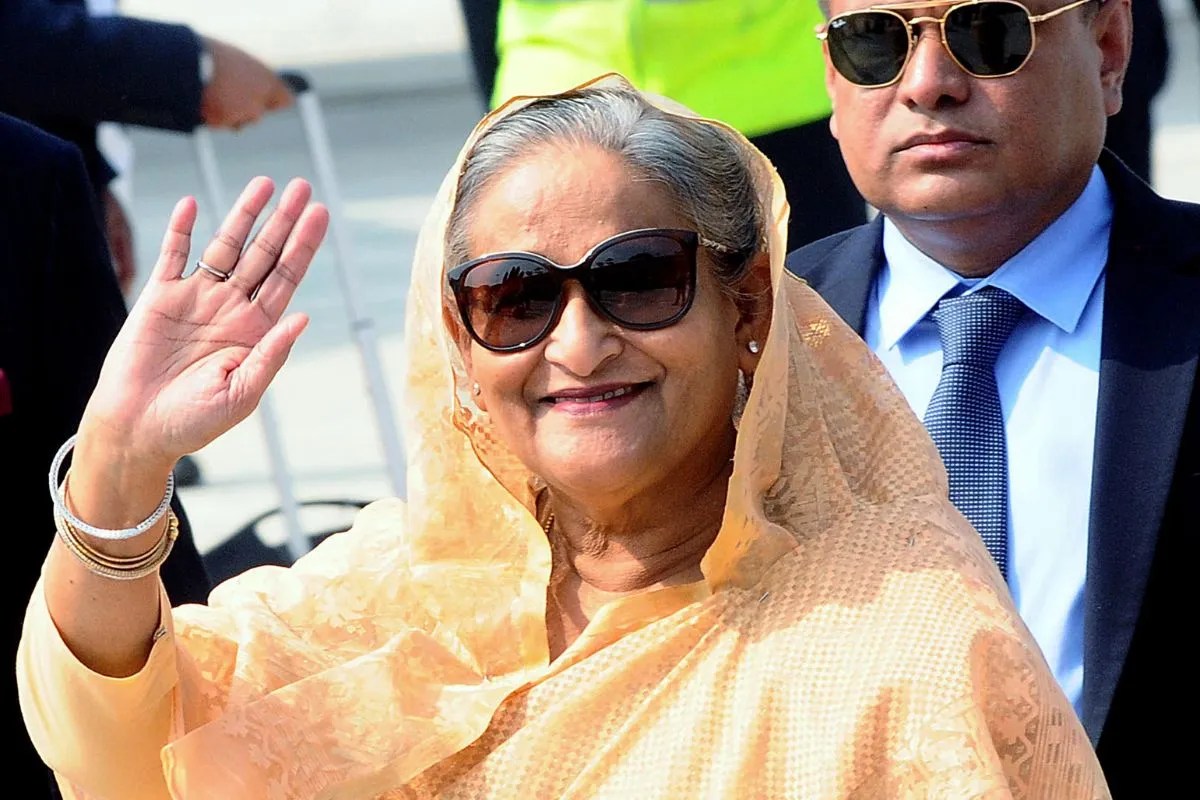
To understand the current storm over Sheikh Hasina, you have to look past the cable news chyrrons and step onto the sticky, humid pavement of a city that has spent decades swinging between fierce loyalty and sudden, explosive betrayal. The streets do not care about constitutional technicalities. The streets care about ghosts. And right now, the most consequential ghost in South Asia is packing a suitcase she never wanted to open.
The Arithmetic Of Waiting
Prime Minister Tarique Rahman’s inner circle is asking a question that sounds simple on the surface, yet vibrates with calculated political pressure: Why wait three more months?
Three months in politics is an epoch. In human terms, it is ninety mornings of waking up to uncertainty, ninety evenings of watching talk shows dissect every twitch of an exiled leader's eyelid.
Imagine sitting in a cramped tea stall in Motijheel, watching the ceiling fan slice through thick cigarette smoke while men twice your age argue over flight manifests and extradition treaties. To them, the debate isn't abstract. It is the difference between closure and chronic anxiety.
The administration currently steering Bangladesh through its fragile post-uprising transition has set a timeline, a deliberate pause meant to let institutional machinery catch up with revolutionary momentum. They talk of legal frameworks, of dotted lines, of dotting every i. But political friction thrives in the gray spaces between patience and suspicion.
When an adviser to the Prime Minister publicly questions the delay, he isn't just critiquing a calendar. He is channeling the raw, impatient pulse of a population that tore down statues only to find that the shadows remained.
Why the hesitation? The official answers involve stability. The unofficial answers involve fear.
The Weight Of Yesterday
Exile is a strange kind of suspension. For years, Sheikh Hasina commanded an apparatus that felt permanent as granite. When the reckoning arrived in the summer of 2024, the fall was vertiginous.
Now, the conversation about her potential return—whether to face trial, to answer for a cracked foundation, or simply to re-enter a political arena that has radically mutated—acts as a stress test for the new government.
Think of it like a dam holding back a swollen river. The engineers want to inspect every crack in the concrete before opening the floodgates. They argue that rushing the process invites structural collapse. But the villagers downstream, weary of watching the water rise year after year, want the valves opened now, regardless of the turbulence.
Tarique Rahman’s administration finds itself caught in this exact tension. To move too fast risks accusations of vengeance over justice. To wait too long risks looking weak, hesitant, or secretly accommodating to the old guard.
The three-month timeline proposed by current authorities was designed as a cooling-off period. Instead, it has become a target. Critics argue that every day of delay grants breathing room to loyalist factions who are quietly regrouping in the digital underground, trading encrypted messages and whispering about comebacks.
The Human Cost In The Margins
Behind every high-level political briefing and diplomatic dispatch are people whose lives were permanently fractured by the events that led to this impasse.
Consider a mother in Uttara whose university-aged son never came home from the barricades. For her, the debate over Sheikh Hasina’s return schedule is not a chess match. It is an insult. Every sunrise without a formal, binding legal reckoning feels like an eternity. When leaders debate whether to wait ninety days, she counts those days in heartbeats of pure grief.
Conversely, think of the low-level bureaucrats and functionaries who served under the previous administration, men and women who simply processed paperwork, built bridges, or taught school children, now terrified that they carry the stain of association. They, too, watch the calendar with dread, wondering if the return of the former leader—or the vengeance of the current one—will sweep away their livelihoods in a single afternoon.
This is the invisible friction of political transition. It is messy, contradictory, and deeply human. Systems can be redesigned on paper overnight, but human trust requires a much slower, more painful alchemy.
The Unforgiving Horizon
The advisers asking "why three months" know something fundamental about human psychology: momentum has an expiration date.
When a society undergoes a violent rupture, the energy required to demand change is finite. If you stall, fatigue sets in. The daily struggle for cooking gas, rice, and stable electricity begins to crowd out the lofty ideals of revolutionary justice. Cynicism creeps in like coastal fog, dampening the fires of reform.
By pushing for accelerated timelines, Rahman’s camp is betting that direct confrontation is safer than prolonged anticipation. They want the ghosts laid to rest in broad daylight, under the scrutiny of courts and cameras, rather than festering in the dark corners of rumor mills and social media algorithms.
Yet, caution has its own cold logic. True statecraft requires surviving the morning after the spectacle ends.
The clock in Dhaka keeps ticking, indifferent to the political point-scoring, the television debates, and the quiet prayers of the grieving and the fearful. Ninety days will pass. The calendar page will turn.
What remains when the dust finally settles will not be determined by the speed of a flight or the cleverness of an adviser’s press conference. It will be decided by whether a nation can look at its own reflection without flinching, and whether it has the courage to build a future that is heavier than its past.